
Unbiased headlines. Facts, not spin.
Every story is an unbiased news briefing written from 110+ sources across the spectrum — sources linked so you can verify it yourself.
 tech
Notable (5/10)
July 6, 2026 at 12:08 PM
tech
Notable (5/10)
July 6, 2026 at 12:08 PM
Palestinian Museum Builds Decentralized Digital Archive After UNESCO Confirms Damage to 164 Cultural Sites in Gaza
What the Archive Is Trying to Solve
The Palestinian Museum sits in Birzeit, in the occupied West Bank, designed by New York-based Heneghan Peng architects, the same firm that also designed Egypt's Grand Egyptian Museum. The building holds significant collections: photographs by Khalil Raad, murals by Vera Tamari, and materials spanning decades of Palestinian cultural life.
Access is already difficult. The museum sits between multiple checkpoints, limiting which Palestinians can physically reach it.
So the museum is going digital, and building something harder to physically seize.
The Documented Losses
Amer Shomali, visual artist and general director of the Palestinian Museum, told Wired that within a single week after October 7, 2023, Israeli strikes hit two art galleries, seven museums, two main archives in Gaza, and hundreds of archaeological sites. He says roughly 80 percent of Palestinian national collections have been looted, destroyed, or remain under Israeli control.
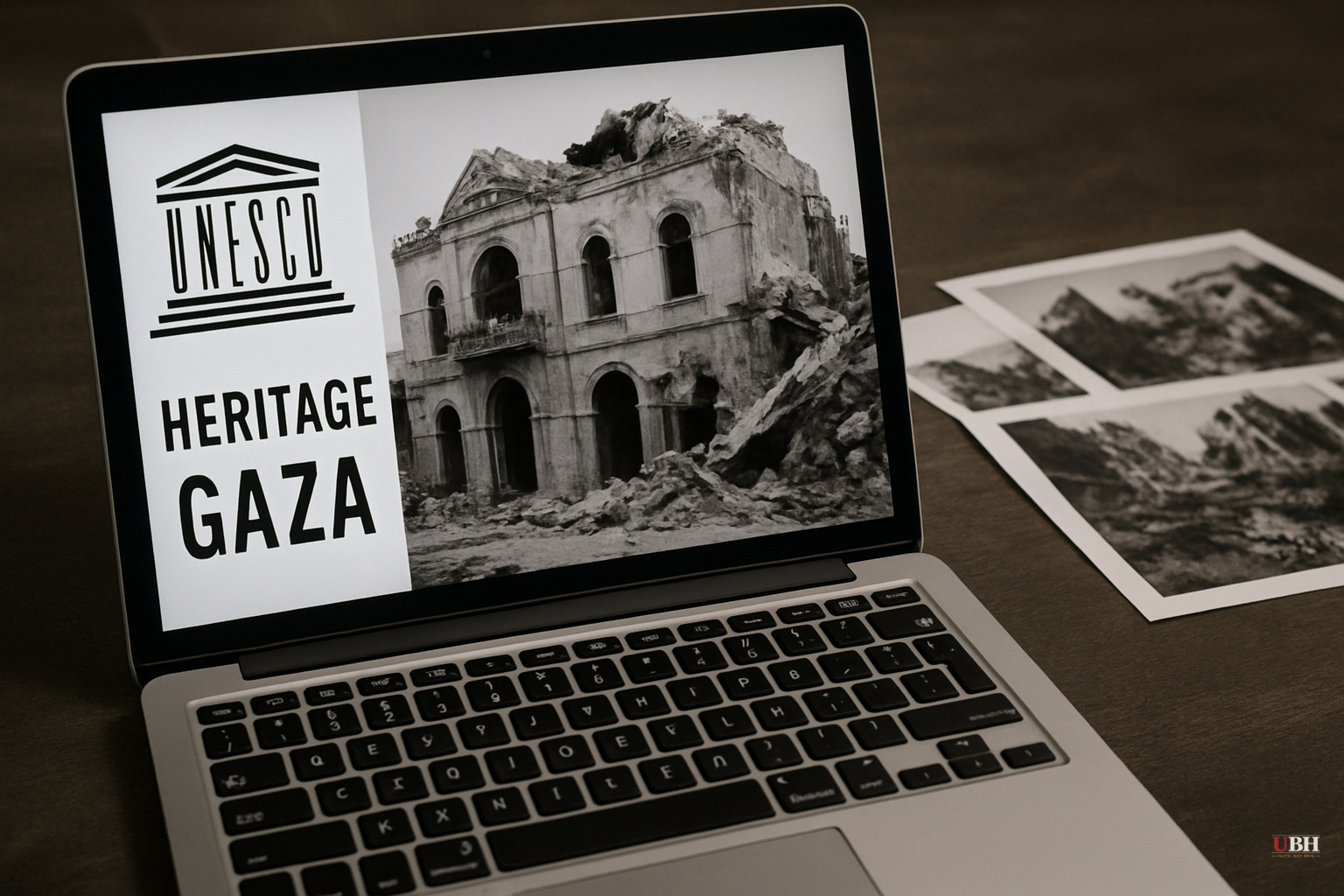
Those are Shomali's figures. What is independently verified: as of March 24, 2026, UNESCO had confirmed damage to 164 cultural sites in Gaza since October 7, 2023, including historical buildings, religious sites, museums, and archaeological sites. UNESCO's count almost certainly undercounts total losses. Mass displacement and the destruction of entire neighborhoods means many artifacts and personal records are gone without any documentation trail.
A 2025 report by the Applied Research Institute-Jerusalem documented at least 2,400 archaeological sites in the West Bank taken over by Israel.
The Legal Pressure Compounding the Physical Destruction
According to Reuters reporting in June 2026, Israeli lawmakers are advancing legislation that would transfer authority over ancient sites in occupied territory to the Israeli Ministry of Heritage. Palestinians and Israeli rights groups say the move amounts to de facto annexation of cultural heritage sites and could further expand Israeli control over Palestinian heritage sites.
Israeli settlers, operating under Israeli army protection, conducted a raid on the ancient city of Sebastiya in Nablus, West Bank, as recently as June 29, 2026, according to photographic documentation by Getty Images photographer Nedal Eshtayah.
The strongest counterargument from Israel's position deserves a fair hearing. Israel maintains that its military operations target Hamas infrastructure and that cultural site damage is a consequence of Hamas embedding assets in civilian and heritage areas, not a deliberate policy of cultural erasure. Israeli officials have also argued that some heritage administration in disputed territories falls within legitimate governance of land whose final status is unresolved under international law. Those arguing the Ministry of Heritage legislation is routine administration of contested territory, rather than annexation, point to the fact that the West Bank's legal status remains a matter of active international dispute.
These arguments do not dissolve the verified damage numbers. UNESCO's 164 confirmed sites and the Applied Research Institute's 2,400 West Bank archaeological sites under Israeli control are documented figures, not Palestinian advocacy claims. The facts of what has been damaged are not in dispute; the attribution of intent is.
What the Digital Archive Actually Does
The Palestinian Museum's digital preservation effort is designed around a specific problem: physical archives can be seized, bombed, or made inaccessible through checkpoints and military control. A decentralized digital archive, distributed across servers outside the region, is structurally harder to neutralize.
Shomali frames the stakes in generational terms. "It was a continuous battle all the time between us and them," he told Wired, describing efforts dating back to 1948. "We document, they loot; but every time we document, we document with less vivid memory."
That observation points to a compounding problem: each cycle of destruction degrades the quality of what survives. Photographs of photographs lose resolution. Oral histories recorded from people who heard stories secondhand carry less fidelity than primary accounts. The archive is racing against this degradation, not just against physical destruction.
The Open Question
The advancing Israeli legislation on West Bank archaeological sites is the most concrete near-term threat to what survives outside Gaza. If it passes, it would shift legal administrative control over those sites to the Israeli Ministry of Heritage. Whether that change would affect Palestinian Museum operations in Birzeit specifically, or alter which physical collections remain accessible to Palestinian institutions, has not been publicly addressed by Israeli officials or the museum. That jurisdictional question remains unresolved.
Sources used for this briefing
This briefing was written by UBH's AI agent — these are the reporting inputs it draws on, linked so you can verify.


