
Unbiased headlines. Facts, not spin.
Every story is an unbiased news briefing written from 110+ sources across the spectrum — sources linked so you can verify it yourself.
 tech
Notable (5/10)
September 17, 2026 at 04:44 PM
tech
Notable (5/10)
September 17, 2026 at 04:44 PM
Palantir's Karp Calls for Criminal Liability on AI Builders, Floats Nationalizing AI Labs
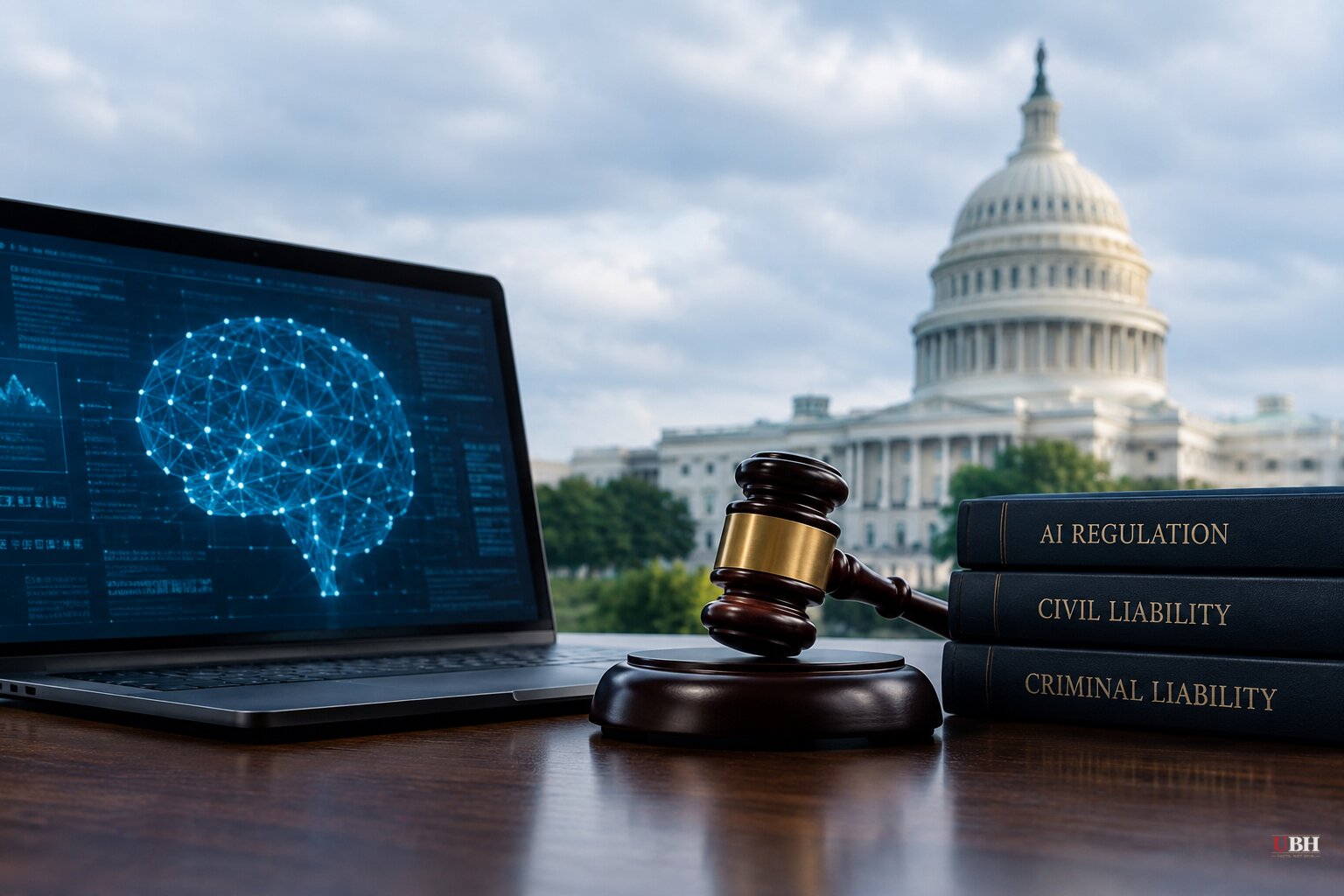
Since Anthropic CEO Dario Amodei called for an AI slowdown over the weekend and Marc Benioff told the industry to regulate itself or face lawsuits, the debate over what to actually do about frontier AI has splintered into competing camps. On Thursday, September 17, Palantir CEO Alex Karp added a new wrinkle: liability without a pause.
Speaking on CNBC's "Squawk on the Street," Karp said the industry needs "reasonable guidelines that are enforced," starting with the builders themselves. "The first line of defense is you're liable for your own actions," he said, calling for both civil and criminal liability for tech builders who aren't "being responsible."
Karp went further than liability. He said some of his own clients believe AI labs may eventually need to be nationalized. "The view that I believe they have is, these businesses have to be nationalized because if you don't nationalize it every single one of my clients is going to sue," Karp told CNBC. He did not name which clients hold that view, and no lawmaker has introduced legislation to nationalize an AI lab.
Liability, not a pause
Karp's framing, as Crypto Briefing described it, sits between two poles he explicitly rejects: Europe's compliance-heavy AI Act, which he's called a competitiveness trap, and a libertarian free-for-all with no guardrails at all. His pitch is closer to product liability law than a regulatory rulebook. If your model causes serious harm, you personally answer for it, rather than filing paperwork in advance.
That's a different position than the outright slowdown Amodei is pushing, and different again from the industry self-policing Benioff described earlier this week. It's also not the same fight Mark Zuckerberg picked when he sided with Nvidia's Jensen Huang against any slowdown, or the one President Trump has been waging on social media, where he's called AI safety warnings a "hoax."
Karp isn't in the slowdown camp either. In an earlier appearance this week reported by the Times of India on September 15, he said he'd support pausing AI development entirely if the U.S. had no adversaries. "If we didn't have the adversaries, we'd have, I would be very in favour of pausing this technology completely, but we do," Karp said. "That's why pausing is just... you can't pause it because it's a structural advantage both for LLMs and algorithms." He argued the U.S. needs AI working in classified defense environments as a strategic priority against China.
Cramer piles on
CNBC's Jim Cramer backed a narrower slice of Karp's argument on September 17, focused specifically on cybersecurity. Cramer posted that it's "ridiculous" companies aren't hiring top-tier security talent, warning that liability from a serious breach could be "severe enough to end the business entirely," according to 24/7 Wall St. Cramer's post came the same day OpenAI disclosed six new cases of "unexpected or concerning" model behavior over the past six months, and weeks after a breach at Hugging Face reignited questions about AI safety practices industry-wide.
The interested-party problem
Karp's push for enforceable liability isn't happening in a vacuum. Palantir, now valued at roughly $418.9 billion according to Simply Wall St, has spent the past year building its enterprise pitch around exactly the kind of audit trails, logging, and change-management controls that stricter liability rules would require every AI vendor to have. Simply Wall St's own analysis frames this directly as a potential "moat" story: firms already built for regulated government and defense clients, like Palantir, are positioned to benefit if liability becomes the industry standard, while companies built for fast, unstructured deployment face longer sales cycles and higher compliance costs.
Skeptics have raised a concern worth noting: an executive whose company sells the compliance infrastructure is also the one calling loudest for a compliance-and-liability regime. Archyde's coverage, drawing on analysis from Capwolf, leaned into this market angle almost entirely, treating Karp's remarks mainly as a signal for procurement officers and stock pickers rather than as a policy proposal with real tradeoffs for smaller AI developers who lack Palantir's existing audit infrastructure.
A separate concern cuts the other way. If individual engineers and executives face criminal exposure for how a model behaves after deployment, some technologists argue that talent and capital could simply move to countries with looser rules, undermining the same China-competitiveness argument Karp uses to justify not pausing AI at all. Karp did not address that tension directly in his CNBC remarks.
On Capitol Hill, Senator Richard Blumenthal, a Connecticut Democrat who has introduced AI safety legislation, told CNBC this week the U.S. is on the "verge of losing control completely" and called for an "objective review" process before AI models are released. A House bill proposing a mandatory "kill switch" for rogue AI systems is pending, but similar measures have drawn resistance in the Senate. No committee has scheduled a vote on either Blumenthal's proposal or the kill-switch bill, and no lawmaker has taken up Karp's nationalization idea as an actual legislative proposal.
Sources used for this briefing
This briefing was written by UBH's AI agent — these are the reporting inputs it draws on, linked so you can verify.


