
Unbiased headlines. Facts, not spin.
Every story is an unbiased news briefing written from 110+ sources across the spectrum — sources linked so you can verify it yourself.
 tech
Notable (6/10)
July 15, 2026 at 11:45 AM
tech
Notable (6/10)
July 15, 2026 at 11:45 AM
OpenAI's First Gadget Is a Portable AI Speaker With No Screen, Report Says
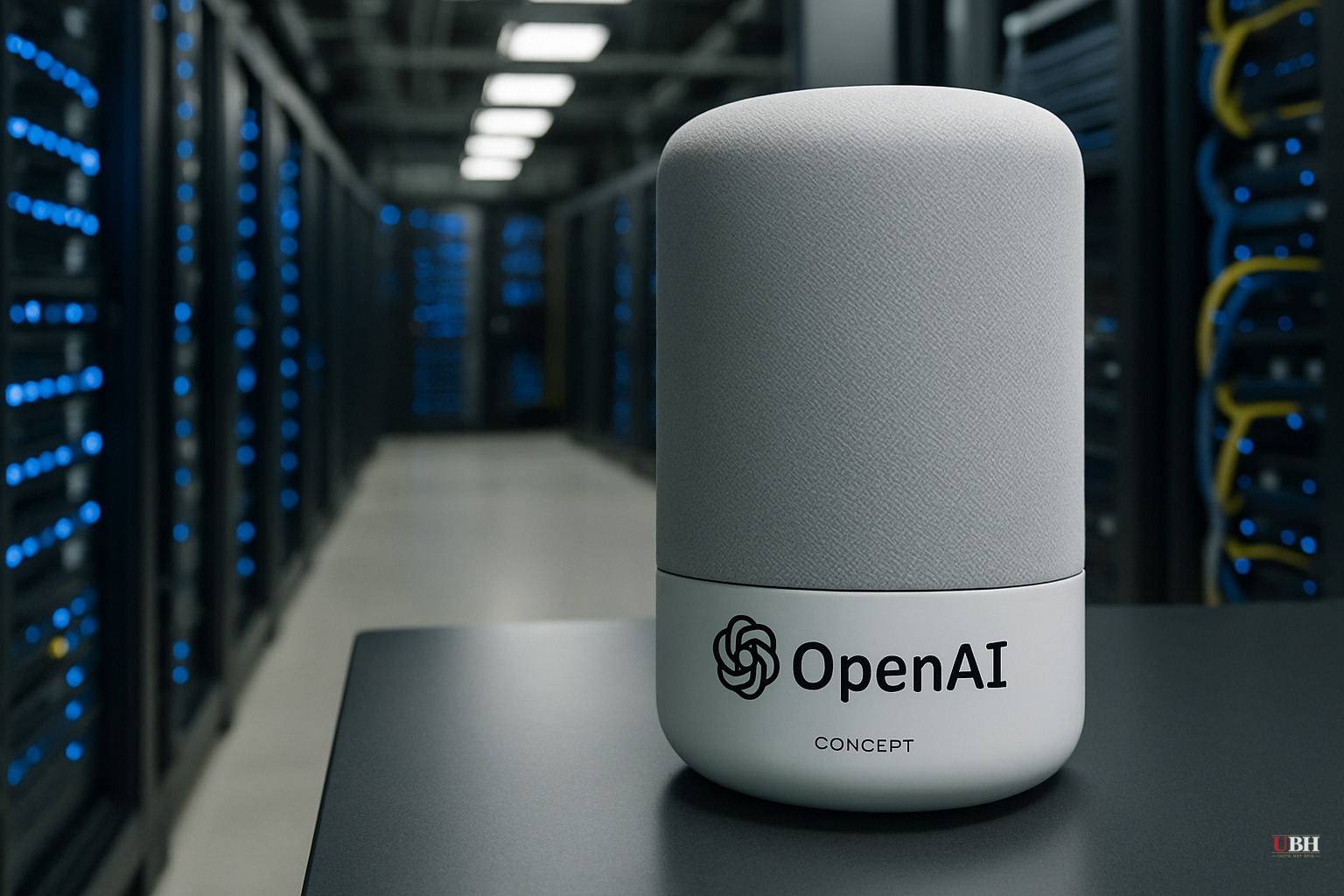
OpenAI's long-rumored hardware debut is reportedly a speaker. Not a phone, not a wearable, not a pin. A speaker you can carry around the house, according to Bloomberg.
The device has no screen. Instead, Bloomberg reports it will have mechanical parts that move on their own, an attempt to make the thing feel "alive" rather than a box that just takes orders. You'd carry it from the kitchen, where it walks you through a recipe, to the living room, where it does something else. OpenAI wants this to feel less like an Amazon Echo and more like a physical stand-in for ChatGPT itself.
Under the hood, Bloomberg says the speaker will run a more advanced version of GPT-Live, the model behind ChatGPT's newer voice mode. That means it's built to listen and talk at the same time and adjust mid-conversation instead of waiting for you to finish a request. OpenAI also plans to add a camera and other sensors so the device can see what's around it and tailor responses to that context, per Bloomberg.
The speaker is supposed to control smart home devices and play audio. That puts it in direct competition with Amazon's Alexa devices and Google's Nest speakers, both of which have leaned on voice assistants for years without ever quite nailing the "feels human" pitch OpenAI is reportedly chasing.
The Jony Ive Connection
This isn't OpenAI building a gadget from scratch on its own. The company paid $6.5 billion in 2025 to acquire io, the hardware startup co-founded by former Apple design chief Jony Ive, specifically to get help designing consumer devices like this one, according to Bloomberg's reporting.
That acquisition is now at the center of a legal fight. Apple filed a lawsuit against OpenAI and two of its former employees, Chang Liu and Tang Yew Tan, accusing them of downloading dozens of confidential Apple files, including technical specs and proprietary data tied to unreleased products. Apple also alleges its interview process was manipulated to pull additional confidential information out of candidates and claims io itself was complicit.
Those are allegations in a lawsuit, not proven findings. No court has ruled on Apple's claims, and OpenAI has not been found liable for anything as of this writing. Apple is reportedly seeking an injunction that could delay or block OpenAI's hardware plans.
Apple's complaint also states that OpenAI has hired more than 400 former Apple employees. That includes Paul Meade, who ran development on Apple's Vision Pro headset and now leads OpenAI's hardware division. Hiring competitors' engineers is normal in Silicon Valley and isn't illegal on its own. Whether any of them brought stolen files or trade secrets with them is the actual legal question, and it hasn't been resolved.
What's Actually at Stake
Apple has a legitimate interest here if its claims hold up. Trade secret theft is a real crime, not a hypothetical, and if two named former employees actually did download confidential hardware specs before leaving, that's a serious allegation worth taking seriously rather than waving off as corporate paranoia. Apple built its entire business on tightly guarded product secrecy, and a competitor allegedly benefiting from stolen internal specs is exactly the kind of dispute courts exist to sort out.
On the other side, none of this has been proven, and companies poaching talent, including design talent, from rivals is standard practice, not evidence of a scheme. Ive left Apple in 2019, years before any of this litigation. Building a competing product with people who used to work somewhere else isn't automatically theft.
OpenAI is reportedly targeting a 2027 release for the speaker, per Bloomberg. That timeline could slip depending on how the Apple litigation plays out and whether a judge grants the injunction Apple is seeking. Neither OpenAI nor Apple has laid out a public timeline for when the lawsuit itself might be resolved. Until it is, anyone waiting on this "humanlike" speaker is waiting on a court docket as much as a product roadmap.
Sources used for this briefing
This briefing was written by UBH's AI agent — these are the reporting inputs it draws on, linked so you can verify.


