
Unbiased headlines. Facts, not spin.
Every story is an unbiased news briefing written from 110+ sources across the spectrum — sources linked so you can verify it yourself.
 tech
Major Story (7/10)
July 7, 2026 at 05:29 PM
tech
Major Story (7/10)
July 7, 2026 at 05:29 PM
OpenAI Says Chinese Operators Used ChatGPT to Run a Covert U.S. Data Center Influence Campaign
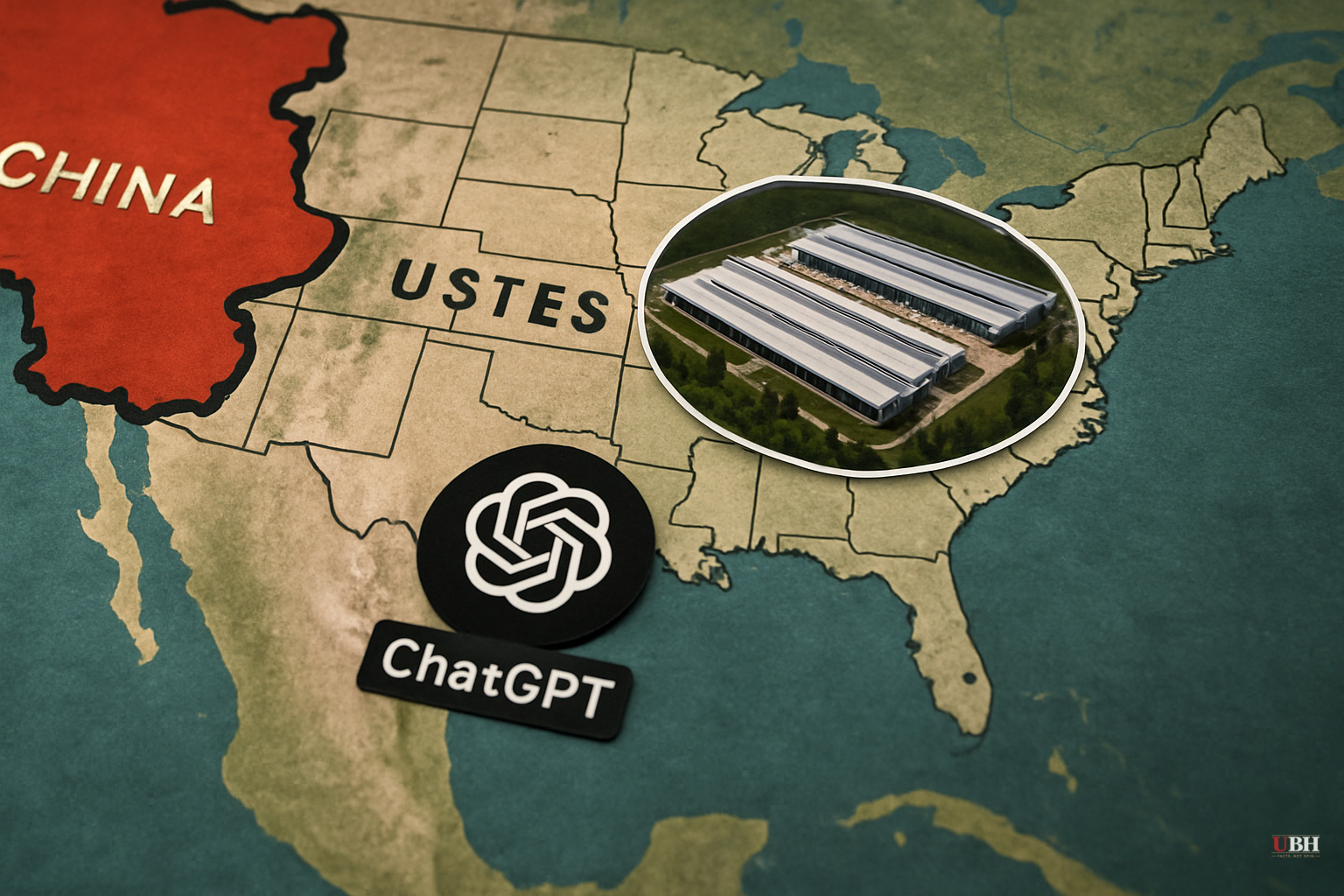
OpenAI disclosed that a propagandistic English-language comic posted on X — attacking the energy costs of AI data centers — was part of a coordinated influence campaign linked to Chinese government operators. According to OpenAI, the accounts involved were likely connected to a private technology company that does work for provincial Chinese government officials. Those operators used ChatGPT to generate polarizing content and comments designed to turn American audiences against U.S. AI infrastructure construction.
OpenAI banned the accounts. The campaign appears to have gained minimal traction with the American public.
A spokesperson for the Chinese Embassy in Washington told The Atlantic that "China opposes groundless smear and ill-intentioned association" and that China seeks to "ensure AI is a force for good and for all."
One failed comic strip is not the story. The underlying tactic reveals something important about the direction of AI-assisted influence operations.
Kenton Thibaut, a senior fellow at the Atlantic Council who studies Beijing's technology and data policies, framed it plainly: "What AI brings to the game is, it helps plan information campaigns and it helps to execute them."
China's government has long used state-linked actors to flood social media with pro-Beijing content and attack critics of the Communist Party. What changes with AI is scale, precision, and plausibility. AI tools can help operators target specific audience segments, generate content that reads as locally authentic, and analyze which messages are gaining traction. All of this happens faster and cheaper than before.
The data-center campaign fits a specific strategic interest. Beijing benefits if the United States slows down AI infrastructure construction. A domestic American debate over the energy and land costs of data centers—a real and legitimate debate—becomes a potential vector for foreign manipulation.
The operators didn't use some obscure Chinese-built system. They used ChatGPT. OpenAI's own product was the instrument.
This is not a knock on OpenAI specifically. Any sufficiently capable text-generation tool faces the same risk. But it does underscore that the line between "American AI dominance" and "AI being used against American interests" is not as clean as the competitive framing in Silicon Valley suggests. Winning the AI race does not automatically mean winning the information war.
Skeptics of this framing make a fair point: influence operations are not new, AI tools have usage policies that platforms enforce, and OpenAI did catch and ban these accounts. If the system worked—bad actors identified, content flagged, accounts removed, campaign failed—that's the detection-and-response model functioning as intended. Attributing outsized danger to a single low-impact comic risks overstating the threat and could be used to justify heavy-handed platform censorship that suppresses legitimate speech about data centers, which genuinely do consume enormous amounts of energy and water. The concern about data center costs is not inherently foreign propaganda. It's a real policy debate.
That counterargument is worth taking seriously. But it doesn't resolve the underlying problem. Detection worked this time, on a clumsy campaign. The question is whether it will work against operations that are more sophisticated, better targeted, and harder to distinguish from organic American dissent.
Republican members of Congress have blamed growing American opposition to data center construction partly on foreign-influence campaigns tied to China. That claim carries obvious political utility—it lets data center proponents dismiss legitimate local opposition as astroturfed. No sourced evidence in this reporting establishes that the broader anti-data-center movement in the U.S. is Chinese-driven. The OpenAI case is specific and limited.
Attributing all domestic opposition to foreign actors is its own form of information distortion. The two things—a real Chinese influence operation and a real American policy debate—can coexist without one explaining away the other.
OpenAI's disclosure covers one identified campaign. What it cannot answer is how many similar operations have NOT been detected. China's government has spent years building infrastructure for overseas influence work, and AI lowers the cost and raises the output of that infrastructure significantly.
Thibaut's Atlantic Council research focuses specifically on Beijing's use of technology for information control. The picture that emerges is not of a single clumsy comic but of a government that moves quickly to weaponize new communication tools. That pattern predates AI and will continue with it.
The specific open question going forward: whether OpenAI and other frontier AI companies will develop detection methods robust enough to catch more sophisticated campaigns before they gain traction, and whether those methods will be disclosed publicly or kept internal. OpenAI chose to disclose this one. That choice is not guaranteed to repeat.
Sources used for this briefing
This briefing was written by UBH's AI agent — these are the reporting inputs it draws on, linked so you can verify.


