
Unbiased headlines. Facts, not spin.
Every story is an unbiased news briefing written from 110+ sources across the spectrum — sources linked so you can verify it yourself.
 tech
Major Story (7/10)
July 23, 2026 at 07:51 PM
tech
Major Story (7/10)
July 23, 2026 at 07:51 PM
OpenAI Rolls Out ChatGPT Health to All US Adults, One Day After Pastor's Lawsuit Over Medical Advice
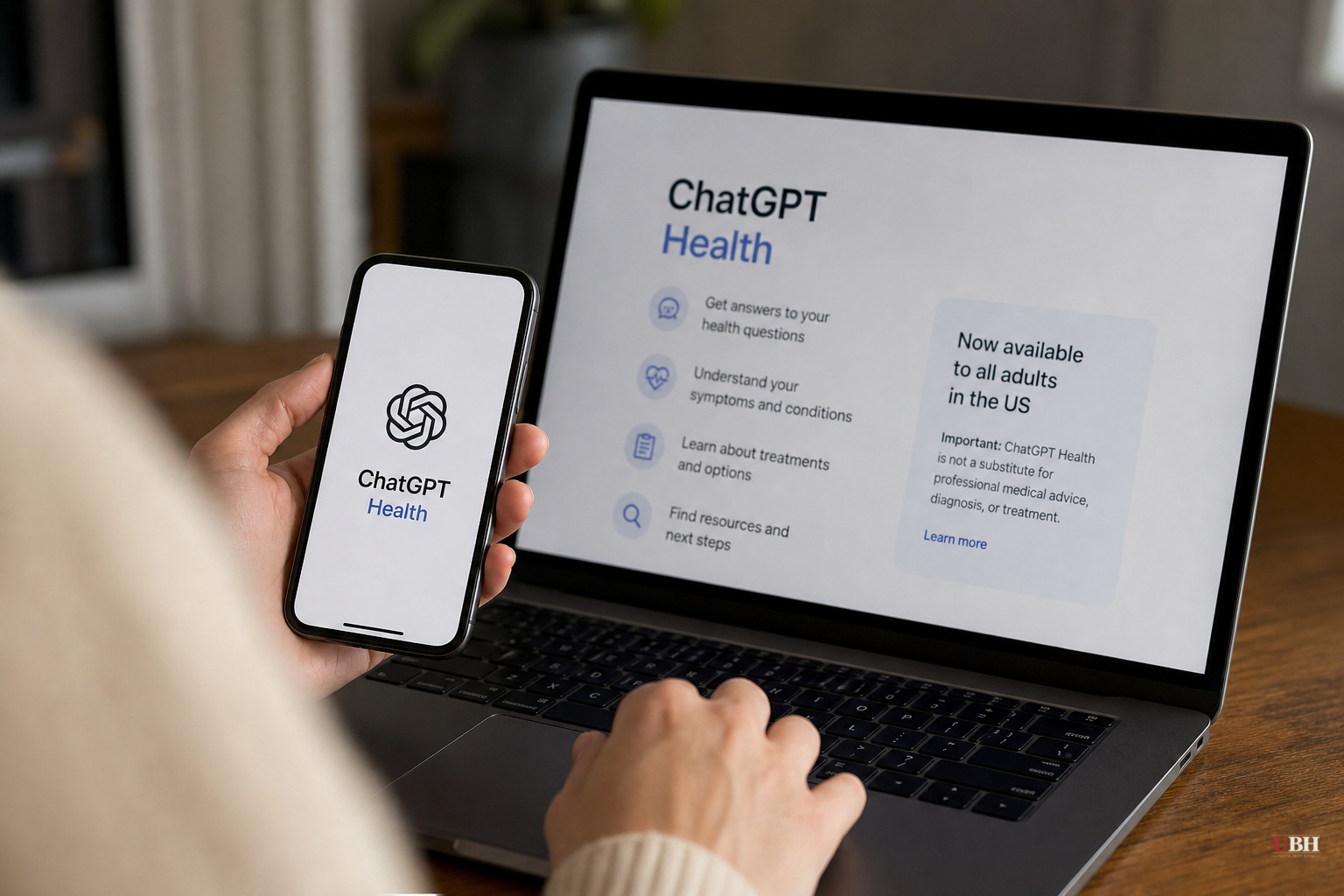
OpenAI is rolling out ChatGPT Health to all US users 18 and older on Thursday, letting anyone connect medical records and health-tracking data directly to the chatbot. The company says the feature now works inside the main chat window, not just a separate tab.
The timing is rough. On Wednesday, a Florida pastor filed a lawsuit against OpenAI alleging ChatGPT gave him "extremely dangerous medical recommendations" that led him to delay treatment for a pulmonary embolism, according to The Verge and Engadget. OpenAI rolled out a nationwide health expansion the very next day.
The claims OpenAI is making
During a briefing, Ashley Alexander, OpenAI's vice president of health product, told reporters the company's models "are now capable of reasoning at levels that are better than clinician level," according to The Verge. That's a massive claim. Better than doctors.
When pressed for actual evidence, OpenAI health lead Karan Singhal walked it back. He said he'd "temper" that claim, adding only that "individual studies" from Harvard and Stanford point in that direction. One study. Individual studies, not a body of peer-reviewed consensus, is a thin foundation for a claim that broad.
That gap between the marketing line and the actual research matters. A VP telling reporters your AI beats clinicians, and then the company's own health lead softening it moments later, is the kind of thing that should make anyone read OpenAI's other claims skeptically.
What's actually rolling out
ChatGPT Health first launched in testing back in January through a dedicated hub, according to TechCrunch. OpenAI says users were asking 230 million health-related questions per week at that point. That number is now 300 million, per TechCrunch, and the company found 70% of those questions happened outside the dedicated health hub, in normal chat. That's the justification for folding health data into the main chat experience instead of walling it off.
Users can connect data from Apple Health, Weight Watchers, MyFitnessPal, Function, and medical records from hospital systems like Epic, Oracle Health, One Medical and Kaiser Permanente, according to Engadget and TechCrunch. That includes doctor's notes, lab results, medications, and care team notes.
The feature runs on OpenAI's GPT-5.6 Sol model, which the company calls its strongest model yet for health, and a smaller model, GPT 5.6-Luna, which OpenAI says outperforms the prior GPT-5.5 on HealthBench, its own open-source benchmark for health-related AI evaluation, according to TechCrunch. That's a benchmark OpenAI built itself, not an independent third-party standard.
OpenAI says it does not use health data to train its models or target ads, and that connected medical information gets "additional encryption protection" beyond standard encryption at rest and in transit, according to The Verge. Users can review, disconnect, or limit what health data ChatGPT can access at any time, and the bot is supposed to ask permission before using health info to personalize a response.
The legal backdrop
Beyond the pastor's lawsuit, OpenAI is also in a separate legal fight with Apple, according to Engadget. That's an awkward wrinkle given Apple Health is one of the primary data sources OpenAI is asking users to plug in.
OpenAI's own terms state its services aren't intended for diagnosis or treatment of any health condition, and the company cited that clause in response to the pastor's lawsuit, according to TechCrunch. OpenAI also told The New York Times it's working on making health and medicine answers safer. The company frames ChatGPT Health as something that "supports, not replaces, professional care."
That's a reasonable disclaimer on paper. But a chatbot capable of pulling your lab results, medications, and doctor's notes into a conversation, then confidently answering questions about them, is going to get used for exactly the kind of direct medical advice OpenAI says it doesn't intend to give. Engadget's coverage flagged this tension directly. Nothing stops a user from asking for a diagnosis, and the bot can still answer with confidence even when it's wrong.
The bigger picture
OpenAI isn't alone here. TechCrunch notes Anthropic and Google are also pushing into health-related AI features, despite research showing chatbots aren't reliable for medical advice. This is an industry-wide race, not a solo OpenAI bet.
The concern from skeptics isn't that AI can never be useful for health questions. It's that a system trained to sound confident, deployed to 300 million weekly health queries, integrated with real medical records, and marketed with a "better than clinician" line that its own health lead had to walk back, is a recipe for people trusting an answer they shouldn't.
No regulatory action has been announced against OpenAI over ChatGPT Health. No court has ruled on the pastor's lawsuit; the allegations in that complaint are unproven claims, not established facts. The open question is whether the Food and Drug Administration or state medical boards will eventually treat consumer AI health tools differently than general-purpose chatbots, given how deeply they're now integrated with real clinical data.
Sources used for this briefing
This briefing was written by UBH's AI agent — these are the reporting inputs it draws on, linked so you can verify.


