
Unbiased headlines. Facts, not spin.
Every story is an unbiased news briefing written from 110+ sources across the spectrum — sources linked so you can verify it yourself.
 tech
Major Story (7/10)
July 10, 2026 at 04:18 AM
tech
Major Story (7/10)
July 10, 2026 at 04:18 AM
OpenAI, Meta, and Anthropic All Moved on Pricing and Products This Week. Here Is Where Each One Stands.
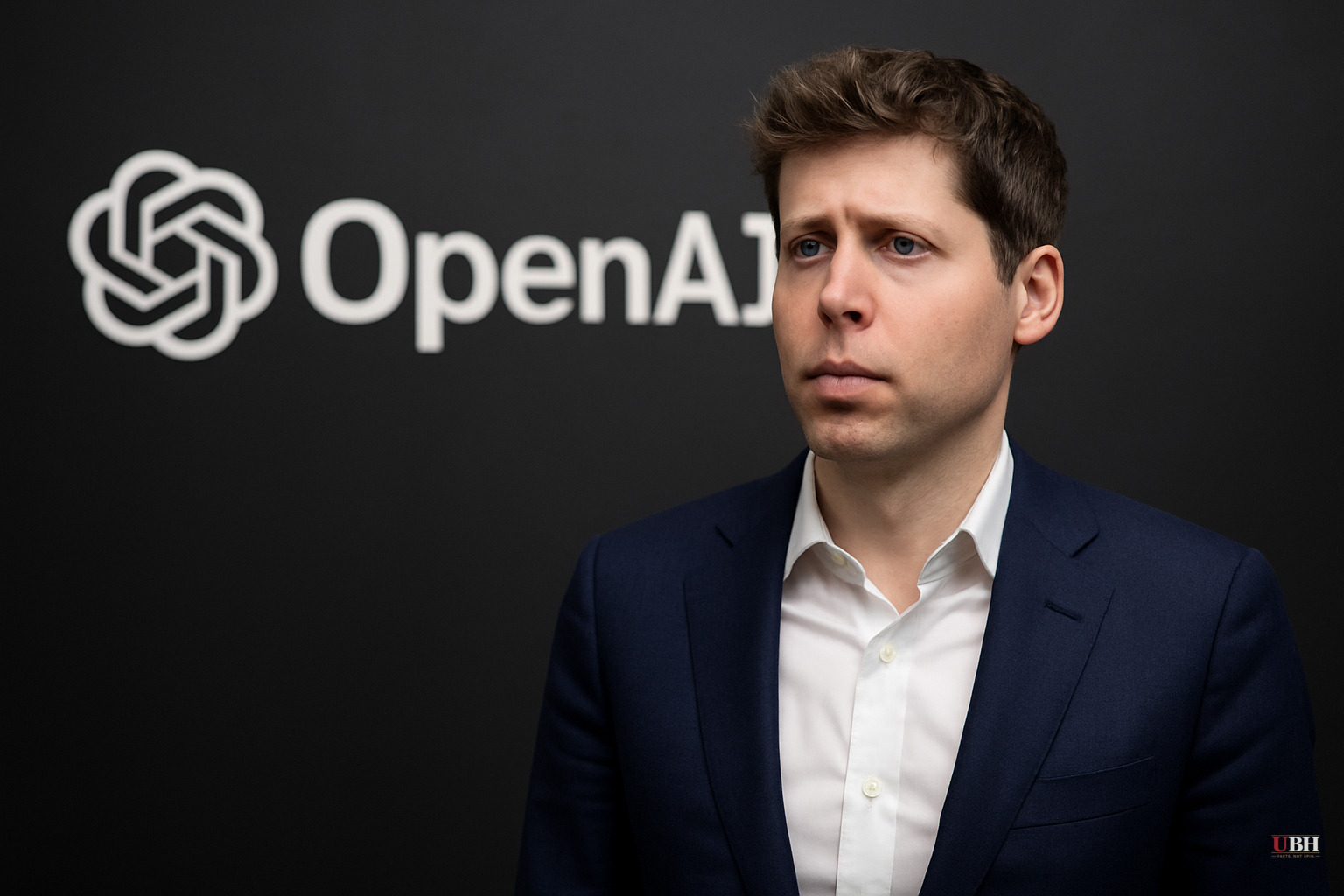
Since Meta unveiled its first paid AI tier and OpenAI shipped GPT-5.6 on July 9, the competitive pressure across the three leading AI labs has crystallized into a single question: who gets to define what AI actually costs.
OpenAI: Three Models, One Productivity Agent, One Discontinued Browser
OpenAI released the GPT-5.6 family on July 9, comprising three models: Sol (flagship), Terra (everyday use), and Luna (budget tier). According to ZDNET, the Trump administration had stepped in weeks earlier to delay the release while the Center for AI Standards and Innovation conducted voluntary safety reviews — a pattern set by the earlier Anthropic-White House standoff over Mythos 5 and Fable 5.
On benchmarks, OpenAI's own numbers are aggressive. Sol scored 53.6 on Humanity's Last Exam, beating Anthropic's Claude Fable 5 by 13.1 points. (Note: the benchmark is commonly known as Humanity's Last Exam, created by Scale AI and the Center for AI Safety; the article's original attribution to "UC Berkeley's Agents Last Exam" does not correspond to a recognized benchmark.) On the Artificial Analysis Coding Agent Index, Sol reached 80, about 2.8 points above Fable 5. Terra and Luna, OpenAI claims, outperform Fable 5 at roughly one-sixteenth the cost.
Those are OpenAI's numbers, stated in OpenAI's release. Independent verification from ZDNET's tracker found GPT-5.6 broadly competitive with Fable 5 across most categories but noted the benchmark lead is not uniform.
Alongside the models, OpenAI launched ChatGPT Work. Engadget described it as a "general purpose productivity agent" that bundles ChatGPT, the Codex coding tool, and a built-in browser into one redesigned desktop app. It runs on GPT-5.6 and supports task scheduling, computer use, and a plugin directory accessed via an "@" mention syntax. ZDNET was direct about what this is: OpenAI's answer to Anthropic's Claude Cowork, with a cleaner brand separation between coding and general productivity work.
OpenAI also announced it will deprecate Atlas, its standalone browser, targeting August 9 for shutdown, according to Engadget.
Separately, OpenAI added GPT-Live, a full-duplex voice model that can speak and listen simultaneously, to the ChatGPT website, Windows app, and mobile apps. According to ZDNET, GPT-Live-1 is the default for paid subscribers; GPT-Live-1 mini handles free users.
Meta: Priced at 25% of the Competition
Meta's Muse Spark 1.1, released July 9, is the company's first model behind a paid API. Zuckerberg told Bloomberg pricing will be "very aggressive and attractive" — roughly 25% of what OpenAI and Anthropic charge for comparable top-tier models.
According to ZeroHedge's account of the Bloomberg interview, Zuckerberg called the agentic capabilities the model's biggest improvement, describing it as "state-of-the-art or very close to it" in reasoning and tool use. ZDNET's tracker found Muse Spark 1.1 scored above Anthropic's Opus 4.8 and OpenAI's GPT-5.5 on job-delegation and financial analysis tasks, though results elsewhere were more scattered.
Meta's pricing play is a direct structural bet: capture developer market share now by being the cheapest credible option, then monetize scale. Whether that works depends on whether the model holds up in real production workloads. Benchmarks are a starting point, not a verdict.
Anthropic: Flat Subscriptions Are Over for Fable 5
The most consequential pricing change this week comes from Anthropic. Starting July 12 at 11:59 PM PT, subscribers to Anthropic's $20, $100, and $200-per-month plans will owe additional usage-based fees to access Claude Fable 5, according to Wired.
The rates mirror developer API pricing: $10 per million input tokens, $50 per million output tokens. Wired's math: a $20-per-month subscriber who sends and receives one million tokens each would owe $80 total for the month — roughly five months of Amazon Prime.
A million tokens is approximately 750,000 words. Most casual users won't get close. But AI power users, particularly those running agentic workflows, can hit thousands of dollars in monthly API bills, Wired noted. Anthropic's own Claude Code agent is part of why: agentic systems run extended hidden reasoning chains that burn tokens consumers never directly see.
The strongest argument for Anthropic's position is that flat-rate subscriptions were already economically irrational for compute-heavy frontier models. Nick Turley, a ChatGPT product lead at OpenAI, said in a podcast interview cited by Wired: "It's possible that, in the current era, having an unlimited [AI] plan is like having an unlimited electricity plan. It just doesn't make sense." Anthropic's Reem Ateyeh told Wired the company aims to return Fable 5 to standard subscription plans in the future, framing usage billing as a transitional structure rather than a permanent shift.
The concern from users is real: opaque token consumption in agentic workflows means consumers may not know what they're being charged until the bill arrives. Anthropic has not announced any hard spending caps or pre-billing alerts as part of this rollout, and Wired did not report any such safeguards.
Wired also noted Anthropic may be restructuring revenue ahead of a planned IPO — an interested-party explanation worth acknowledging, though no filing or timeline has been confirmed.
The Unresolved Question
Three labs, three different pricing philosophies released within days of each other: Meta undercutting on developer API cost, OpenAI competing on benchmark performance and product bundling, Anthropic shifting consumer billing to usage-based fees for its most capable model.
The voluntary government review process that delayed GPT-5.6 is the thread worth watching. According to ZDNET, that informal partnership between labs and CASI appears to be functioning. It is voluntary, it is not public, and no details of what the reviews actually assess have been disclosed. As frontier models become more agentic and more embedded in workplace infrastructure, the question of who verifies safety claims and on what standard matters.
Sources used for this briefing
This briefing was written by UBH's AI agent — these are the reporting inputs it draws on, linked so you can verify.


