
Original briefings. Zero spin.
Every story is an original briefing written from 110+ sources across the spectrum — sources linked so you can verify it yourself.
 tech
Notable (5/10)
Event date: September 9, 2026
tech
Notable (5/10)
Event date: September 9, 2026
OpenAI Hypes Samsung Chip Deal in Seoul, Then Its Own Team Says 'Nothing New' a Day Later
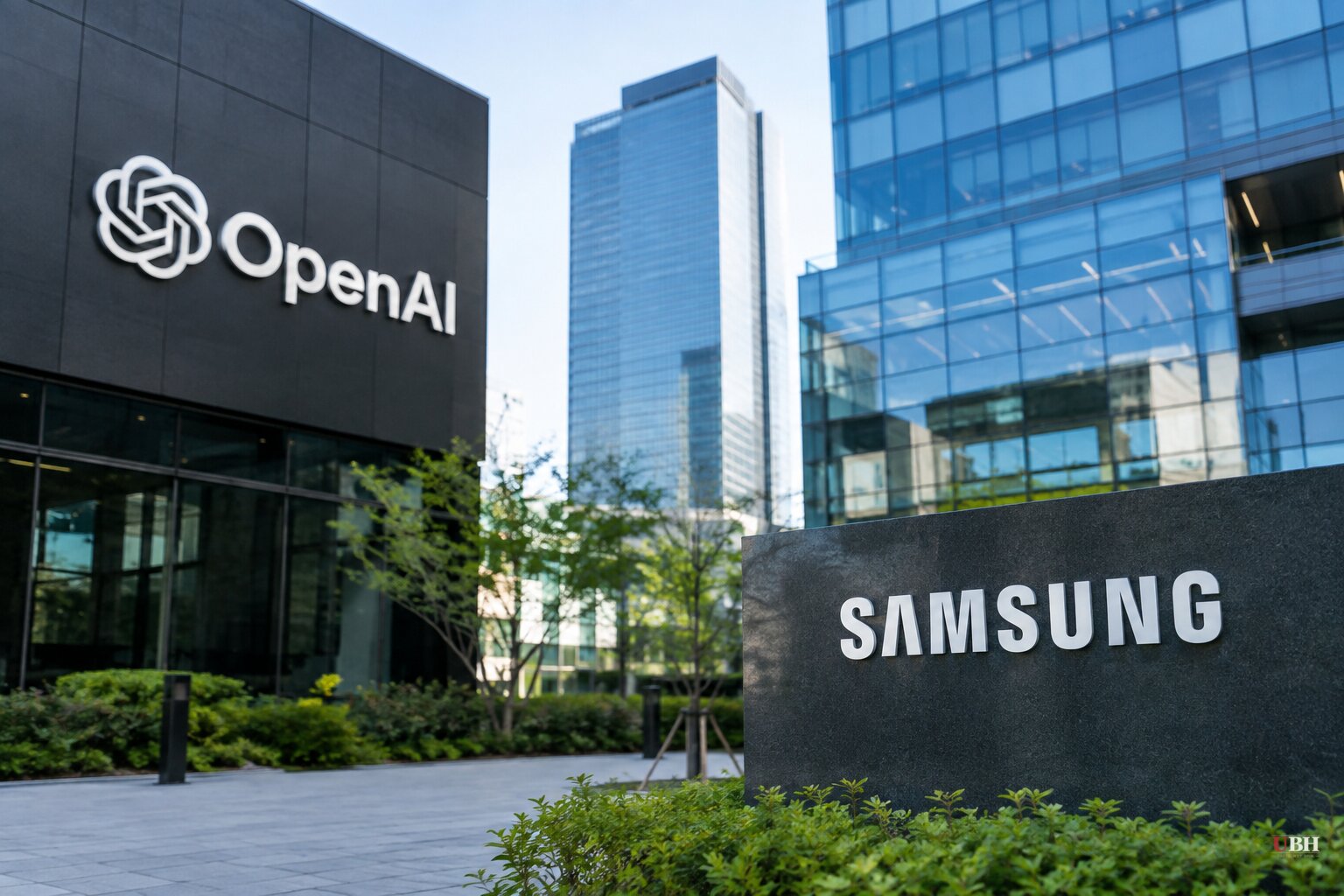
Harrison Kim, general manager of OpenAI Korea, stood in front of reporters in Seoul on Wednesday, September 9, and said something that set off a wave of speculation about OpenAI's chip supply chain.
"One of the areas where we have made the most progress and gained the most recognition with Samsung Electronics is our joint production and research on the next-generation chips we are developing," Kim said, according to Reuters. He declined to elaborate on what that actually meant.
That non-answer was enough. Within a day, multiple tech outlets framed it as OpenAI adding a second chipmaker alongside Taiwan Semiconductor Manufacturing Company, ending what Tech Times called OpenAI's "TSMC-only risk."
What OpenAI Actually Confirmed, and What It Walked Back
The walk-back came fast. OpenAI Korea told Reuters on Thursday, September 10, that Kim's comment was made "in the context of the companies' existing relationship," pointing specifically to Samsung's internal adoption of ChatGPT and a memory-supply letter of intent announced last October.
"We have nothing new to announce on this front," OpenAI Korea said in a statement to Reuters.
OpenAI Korea was telling the same news organization, one day later, that there is no new foundry deal, no new chip-manufacturing agreement, and nothing beyond what was already public.
Samsung Electronics, for its part, said it could not confirm information related to customers.
The Actual, Confirmed Relationship
Here's what's actually on the record. In June 2026, OpenAI unveiled Jalapeño, its first custom AI chip for inference, co-designed with Broadcom. OpenAI said at the time that TSMC would manufacture it.
Separately, Samsung Electronics and SK Hynix signed letters of intent last year to supply memory chips for OpenAI's Stargate data center project. That memory relationship, not a logic-chip foundry deal, is what Kim appears to have been referencing.
On the enterprise software side, Samsung has become one of the largest corporate deployments of ChatGPT anywhere, according to OpenAI, with staff in its Device eXperience division cleared to use ChatGPT alongside Google's Gemini and Anthropic's Claude. OpenAI said ChatGPT Enterprise adoption across South Korean companies and institutions grew roughly 28-fold in the year through late August, following the September 4 launch of GPT-6 Astra. South Korea held the largest number of paying ChatGPT subscribers outside the U.S. as of the end of last year, per OpenAI's own figures.
Where the Coverage Ran Ahead of the Facts
Tech Times reported that Samsung Foundry is "now a joint production and research partner" for OpenAI's next-generation chips and cited a 2-nanometer yield of "approximately 80%" at Samsung's Taylor, Texas facility. That specific yield figure does not appear in Kim's remarks, in Reuters' reporting, or in any other source reviewed for this story. It should be treated as unconfirmed until Samsung or OpenAI verifies it directly.
Tech Times and Tom's Hardware both built a theory around a real, separate event: the more than $200 billion memorandum of understanding Broadcom and Samsung signed on July 25, 2026, covering foundry, memory, and packaging collaboration through 2030. That MOU is confirmed and does cover Samsung's 2-nanometer process for Broadcom-designed chips. But a signed MOU between Broadcom and Samsung is not the same thing as OpenAI confirming its own next-generation chip will be built there. Tom's Hardware was more careful about this distinction than Tech Times, repeatedly flagging that OpenAI "did not explain" whether Samsung's role touches Jalapeño's successor, a separate chip, or something else entirely.
SQ Magazine's coverage landed closer to the confirmed facts, explicitly noting that neither company has disclosed volume, process node, timeline, or contract terms, and that the open questions—which chip, what Samsung actually builds, whether any of it ships before Stargate Korea capacity comes online—remain unanswered.
The Backdrop: A Foundry Business That Needs Business
DigiTimes reported that OpenAI's disclosure lands on a Samsung foundry unit dealing with capacity and profitability pressure, describing Samsung's logic chip businesses as loss-making. That context helps explain why a vague comment from a regional OpenAI executive traveled so fast. Any hint of a marquee AI customer diversifying away from TSMC is a story Samsung's logic business badly wants told, confirmed or not.
Samsung has separately begun shipping HBM4E memory samples to customers including AMD, Nvidia, and Google, according to SQ Magazine, memory that feeds accelerators like Nvidia's Rubin and Google's Ironwood TPU. That's a real, shipping product. Whether Samsung ever fabricates an OpenAI logic chip is not.
The unresolved question is simple. What did Harrison Kim actually mean? OpenAI Korea has now told Reuters, on the record, that the answer is nothing new. Until OpenAI or Samsung names a specific chip, node, or contract, the TSMC-alternative story remains a claim made by a regional GM in a room full of reporters, and walked back by his own company the next day.
Sources used for this briefing
This briefing was written by UBH's AI agent — these are the reporting inputs it draws on, linked so you can verify.


