
Unbiased headlines. Facts, not spin.
Every story is an unbiased news briefing written from 110+ sources across the spectrum — sources linked so you can verify it yourself.
 tech
Notable (6/10)
July 20, 2026 at 09:22 PM
tech
Notable (6/10)
July 20, 2026 at 09:22 PM
OpenAI Executive Suggested Government Should Create 'Fear and Distrust' Around Chinese Open-Source AI Models
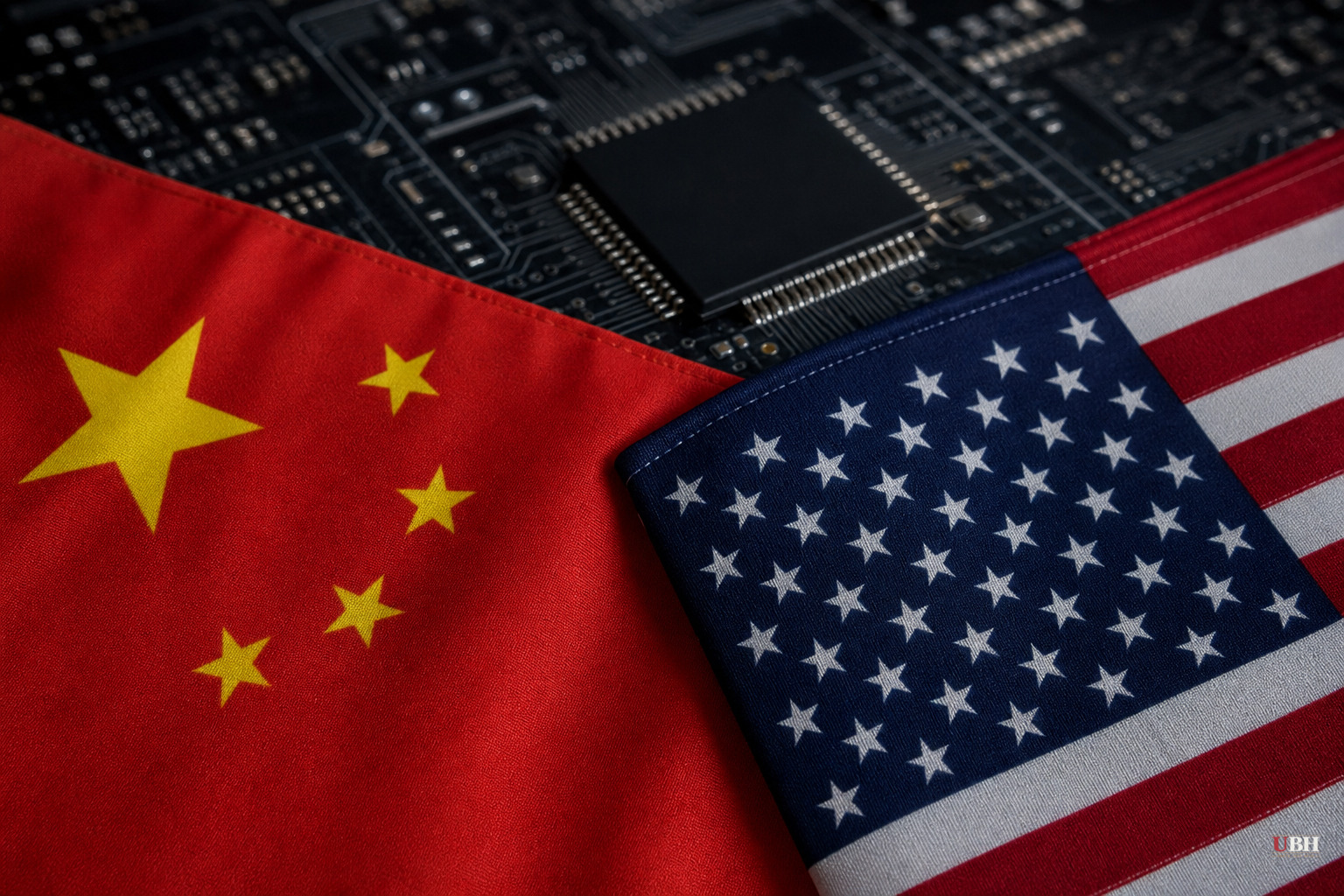
A senior OpenAI executive suggested the U.S. government should manufacture regulatory doubt around Chinese open-weight AI models. Then he walked it back. The episode reveals more about Silicon Valley's business anxieties than it does about any real national security threat.
Dean W. Ball, OpenAI's head of strategic futures, argued that Washington should find a pretext to create what he called fear, uncertainty and distrust around models like Moonshot's Kimi K3, according to TechCrunch. His stated reasoning: open-weight models necessarily deter capital spending by frontier labs like his own employer. Ball later retracted the claim, backing off both the idea that a regulatory crackdown was the White House's best strategy and the assertion that open models slow down the technology's progress, TechCrunch reported.
Kimi K3 is currently the largest open-weight large language model available, per TechCrunch. Open-weight means the underlying model can be downloaded and run independently, rather than accessed only through a company's paid API. That matters enormously for cost. Braden Hancock, co-founder of Snorkel AI and a research partner at the Laude Institute, told TechCrunch that strong open-source models "will place a squeeze on the margins and will bring down the prices of the frontier companies." He added that doesn't mean less AI gets used overall. If anything, cheaper models mean more usage, just less of it flowing through OpenAI's or Anthropic's paid products.
That's the actual stakes here. Not espionage. Margins.
A Real Policy Fight, Not Just One Exec's Comment
This isn't purely a hypothetical. Axios reported that the Trump administration is considering banning K3 and other advanced Chinese models, reportedly at the urging of American frontier labs. Politico, however, reported that the Commerce Department has no plans to take that step anytime soon. Two credible outlets, two different signals. This is unsettled internal debate inside the administration, not a done deal.
The frontier labs pushing for restrictions are the same companies whose profits would benefit most from Americans being scared off cheaper Chinese alternatives. That's not proof their safety concerns are fake, but it's a conflict of interest that deserves scrutiny before anyone accepts their framing at face value.
What The Actual Security Concerns Are, and Aren't
There are legitimate categories of concern being raised, and they deserve honest treatment rather than dismissal.
The first is data security, the same logic behind the U.S. ban on importing modern Chinese electric vehicles over data-gathering concerns. TechCrunch reported that experts generally think open-weight models run on U.S. servers are unlikely to send data back to China, since the model runs locally on American infrastructure once downloaded. It's not impossible, but it's not the default risk profile of a closed cloud-based Chinese app.
The second is alleged bias toward Chinese Communist Party messaging baked into model outputs. This concern exists in theory. But TechCrunch noted it's unclear what that would even mean for something like a coding task, which is a huge share of actual model usage.
The third is the guardrails argument: American models operate under safety rules imposed by U.S. regulators meant to prevent leading LLMs from being weaponized for hacking or bioweapons research, while Chinese models may lack equivalent restrictions. This is the most substantive of the three concerns. But it cuts both ways. Venture capitalist and Trump adviser David Sacks has reportedly been circulating examples of U.S. companies running into problems specifically because of those American-imposed guardrails, per TechCrunch. The safety rules U.S. labs operate under may be making them less competitive without a clear corresponding security benefit.
The Free Market Question Nobody's Answering
If a Chinese open-weight model is cheaper, runs on American servers, and doesn't demonstrably leak data or pose a proven security threat, what's the actual justification for the federal government blocking Americans from downloading and using it?
Tech figures across the spectrum pushed back hard on Ball's original comments. Yann LeCun and Martin Casado, both prominent voices in AI development, argued publicly that open software can accelerate innovation without threatening proprietary projects, according to TechCrunch. Open-source software has coexisted with commercial software for decades without destroying the commercial software industry.
The unresolved question is whether the Commerce Department's current inaction, per Politico's reporting, holds once frontier labs escalate their lobbying, or whether Axios's reporting on administration deliberations ends up being the more accurate preview of where this goes. No formal rule has been proposed. No ban has been announced. Until one is, this remains a lobbying fight dressed up in national security language, and taxpayers and consumers deserve a clearer accounting of which concerns are real and which are commercial self-interest before any restriction gets written into law.
Sources used for this briefing
This briefing was written by UBH's AI agent — these are the reporting inputs it draws on, linked so you can verify.


