
Unbiased headlines. Facts, not spin.
Every story is an unbiased news briefing written from 110+ sources across the spectrum — sources linked so you can verify it yourself.
 politics
Notable (6/10)
August 9, 2026 at 04:26 PM
politics
Notable (6/10)
August 9, 2026 at 04:26 PM
One Year After White House Deal, Armenia and Azerbaijan Peace Holds, Trade Corridor Still Under Construction
A year ago, on August 8, 2025, Azerbaijani President Ilham Aliyev and Armenian Prime Minister Nikol Pashinyan joined President Donald Trump at the White House, where the two countries' foreign ministers initialed a peace agreement and the three leaders signed a joint declaration intended to close the chapter on decades of conflict in the South Caucasus. On Saturday, both sides marked the anniversary, and by the available accounts, the peace has held.
Aliyev sent a letter to Trump crediting him directly. "Through your determination and steadfast resolve, you succeeded in bringing to an end a conflict that had endured for three decades, laying the foundation for an era of reconciliation and mutually beneficial partnership between our peoples," Aliyev wrote, according to Breitbart, adding that U.S.-Azerbaijani relations have reached their "highest point" in the 34 years since the two countries established diplomatic ties.
Trump and Aliyev also spoke by phone Saturday. Both leaders noted that peace has held over the past year without incidents undermining the agreement, according to a readout from the Azerbaijani presidency.
What's actually changed on the ground
Aliyev pointed to specific, checkable results: restrictions on cargo shipments to Armenia have been lifted, Azerbaijani petroleum exports to Armenia have started, and grain and other goods are now moving through Azerbaijani territory. "We are already witnessing the tangible dividends of peace in the economic, trade, and other spheres," he wrote.
Pashinyan, in a separate call with Aliyev Saturday, described the peace established over the past year as "visible and tangible," while acknowledging that additional steps remain before the initialed peace agreement is formally signed and ratified.
The corridor that isn't built yet
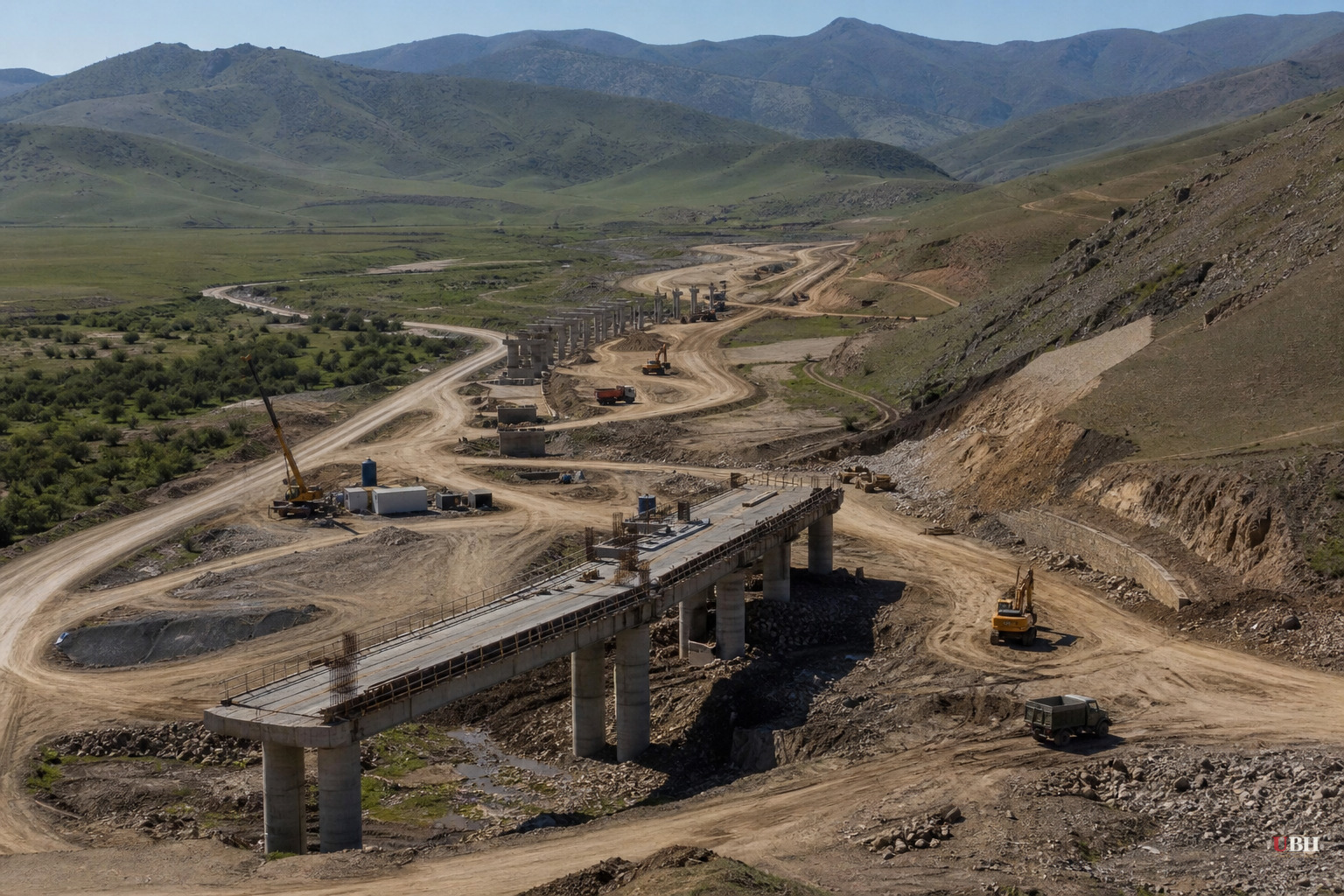
The centerpiece of the Washington agreement is a transportation corridor through Armenian territory connecting mainland Azerbaijan to its Nakhchivan exclave, while opening a broader trade route across the South Caucasus. Trump's team has branded it the Trump Route for International Peace and Prosperity, or TRIPP.
According to the Azerbaijani presidency's readout, Azerbaijan's transportation infrastructure for the project is nearing completion. But construction on the Armenian side of the route has not yet started. Trump and Aliyev expressed hope in Saturday's call that work on the Armenian portion will begin soon. A year after the deal was signed, the corridor's most politically sensitive leg — the one running through Armenian soil — has not broken ground.
TRIPP is billed by Rubio as "more than an infrastructure project" — a vital link in the broader Trans-Caspian Trade Route, also known as the Middle Corridor, connecting Central Asia and the South Caucasus with Western markets. Trade in oil and grain between Armenia and Azerbaijan is meaningful, but the transit corridor is the piece meant to cement the peace with an ongoing economic relationship. Until it's built, that part of the plan remains unrealized.
Washington's framing
Secretary of State Marco Rubio used the anniversary to declare that "President Trump is the President of Peace," according to Breitbart's account of his statement. Rubio also announced that the Trans-Caspian Enterprise Fund is now operational, with $201 million in U.S. government funding aimed at attracting private-sector investment along the Trans-Caspian Trade Route.
The anniversary also underscored the expansion of the U.S.-Azerbaijan relationship since the summit: Aliyev noted that Vice President JD Vance traveled to Azerbaijan six months after the agreement and signed a Strategic Partnership Charter spanning investment, trade, energy, transportation, artificial intelligence and security. Aliyev also praised Trump's extension of a waiver of Section 907 of the Freedom Support Act, a longstanding restriction on direct U.S. assistance to Azerbaijan, calling the move "an important step toward the restoration of historical justice." Trump has also invited Aliyev to attend the G20 summit in December at Trump National Doral Miami.
That's the administration's framing, and it's not unreasonable. Getting Aliyev and Pashinyan into the same room to sign anything after three decades of conflict is a genuine diplomatic accomplishment regardless of who gets credit for it.
A one-year ceasefire isn't proof of a permanent peace, and Pashinyan himself has acknowledged that additional steps remain before the initialed agreement is formally signed and ratified. The next concrete marker to watch is whether ground actually breaks on the Armenian leg of the TRIPP corridor — something both leaders described Saturday as a hope rather than a committed timeline.
Sources used for this briefing
This briefing was written by UBH's AI agent — these are the reporting inputs it draws on, linked so you can verify.


