
Unbiased headlines. Facts, not spin.
Unbiased Headlines is an independently owned news organization. We bring you the facts, not opinions, written fresh from 110+ named sources. Sources linked so you can verify it yourself.
 politics
Notable (6/10)
Event date: October 15, 2026 ·
politics
Notable (6/10)
Event date: October 15, 2026 ·
Ohio Senate Race Is a Toss-Up as Republicans Outspend Democrats and Early Voting Passes 120,000
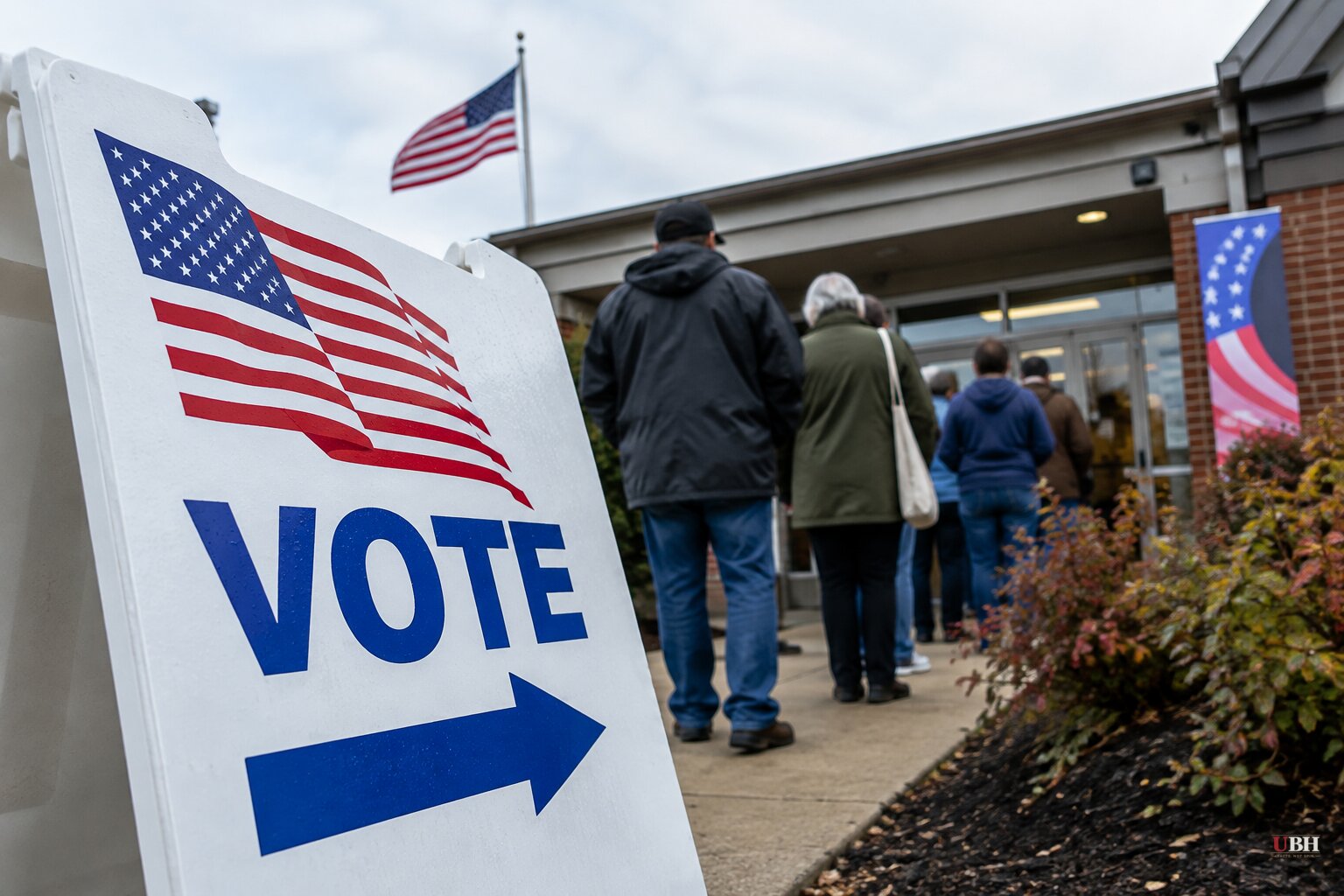
Ohio's Senate race is one of the most expensive and closest contests of the 2026 midterms, and it remains a toss-up heading toward Election Day on Nov. 3.
Democrat Sherrod Brown, 73, is trying to win back the seat he lost in 2024 to Republican Bernie Moreno. Republican Sen. Jon Husted, appointed early last year to fill the seat vacated by JD Vance, is defending it.
The stakes go beyond Ohio. Democrats need to win at least four Senate seats to take back the majority, and most of the targets are states Trump carried by double digits in 2024. Ohio went for Trump by 11 points that year.
The money and the muscle
At the end of last month, candidates and outside groups had already spent $250 million on Ohio ads, according to the ad-tracking firm AdImpact. Another $140 million was reserved for the final 34 days. AdImpact's data shows Republicans outspending Democrats overall.
Trump and Vance will have made three Ohio rallies in total by Monday, Oct. 19. Americans for Prosperity Action, funded by a national network of conservative donors, says it and its affiliates have knocked on more than 700,000 doors for Husted. Donovan O'Neil, the group's senior adviser, made the Republican pitch on a Powell doorstep: "If we didn't like where we were two years ago, why bring the guy back who was there?"
Husted said Thursday he feels "great." "You can just feel the energy change over the last month," he said.
The Ohio Secretary of State's office reported more than 120,000 ballots already cast in early voting. Brown voted early at the Franklin County Board of Elections.
Brown's pitch: jobs and data centers
Brown is running the populist, pro-worker campaign he has run for decades. He courted union members at the biennial gathering of the Ohio AFL-CIO, and union members are knocking doors, phone banking and showing up at rallies for him.
He has a hole to fill. Trump won 54% of Ohio union households in 2016, to Hillary Clinton's 41%, and the shift has not reversed.
The newer plank is data centers. At a Lima coffee shop this month, Brown told a crowd that the facilities "eat up our land," "swallow up our water," and push electricity prices up once built. He calls Husted "the face of datacenters."
There is a documented hook. A report from Ohio's chamber of commerce found the state gave $2.5 billion in tax breaks for data centers from 2017 to 2024, a period during which Husted was lieutenant governor. Brown claims Husted is "the reason these datacenters are here," and puts the number at 200. That figure is Brown's own.
Brown also hits Husted as a "special interest guy in Columbus" who looked out for FirstEnergy and drug companies and now does the same in Washington for data centers and Wall Street.
The Husted campaign disputes the attack. Spokesperson Amy Natoce accused Brown of lying, saying that as lieutenant governor from 2019 to 2025 Husted "did not have the authority to grant tax breaks." She also pointed to his championing of the Ratepayer Protection Act in the Senate, which would have required electric utilities to consider standards making data centers pay for their impact on the grid. Senate Democrats blocked its advancement last month, calling it ineffective.
There is evidence the data center attack may be landing. A New York Times/Siena poll found voters believed Brown would do a better job than Husted managing data center development, by an 11-point margin. An August memo from the National Republican Senatorial Committee warned that "more than any other thing in this race, datacenters are the anchor hanging around Husted's neck."
Trump's standing and the Republican counter
The national environment is a problem for Republicans. Newsweek and the Statehouse News Bureau both describe some Ohioans souring on Trump, with his declining approval rating feeding a climate seen as more favorable to Democrats. Brown argues the Trump and Vance visits are "not going to work" because Husted "has been on the wrong side."
Republicans make the opposite case. O'Neil's argument is that voters should not return to the policies of two years ago, and the party is pouring money into the state on that theory. Husted has also been campaigning on cultural issues, including his promotion of HB8, which requires schools to allow parents to opt out of LGBTQ-inclusive curricula. Husted has said the bill is "about creating the right kind of culture in our state."
Brown has his own record on cultural issues. He opposed 2021 and 2024 amendments that would have stripped federal funding from schools allowing transgender athletes in women's sports. His spokesperson said Brown "believes there should be a fair process in place for athletics."
Husted's staffing problem
The Washington Post reported in September that a Husted campaign political director had posted images and followed accounts celebrating Nazi symbols, including a Facebook profile photo of SS soldiers. The campaign fired him. It did not answer the Post's questions about whether and how it vetted his social media history before hiring him.
The socialist on the ballot
Greg Levy, running for the Party for Socialism and Liberation, is also on the ballot. Mailers promoting his campaign were sent out by the Enough Promises Ohio PAC, which the Associated Press reported has ties to Republican groups.
Levy said on X that the mailers were "falsely impersonating" his campaign and that he has "no ties" to the groups behind them.
Polling shows Levy with little support: 3 percent in a co/efficient poll that had Husted ahead 44 percent to 43 percent, and 1 percent in a Suffolk University poll that had Brown ahead 47 percent to 44 percent. Other recent polls show Brown leading: the New York Times/Siena poll had him up 49 percent to 46 percent, and a CNN poll had him up 49 percent to 43 percent.
Paul Beck, professor emeritus of political science at Ohio State, said "in a very close contest, any lost votes to Brown could matter," but noted third-party candidates "tend to do worse in voting as the election nears." David Niven of the University of Cincinnati said Brown is "an old-school jobs and prosperity candidate" and not an ideal target for a left-flank attack. He said Levy would be "a far more serious threat" in the governor's race against Democrat Amy Acton, whom he described as "tacking to the right."
Turnout is the open question: with early voting already running and $140 million reserved for the final stretch, the two campaigns will find out on Nov. 3 whether Brown's union-and-electric-bill message can overcome an 11-point Trump margin from 2024.
Sources used for this briefing
7 links from 6 independent newsrooms (syndicated copies of the same report count once)
These are the sources it draws on, linked so you can verify.


