
Unbiased headlines. Facts, not spin.
Unbiased Headlines is an independently owned news organization. We bring you the facts, not opinions, written fresh from 110+ named sources. Sources linked so you can verify it yourself.
 politics
Notable (6/10)
Event date: October 16, 2026 ·
politics
Notable (6/10)
Event date: October 16, 2026 ·
GOP Governor Candidates in Wisconsin, Pennsylvania and Kansas Soften Abortion Stances
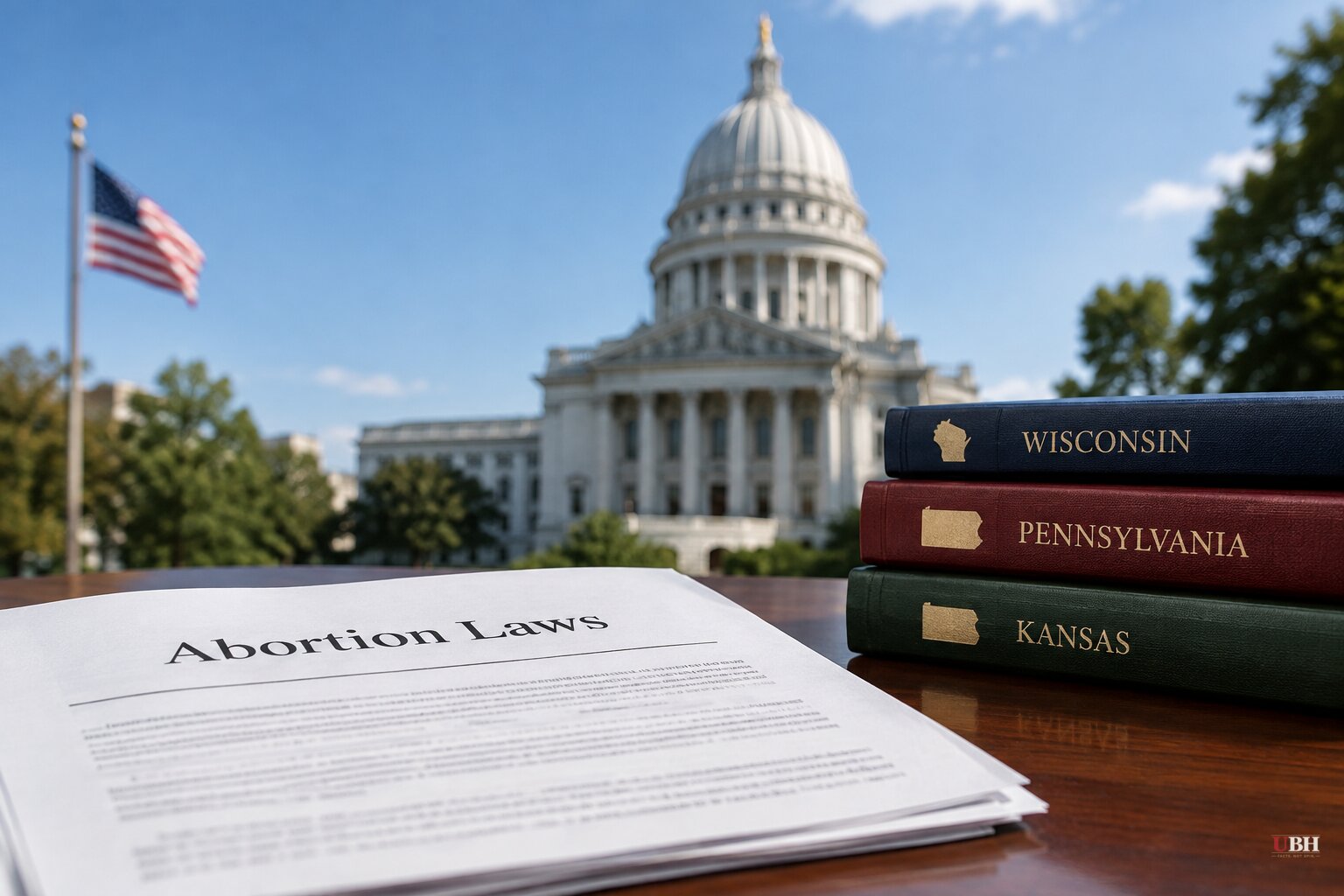
Three Republican nominees for governor have changed how they talk about abortion, and the record shows it.
Wisconsin: U.S. Rep. Tom Tiffany now calls his state's 20-week abortion limit "settled law." Three years ago, he co-sponsored a bill that would have banned abortion six weeks into pregnancy.
Pennsylvania: Stacy Garrity says she would "respect" the state's current law, which allows abortion until 24 weeks. Four years ago, after Roe v. Wade fell, she urged abortion opponents "to engage and make a difference" in state laws.
Kansas: Abortion is legal until 22 weeks. Ty Masterson has demurred when asked whether, as governor, he would back a statewide referendum to remove the abortion protections from the Kansas constitution. He has spoken at protests against abortion rights and won the backing of state and national anti-abortion groups.
The campaigns of Tiffany, Garrity and Masterson did not reply to requests for comment on the shift.
What the candidates have actually said
The public statements are narrow. Tiffany called the current limit settled. Garrity said she would respect current law. Masterson declined to answer a question about a referendum.
None of the three has announced that he or she would sign or veto a specific bill. A candidate who says he will respect existing law has taken a position. A candidate who dodges a question has not.
The contrast is with the earlier record. Tiffany put his name on a six-week ban. Masterson's anti-abortion endorsements came from groups that wanted more restriction, not less.
How pollsters read it
Ashley Kirzinger, a pollster at KFF, a nonpartisan health policy research and polling organization, said the move "might be their strategy there, to try to demotivate Democratic turnout in the state to take abortion off the table as a voting issue." She said that is especially true in tighter races such as Wisconsin and Kansas.
That is one pollster's interpretation. The candidates have not explained their own reasoning.
Molly Murphy, president of the Democratic-aligned Impact Research, said Republicans in general elections have long avoided campaigning on bans. "It would get discussed in donor meeting hot mics, endorsement questionnaires, etc, but candidates wouldn't run on the fact that they'd ban abortion," she wrote in an email.
Celinda Lake, a longtime Democratic pollster, disputes the "settled law" label. Voters, she said, don't see it that way, and the share opposing abortion bans has grown since Roe fell. "They feel like, 'Wait a minute, it can be taken away again,'" Lake said.
The polling backdrop
About 60 percent of Americans say abortion should be legal in most or all cases, including about two-thirds of independents, according to a poll from The 19th and YouGov.
The same reporting notes that voters are far more likely to rank cost of living as a priority. Reproductive rights have receded from the national spotlight, even as the political risk of pushing new restrictions remains.
A candidate can be sincere about pro-life convictions and still decide that a state's existing limit is where the law will stay for a governor's term. Voters in these states have also not given governors a mandate to rewrite those limits. Whether that is conviction, calculation or both, the candidates have not said.
Democrats press the issue
Democrats and their allies are trying to put abortion back at the center of some races. In Wisconsin, Democratic nominee David Crowley has said that if elected he would work with the legislature to enshrine abortion rights in the state constitution. How expansive that protection would be is unclear.
That sets up a plain choice for Wisconsin voters. One side proposes a constitutional guarantee. The other calls the current 20-week limit settled.
What's unresolved
A governor does not write abortion law alone. Legislatures pass bills, and in Kansas the constitutional question would go to voters. The candidates' answers on vetoes, signatures and referendums are the details that would show how far the new posture goes.
Tiffany, Garrity and Masterson have not answered those questions. Masterson in particular has not said whether he would support putting the Kansas constitution's abortion protections before voters.
Sources used for this briefing
7 links from 5 independent newsrooms (syndicated copies of the same report count once)
These are the sources it draws on, linked so you can verify.


