
Unbiased headlines. Facts, not spin.
Unbiased Headlines is an independently owned news organization. We bring you the facts, not opinions, written fresh from 110+ named sources. Sources linked so you can verify it yourself.
 politics
Major Story (8/10)
politics
Major Story (8/10)
France Protest Arrests Top 1,200 as Limoges Town Hall Is Largely Lost to Fire, Prime Minister Says 150 Police Hurt
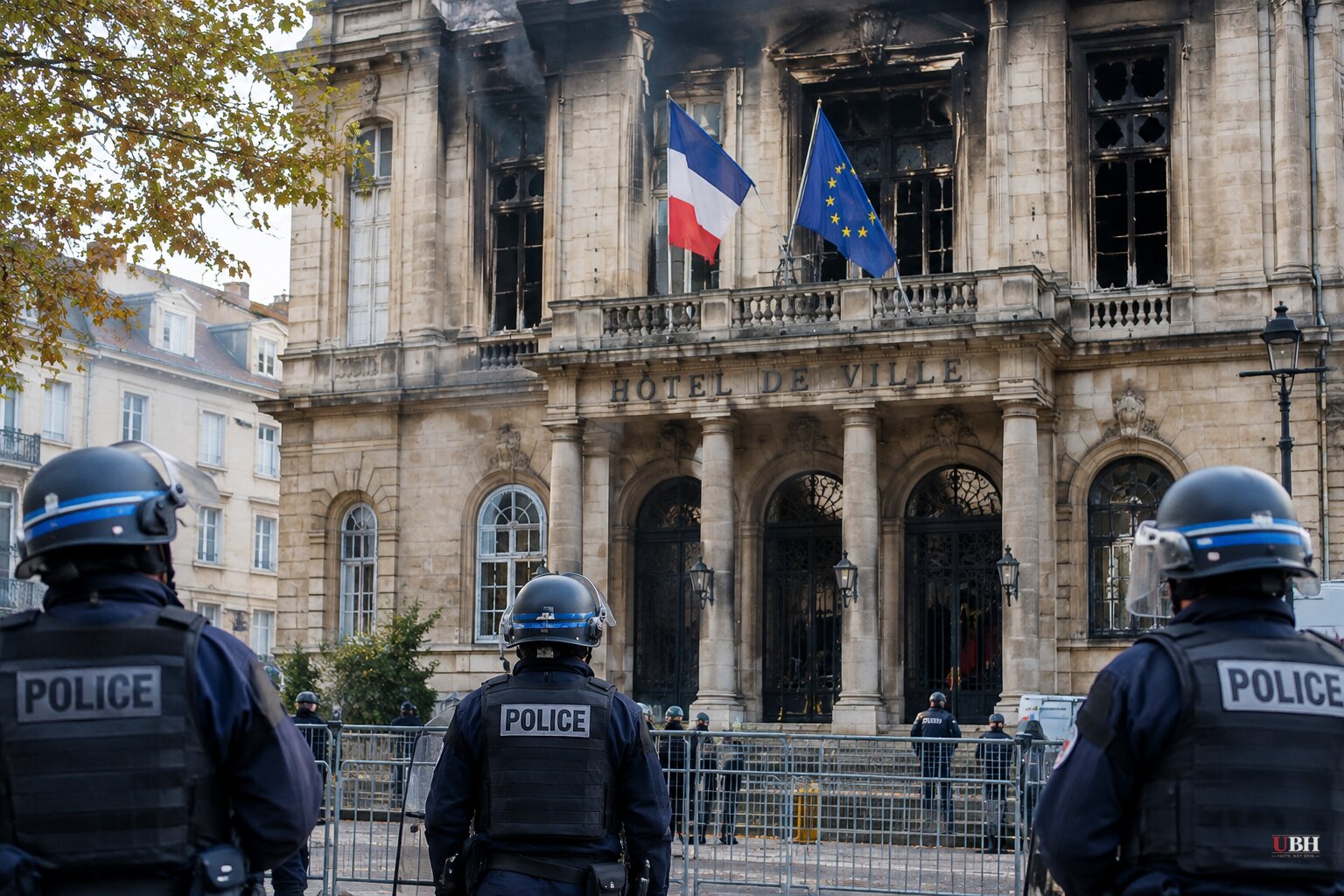
Since students began protesting over crumbling lycées in mid-September, the movement has grown into a wider revolt over prices and public services. Saturday, Oct. 17 was the day it turned destructive on a national scale. Late that evening, Prime Minister Sébastien Lecornu said 1,200 people had been arrested and 150 police officers hurt. The first count that circulated during the afternoon was 272 arrests.
An estimated 550,000 people took to the streets, according to figures cited by the BBC. The French government called the day an "escalation in violence."
Buildings burned, shops emptied
The worst single loss was in Limoges. Masked protesters set fire to the town hall, and local prefect Maurice Barate said it was "largely lost." He said the roof collapsed onto the lower floors, two-thirds of the exterior was already gone, and only the west wing was spared. Barate called it a "catastrophe for heritage."
In Lyon, a fire broke out in the tourist office. Mayor Grégory Doucet called it "a tragedy" for the city and said it "breaks our hearts." Local police said "hostile individuals" kept firefighters from safely tackling the blaze.
In Marseille, protesters rammed the town hall door with street barriers and got into the lobby before police removed them. Mayor Benoît Payan called it "unacceptable" and described the damage as "limited."
In Paris, a peaceful march near Place de la République degraded into clashes with black-clad, masked groups. They threw fireworks and paving stones, attacked a bank and looted a sports shop. Police answered with tear gas and water cannon. Dozens of shops along Boulevard Magenta were broken into, and groups tried to get into the Galeries Lafayette department store.
Elsewhere, an Apple store in Lille was broken into and emptied. In Grenoble, footage authenticated by BBC Verify showed masked men driving a tourist train toward at least three riot police officers. Damage was also reported in Avignon, Pau, Montpellier and Valence.
The injured
In Saint-Étienne, a young man "had his hand blown off by a grenade," Mayor Régis Juanico wrote on social media. He added: "Such a tragedy should never have happened." The sources do not say what kind of grenade it was or who threw it.
Al Jazeera correspondent Rosie Birchard was harassed by looters in Rennes and struck on the head by a thrown object, according to her own network's report.
What the government says
Nuñez said the official demonstration had been hijacked by casseurs, "opportunistic delinquents who had seen a chance to pillage and loot." He said: "we will find them and deal with them firmly." His ministry blamed "targeted acts of violence" by "hooded individuals" in Paris, Marseille, Rennes, Toulouse and Angers. Officials, the Guardian reported, pointed to the "ultra-left."
Nuñez said the state is not planning to declare a state of emergency. He added: "I very strongly condemn the violence we have seen."
What the marchers say
The government's account is that a violent fringe took over a legitimate protest. The marchers describe a different grievance. Sonia Mabrouk, 40, who joined the 2018 yellow vest protests, came with her high-school-age daughter and criticized "policies that favor the rich and always hit the poorest people in their wallets." She cited neglected public services and said, "There's a general sense of frustration and anger."
A group of young people in Paris told the BBC they were "pacifists" who were "just trying to make things change, but nothing is moving." Gasoline, energy and food prices have spiked in recent months, according to the AP. Calls on social media to revive the yellow vest movement helped draw people into the streets.
Some protesters also object to how police behaved. The Times of India reported that students were protesting against alleged excessive police force. BBC journalists saw riot police charge a crowd in central Paris and hit several people with batons.
What comes next
The damage is concentrated in public buildings that cost money and history to replace. Limoges alone lost a roughly 140-year-old town hall. Many Paris metro stations, including those near the Champs-Élysées, the presidential palace, parliament and government offices, were closed at police request during the day.
The legal follow-through is the open question. Nuñez has promised to find the looters and arsonists, but he has not said how many of the 1,200 arrested will be charged. Macron has not given any new account of what the government will do about prices and school conditions, the grievances that brought the crowds out.
Sources used for this briefing
8 links from 7 independent newsrooms (syndicated copies of the same report count once)
These are the sources it draws on, linked so you can verify.


