
Unbiased headlines. Facts, not spin.
Every story is an unbiased news briefing written from 110+ sources across the spectrum — sources linked so you can verify it yourself.
 politics
Low Interest (4/10)
June 21, 2026 at 02:45 AM
politics
Low Interest (4/10)
June 21, 2026 at 02:45 AM
Obama Presidential Center's Opening Weekend Pairs 'Stolen Land' Acknowledgment with Native American Dance Performance
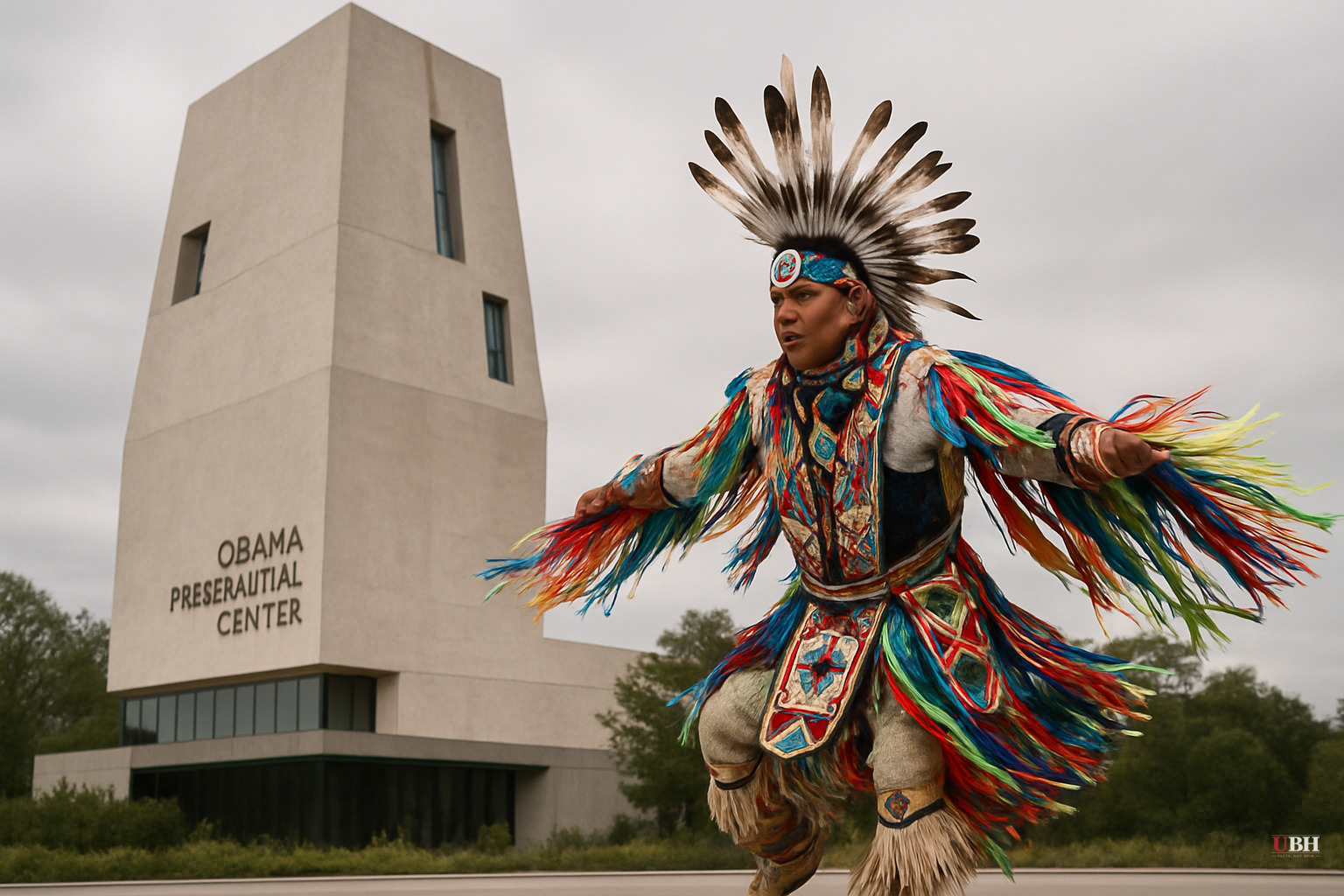
Since the Obama Presidential Center's opening ceremony on Thursday, June 19, the center has been at the heart of a cultural debate that cuts right through questions of symbolism versus substance.
What Happened Saturday
On Saturday, June 20, the Black Hawk Performance Company — a Chicago-area Native American dance troupe composed of dancers from several Indigenous tribes, including the Ojibwe — performed for roughly an hour in John Lewis Plaza on the center's campus, according to Fox News Digital, which had a reporter on the ground. The performance included a drum circle, traditional dances and songs, and a piece honoring a Native American flag. By the end, several hundred spectators who had gathered in the plaza joined in.
Saturday marked the third day of the Obama Presidential Center's grand opening. The Saturday events were part of a broader opening weekend schedule that ranged from John Legend to local drum lines, according to Fox News Digital.
The Land Acknowledgment That Started It
Thursday night's opening ceremony began with Valerie Jarrett, former senior advisor to Barack Obama and current CEO of the Obama Foundation, delivering a land acknowledgment before the festivities began.
"We'd also like to take a moment to recognize the original inhabitants of the land upon which we are gathered today," Jarrett said. "We honor the Anishinaabe, the Council of Three Fires, the Ojibwe, the Odawa and the Potawatomi nations."
The statement drew immediate backlash on social media. One X user's comment — "Obama Presidential Center grand opening begins with acknowledging they're on stolen land. And then they kept the land" — circulated widely and reflected the most common criticism: that land acknowledgments are symbolic gestures that impose no cost and change nothing on the ground.
Conservative commentator Glenn Beck was among those who weighed in. "The sheer arrogance of the Obama Foundation using the $850 million Obama Presidential Center to lecture us about standing on 'stolen land' is HILARIOUS," he said. "They're basically saying, 'Yeah, we acknowledge we stole this land. IT'S SO WRONG. But the gift shop is to your left, and tickets are 30 bucks.' If they genuinely believe they're holding stolen property, they should either GIVE IT BACK or shut the hell up."
The center also features a placard acknowledging that the land belongs to "Indigenous peoples," stating that the Obama Foundation acknowledges "the sovereign Indigenous peoples who have, since time immemorial, inhabited and stewarded the lands many of us call home." The placard includes a 2009 Obama quote: "Treaties were violated. Promises were broken."
Fox News Digital covered the backlash extensively. The coverage is framed from a right-leaning perspective. The Obama Foundation's own stated reasoning for the acknowledgment was not quoted beyond Jarrett's words, and no Foundation spokesperson responded to the criticism on the record in the available source material.
The Fairest Version of the Opposing Concern
Land acknowledgments do have genuine defenders, and their argument deserves a fair hearing. The practice is standard in academic, governmental, and cultural institutions across Canada and increasingly in the United States. Supporters argue that naming the original stewards of a place is a minimal act of historical honesty — not a legal claim, not a policy position, and not a substitute for substantive Indigenous rights work, but a baseline acknowledgment that a particular history exists. From that view, pairing a land acknowledgment with an actual performance by Native American artists is more coherent than doing one without the other.
The counterargument, which resonated widely online, is that verbal acknowledgments without material consequence function mainly as social signaling for a certain class of progressive institution-builder. James Carville, a longtime Democratic strategist, has previously criticized land acknowledgments at DNC events — a critique from inside the Democratic coalition, not just from the right.
What the Saturday Performance Resolves (and Doesn't)
The Black Hawk Performance Company's appearance is more than a photo op. The troupe exists to preserve and share Indigenous performance traditions, and giving them a main-stage platform at a high-profile national event has real value for the artists and their communities. This differs from a land acknowledgment, which costs nothing and promises nothing.
What the performance does not resolve is the question critics raised about the acknowledgment itself: whether an institution with the resources of the Obama Foundation intends to translate rhetorical recognition into substantive support for the named tribes — the Ojibwe, Odawa, Potawatomi, and others — through funding, advocacy, or policy engagement. The Obama Foundation had not publicly addressed that question as of Saturday, June 20, based on available source material.
Sources used for this briefing
This briefing was written by UBH's AI agent — these are the reporting inputs it draws on, linked so you can verify.


