
Unbiased headlines. Facts, not spin.
Unbiased Headlines is an independently owned news organization. We bring you the facts, not opinions, written fresh from 110+ named sources. Sources linked so you can verify it yourself.
 finance
Notable (6/10)
NYSE Owner ICE Plans Regulated U.S. Perpetual Futures Market With Trade.xyz on Hyperliquid Rails
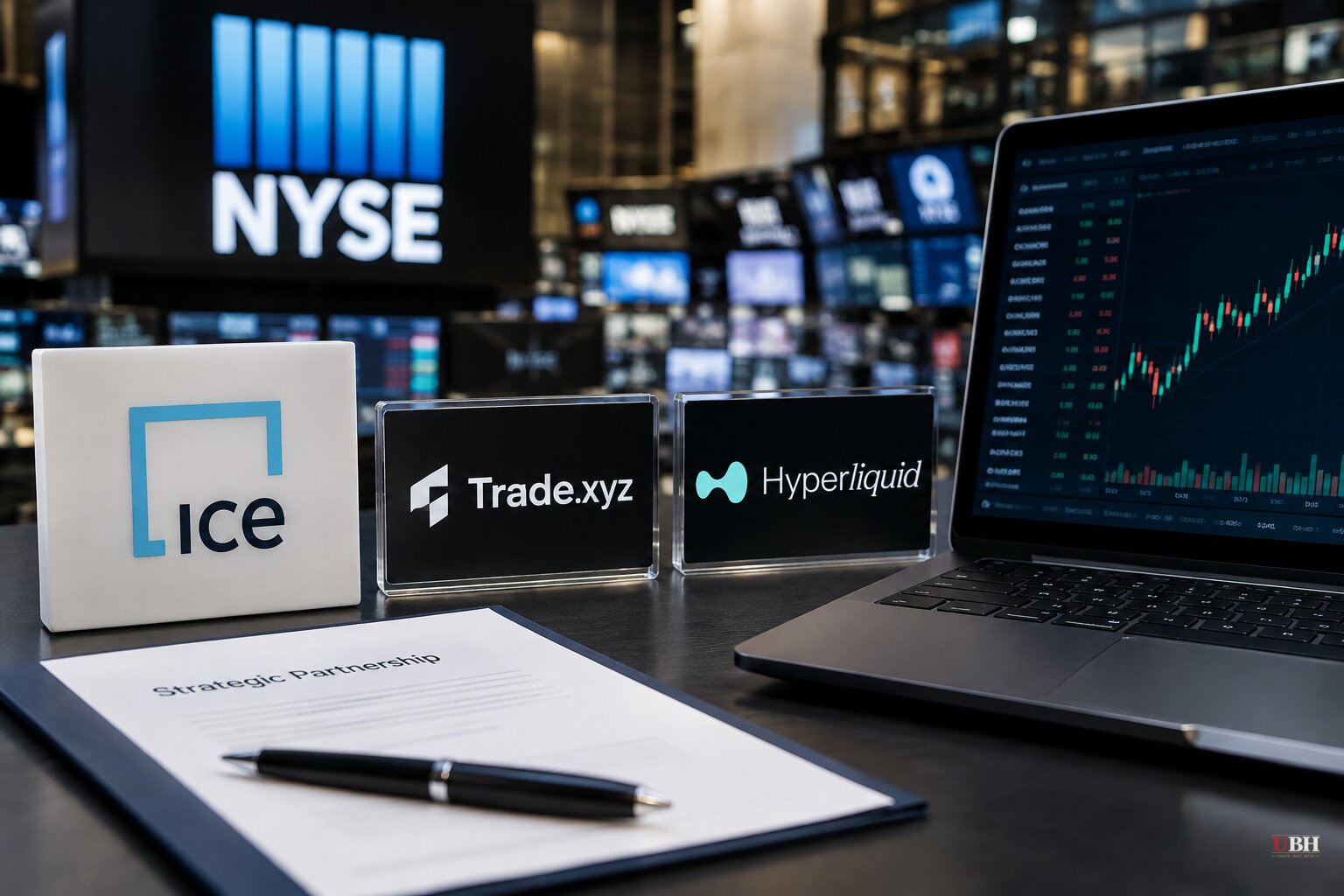
Intercontinental Exchange, the company that owns the New York Stock Exchange, is teaming up with Trade.xyz to build a regulated U.S. market for perpetual futures. Trade.xyz announced the plan on X today, Oct. 29.
The new venue would run on Hyperliquid's infrastructure. It would have its own clearing, know-your-customer and anti-money-laundering systems, and it would offer Trade.xyz perpetual futures tied to equities, equity indexes, commodities and currencies. All of it is subject to regulatory approval.
Bloomberg reported that ICE will take an equity stake in Trade.xyz. Specific investment terms were not disclosed.
What a perpetual future is, and why it matters
A perpetual future is a derivative with no expiration date. Traders hold positions as long as they like, and recurring funding payments between buyers and sellers keep the contract's price near its reference benchmark. The product grew up on crypto platforms and trades around the clock.
Trade.xyz says its markets on Hyperliquid have passed $650 billion in volume in just over a year. The company said those markets provide continuous price discovery. That figure is the company's own and has not been independently audited in anything available to us.
HYPE, Hyperliquid's native token, jumped 8.5% to $86 following the announcement. That is a token price move, not a measure of the deal's value to anyone.
The regulatory gap
This is a plan, not a product. Trade.xyz said the market is contingent on regulatory approval, and no launch date has been announced. No regulator has publicly commented on the proposal.
What the deal does show is a major exchange operator moving to bring an offshore-style crypto product inside the U.S. rulebook. For a country that wants its capital markets onshore and supervised, that is a plausible direction. It also puts a lot of weight on whether a blockchain-based trading system can meet the standards applied to traditional clearing and surveillance.
The push for regulated access is not new. On Oct. 20, the Hyperliquid Policy Center, an advocacy group that describes itself as seeking regulated American access to onchain markets, sent a letter to the CFTC. CEO Jake Chervinsky and senior counsel Brad Bourque signed it. They asked the agency to allow futures and perpetuals tied to GPU rental prices and AI computing costs. The letter is a policy request, not an approval or a product launch.
Manipulation allegations on the platform
The ICE announcement lands one day after fresh allegations about trading conduct on Hyperliquid. Solidus Labs, a market-surveillance firm, reviewed public Hyperliquid data and said a single trader using two accounts stacked more than $170 million of atypical orders in early March.
Solidus said the activity ran for three days beginning March 8 and produced roughly $119,000 in profit between March 8 and March 10. It said the same trader accounted for more than 90% of cancellations in that market. The firm flagged 31 instances in which one-sided cancellations came in bursts while trades hit the opposite side.
One March 9 sequence involved Brent perpetuals. Solidus said $17 million of sell orders were withdrawn while $425,000 of buys were filled, as prices moved from $83.06 to $81.42, then $83.51 and $87.56. By the firm's estimate, about $30 of canceled orders sat on one side for every $1 of executions on the other.
Solidus says the pattern resembled spoofing, a manipulation tactic. Spiro Antonopoulos, the firm's senior vice president and global lead for government and investigations, spoke on the record about the findings. These are Solidus's allegations about the conduct of one trader. No charges or regulatory action have been announced, and the trader has not been identified in the material we reviewed.
The finding bears directly on the ICE plan. Any U.S. venue would need surveillance able to catch exactly this kind of behavior, and Trade.xyz and ICE have said the new market will have dedicated KYC and AML systems. They have not described how trade surveillance would work.
Open questions
The size of ICE's stake has not been disclosed. Neither has the timeline for approval, or which agency filings the venue will require. Those answers will determine whether this stays an announcement or becomes a functioning U.S. market for 24/7 perpetual futures.
Sources used for this briefing
7 links from 6 independent newsrooms (syndicated copies of the same report count once)
These are the sources it draws on, linked so you can verify.


