
Unbiased headlines. Facts, not spin.
Unbiased Headlines is an independently owned news organization. We bring you the facts, not opinions, written fresh from 110+ named sources. Sources linked so you can verify it yourself.
 finance
Major Story (7/10)
Bessent Says Neocloud Debt Is Not 'Problematic at All' as CoreWeave Shares Sit Nearly 40% Lower in October
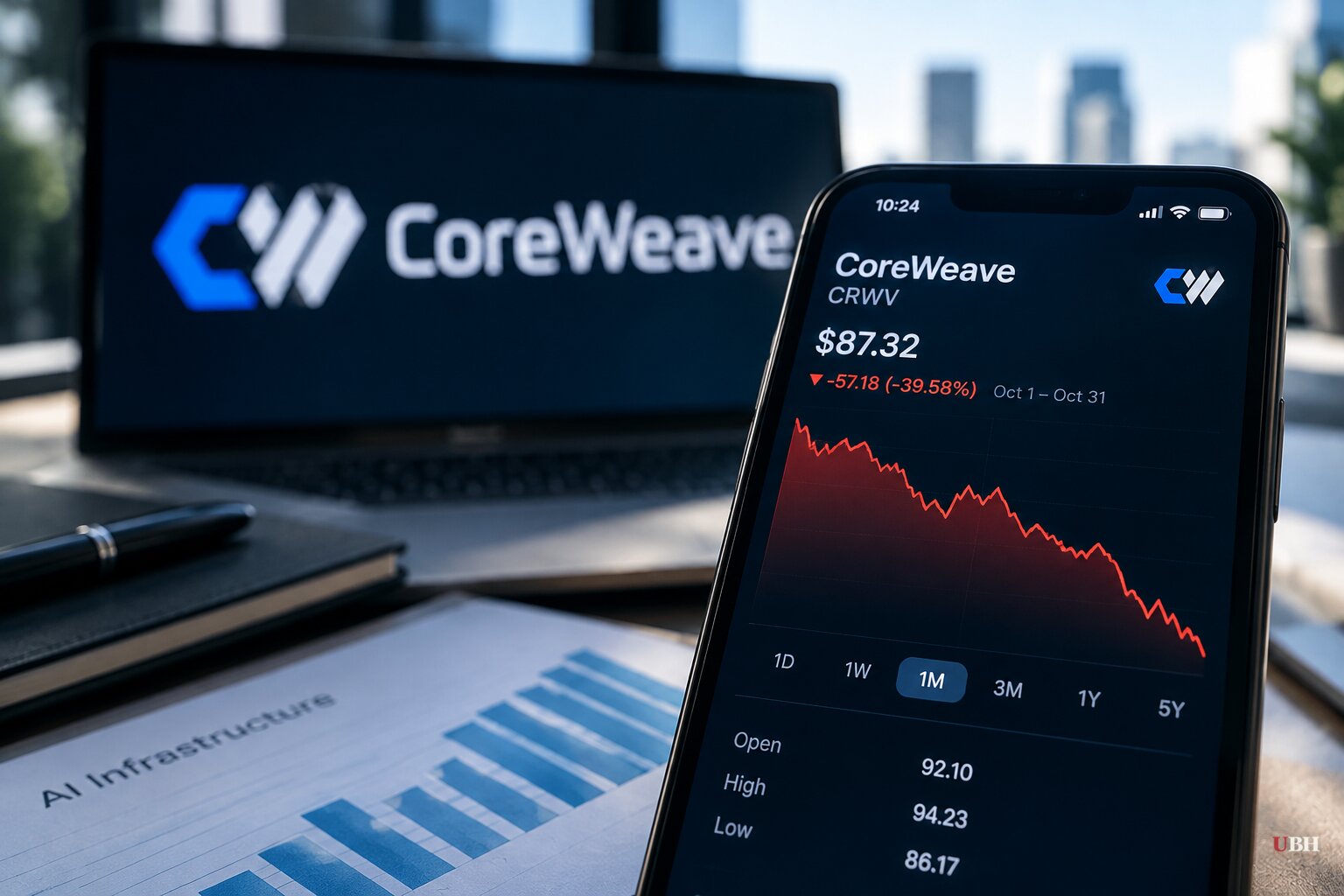
Since CoreWeave bond yields pushed above 15% in mid-October and its shares hit their low for the year around Oct. 22-23, the neocloud debt fight has moved from trading desks to the Treasury. Secretary Scott Bessent weighed in on CNBC on Wednesday, Oct. 28.
Asked about yields on some AI-related debt climbing into double digits, Bessent said: "We monitor all of this." He then added: "I don't think it's problematic at all, because we're seeing that that's the neoclouds are a small component of the overall ecosystem."
He said financing and deals were still getting done. He pointed to companies like Meta choosing to finance with equity.
The market data
Neoclouds, including CoreWeave, Nebius and IREN, rent AI computing capacity to the big tech companies and AI labs. CoreWeave shares fell nearly 40% in October and have bounced slightly off the low. The Roundhill Neocloud ETF, which holds the major names, is down 24% over the past month.
The trigger was the price of money. A hotter-than-expected inflation report on Oct. 14 showed consumer prices up 3.7% in the year to September. The 10-year Treasury yield briefly touched about 5.3%. CoreWeave shares fell 15% that day and Oracle dropped 7.3%.
CoreWeave plans to spend between $35 billion and $39 billion on capital projects this year. Its business rests on borrowing to buy chips and lease data center space, so higher rates hit it directly.
What lenders are charging
Bloomberg counted at least 18 speculative-grade bonds and leveraged loans tied to data centers carrying double-digit yields. JPMorgan Chase and Goldman Sachs reworked the terms of a $5 billion loan for AI infrastructure company Volta Infrastructure to attract investors. The yield on that loan exceeds 11%, according to Bloomberg.
The pressure is not confined to junk credit. Morgan Stanley says yields on top-rated data center bonds have approached 7%, up from under 5% at the start of the year. Citadel Securities has warned that the financial burden of supporting AI infrastructure companies could spread to the big technology firms backing them. The cost of credit default swap protection on Oracle hit a record last week.
Those are the signals Bessent's critics point to. Citadel's warning is that the strain does not stay inside the smallest borrowers.
Bessent's case, and Musk's
Bessent's argument is about size and flow. Neoclouds are a minor part of the AI buildout, he said, and capital has not dried up. Bloomberg reported that a $25 billion Meta financing transaction drew demand of more than five times the amount sought. That is the kind of deal he was pointing to.
Elon Musk took the opposite view in a Sunday, Oct. 25 post on X. He wrote that many neoclouds face "guppy-level death and consolidation" and that debt markets are reluctant to fund companies that depend almost entirely on AI data center revenue. One account of the post has him predicting that more than 200 neocloud operators could fail or consolidate. Musk also said SpaceX will not acquire any neocloud company.
Nvidia CEO Jensen Huang, whose company has backed several neocloud providers, is more bullish. He told CNBC earlier this month that demand for them is "off the charts" and that their capabilities are "extraordinary."
The sector's contracts are large. Nebius signed a deal worth more than $17 billion with Microsoft last September. In March it announced a five-year agreement with Meta worth up to $27 billion. The open question is whether those revenues cover the debt service at today's rates.
Rates and the Fed
Bessent also signaled flexibility on monetary policy. He said another Federal Reserve rate hike would not necessarily be a policy mistake, according to a Business Korea account of the CNBC interview. Traders had raised the odds of a hike before the Fed's Oct. 27-28 meeting after the September inflation print.
The Fed is the variable that matters most to leveraged AI borrowers. CoreWeave's slide tracked the jump in yields, not any announced loss of customers.
The closed-door appearance a week earlier
On Oct. 21, Bessent spoke at a New York event co-hosted by JPMorgan and Robin Hood, the nonprofit founded by Paul Tudor Jones. Tickets started at $7,500 and the event was closed to the press.
Three attendees told the Financial Times that Bessent, interviewed by Bridgewater CEO Nir Bar Dea, said: "I don't see a systemic problem." He rejected comparisons to the dot-com bust, saying the boom "isn't Pets.com." The same attendees said he called the people backing AI the smartest in the world, with 99% of their net worth in these companies. They also said he acknowledged the industry has done a poor job explaining the technology's benefits to ordinary Americans.
A Treasury spokesperson said Bessent is well aware of what counts as material non-public information and that everything he said had previously been stated publicly. No rule bars a Treasury secretary from addressing a large private group of market participants. His predecessor, Janet Yellen, spoke only at events where media could attend, according to the Financial Times.
What comes next
Bessent's statement is that Treasury is monitoring the situation. Nothing in his remarks announced a policy step. The next test is pricing: whether deals like the Volta loan keep needing double-digit yields to clear, and whether the Oracle default swap spread and top-rated data center bond yields keep widening from here.
Sources used for this briefing
8 links from 8 independent newsrooms (syndicated copies of the same report count once)
These are the sources it draws on, linked so you can verify.


