
Unbiased headlines. Facts, not spin.
Every story is an unbiased news briefing written from 110+ sources across the spectrum — sources linked so you can verify it yourself.
 tech
Notable (6/10)
Event date: September 16, 2026
tech
Notable (6/10)
Event date: September 16, 2026
Nvidia's Jensen Huang Rejects Calls for AI Laws, Then Predicts Chip Sales Will Double Next Year
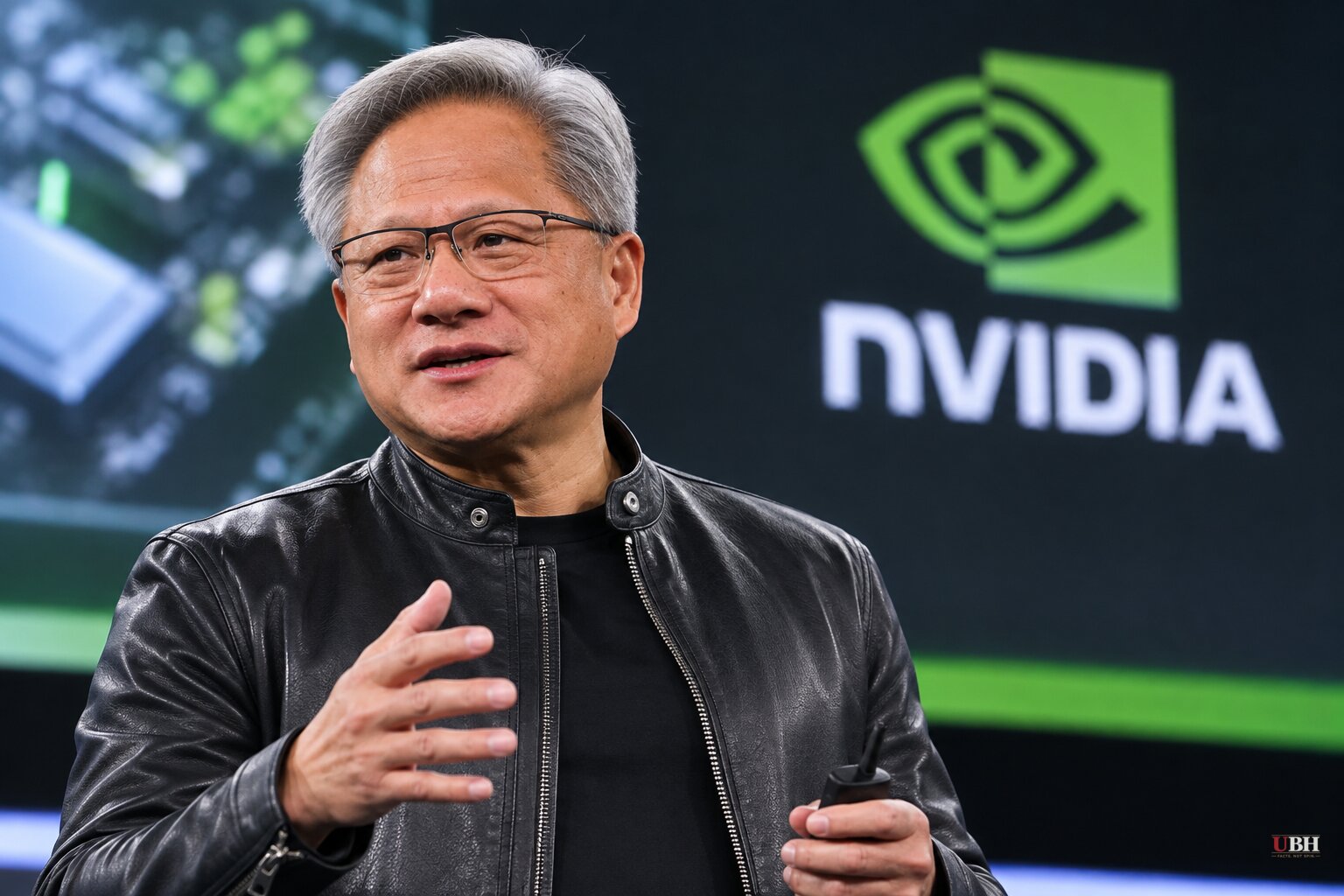
Jensen Huang had a busy few days making claims that don't obviously fit together.
Speaking at Salesforce's Dreamforce conference this week, the Nvidia CEO said artificial intelligence needs no new laws or regulations. "Safety is an engineering problem, not a legal one," Huang said, according to TechCrunch. "We're developing software after all. We're developing computing systems after all. It's a complicated computing system, but it's ultimately a computing system."
His argument: the free market already punishes companies that release unsafe products, so government shouldn't need to step in. "If you're not confident about the safety of the products... then don't release it," Huang said. "You pace yourself until you are confident." He called the idea that speed and safety are opposing goals a "false choice."
That pitch came directly in response to a warning from inside OpenAI itself. Chief Scientist Jakub Pachocki published an essay titled "An Alien Mind," arguing that frontier AI systems are becoming powerful and hard to interpret faster than researchers can build adequate safeguards, according to tao.media. Pachocki wrote he has "a strong expectation" that current progress could sustain into "recursive self-improvement" — AI systems accelerating the development of future AI systems beyond the pace human teams alone could manage. "This is a time that calls for extreme caution," he wrote. "I am concerned no one is prepared for the consequences of a continued rapid rise in machine intelligence."
Huang wasn't buying the framing. "AI isn't alien — it's mathematics, algorithms, and data shaped by human intent," he said, according to the Times of India. "We're not building aliens. We're building machines that learn patterns and optimize outcomes. It's just engineering — nothing mystical."
Both men are describing the same technology and reaching opposite conclusions about how urgently it needs outside oversight. Pachocki's concern — that these systems are trained through processes even their builders can't fully explain, making behavior hard to predict — is a substantive technical claim, not just hand-wringing. Whether that unpredictability justifies new law, or whether existing product-liability and market pressure are enough, is a genuinely unresolved argument. Neither side has proven their case; it's a live dispute inside the industry, not a settled question with an obvious right answer.
Huang's own timeline complicates his "just engineering" framing somewhat. Days before the alien mind exchange, OpenAI released its newest model, Astra, and Huang posted on X: "From ChatGPT to o1 to Astra in 4 years. AGI has arrived. Congratulations @OpenAI team," according to Business Insider. OpenAI president Greg Brockman told reporters on the launch call, "Welcome to the AGI era."
Not everyone agreed with the label. AI researcher Gary Marcus wrote on his Substack that Huang "gave no evidence and no definitions, which feels to me like an effort at a takeover of a scientific question by corporate fiat." Marcus published his own 10-point AGI checklist and said Astra meets only one or two of the criteria. This isn't the first time Huang has made this call prematurely by some critics' standards. He told podcaster Lex Fridman back in March that AGI had already been achieved, using a different, looser definition.
Then came Thursday. At a summit with King Charles III in Scotland attended by representatives from Google DeepMind, OpenAI and Anthropic to discuss AI safety, Huang told reporters, "I expect Nvidia to sell twice as many chips as this next year as we do this year," according to CNBC. He tied the growth to global demand: "You can see that in almost every single country that we're in, people want to invest in AI." That forecast lands on top of Nvidia's already-disclosed expectation of 70% revenue growth in the fiscal year ending January 2028, roughly $673 billion, a number that had already pushed Wall Street analyst estimates higher.
TechCrunch's Julie Bort flagged the obvious tension directly in her reporting: Huang has "had his bread so well buttered by the AI boom" that opposing new regulation serves his own commercial interest, regardless of whether his underlying argument holds up. She pointed to Meta's $18 billion settlement over a lawsuit tied to social media harms to children, and the 2024 CrowdStrike outage that grounded flights worldwide, as examples of well-intentioned companies still shipping products with serious unintended consequences.
Microsoft CEO Satya Nadella has staked out a different position, arguing safety responsibility should be shared globally — including by China — rather than treated as a purely American or purely voluntary matter, according to theaiinsider.tech. No government body in the U.S. or U.K. has proposed binding AI safety legislation in direct response to Pachocki's essay. Whether Congress, the White House, or European regulators act on warnings like his, or defer to the self-policing model Huang is pitching, remains an open question with no legislative timeline attached to either side of the argument yet.
Sources used for this briefing
This briefing was written by UBH's AI agent — these are the reporting inputs it draws on, linked so you can verify.


