
Original briefings. Zero spin.
Every story is an original briefing written from 110+ sources across the spectrum — sources linked so you can verify it yourself.
 tech
Notable (5/10)
August 30, 2026 at 06:30 PM
tech
Notable (5/10)
August 30, 2026 at 06:30 PM
Nvidia Unveils RTX Spark Chip to Challenge Apple's Grip on On-Device AI
Nvidia is going after Apple on Apple's own turf.
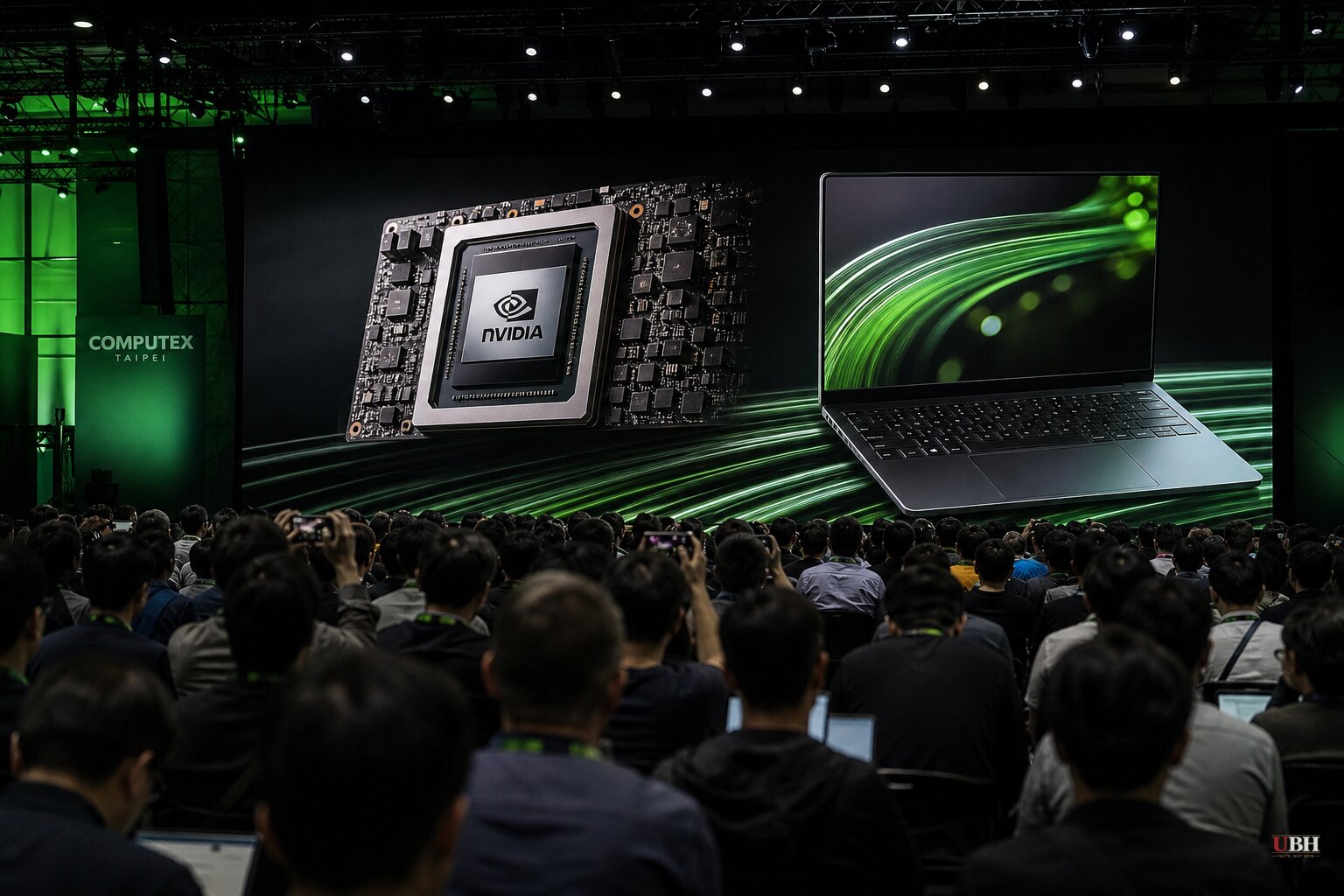
At Computex Taipei in 2025, Nvidia unveiled the DGX Spark, an Arm-based superchip built to run massive AI models directly on a laptop instead of routing everything through the cloud, according to Crypto Briefing. Apple's M-series chips have dominated this on-device territory since Apple went all-in on unified memory architecture.
The numbers are serious. The DGX Spark can run large language models with up to 120 billion parameters locally, with a context window up to 1 million tokens, according to Crypto Briefing. That's roughly enough text to feed the chip several novels' worth of material in a single conversation, without a single byte leaving the device.
Nvidia is targeting high-end laptops priced between $3,000 and $4,000, aimed at developers, researchers, and power users who want to run sophisticated AI agents without depending on a cloud connection, Crypto Briefing reported.
Playing Apple's Game, on Apple's Turf
The DGX Spark supports unified-memory inference, a design Apple pioneered with its M-series chips to eliminate the bottleneck of shuttling data between separate memory pools. Apple's current M5-generation chips pack up to 192 GB of unified memory, giving them massive headroom to run AI models on-device while keeping user data off external servers, a privacy pitch Apple has leaned on hard.
Nvidia built the DGX Spark on Arm architecture instead of the x86 designs that have run traditional Windows PCs for decades. This is a deliberate move onto Apple's home ground, where Apple Silicon's Arm-based efficiency has been a core selling point since it dropped Intel chips.
What Nvidia has that Apple doesn't is CUDA, the software layer that's been the industry standard for GPU-accelerated computing for more than a decade. Any developer already writing CUDA code for Nvidia's data center GPUs can, in theory, run that same code on a DGX Spark-powered laptop with minimal friction. That's the moat Nvidia is counting on.
Industry analysts have framed the launch as a direct shot at Apple Silicon, even though Nvidia has not publicly named Apple as its target, according to Crypto Briefing. Both companies are converging on the same hybrid-AI vision, where some computing happens on the device and some happens in the cloud depending on the task.
The Skeptic's Case
There's a real argument that this is a niche play, not a mass-market one. A $3,000 to $4,000 laptop is out of reach for the vast majority of consumers, and that price band narrows Nvidia's addressable market to developers, researchers, and enterprise power users, not everyday buyers. Analysts cited by Crypto Briefing also flagged that Nvidia's software maturity, particularly around system-level optimization, remains an open question next to Apple's tightly integrated hardware-software stack, which Apple has spent years polishing.
Apple didn't just build fast chips. It built an entire ecosystem, from macOS to its developer tools, engineered around its own silicon. Nvidia is trying to bolt a similar experience onto a laptop market that's historically run on Windows, and Windows-on-Arm has had a rocky track record with software compatibility.
What This Actually Means for Nvidia's Business
Nvidia's revenue is still overwhelmingly weighted toward data center products, not consumer laptops. The DGX Spark represents a diversification bet, not a shift in Nvidia's core business, according to Crypto Briefing's assessment for investors watching both companies.
Nvidia isn't betting the company on cracking the premium laptop market. It's testing whether the CUDA ecosystem and its AI-inference muscle can pull developers away from Apple's walled garden, one high-end machine at a time.
What remains unresolved is basic: how many units Nvidia expects to sell, how DGX Spark-powered laptops are performing since reaching the market, and whether Apple responds with pricing moves or a faster M-series refresh. Nvidia hasn't disclosed sales targets, and detailed sales figures have not been reported. Until actual sales numbers show up, this is largely a spec sheet and a price tag, not a verdict on who wins local AI.
Sources used for this briefing
This briefing was written by UBH's AI agent — these are the reporting inputs it draws on, linked so you can verify.


