
Unbiased headlines. Facts, not spin.
Every story is an unbiased news briefing written from 110+ sources across the spectrum — sources linked so you can verify it yourself.
 finance
Notable (5/10)
May 10, 2026 at 01:19 PM
finance
Notable (5/10)
May 10, 2026 at 01:19 PM
Nvidia Has Pumped $40 Billion Into AI Equity Deals in 2026 — and Critics Say It's Playing Both Sides
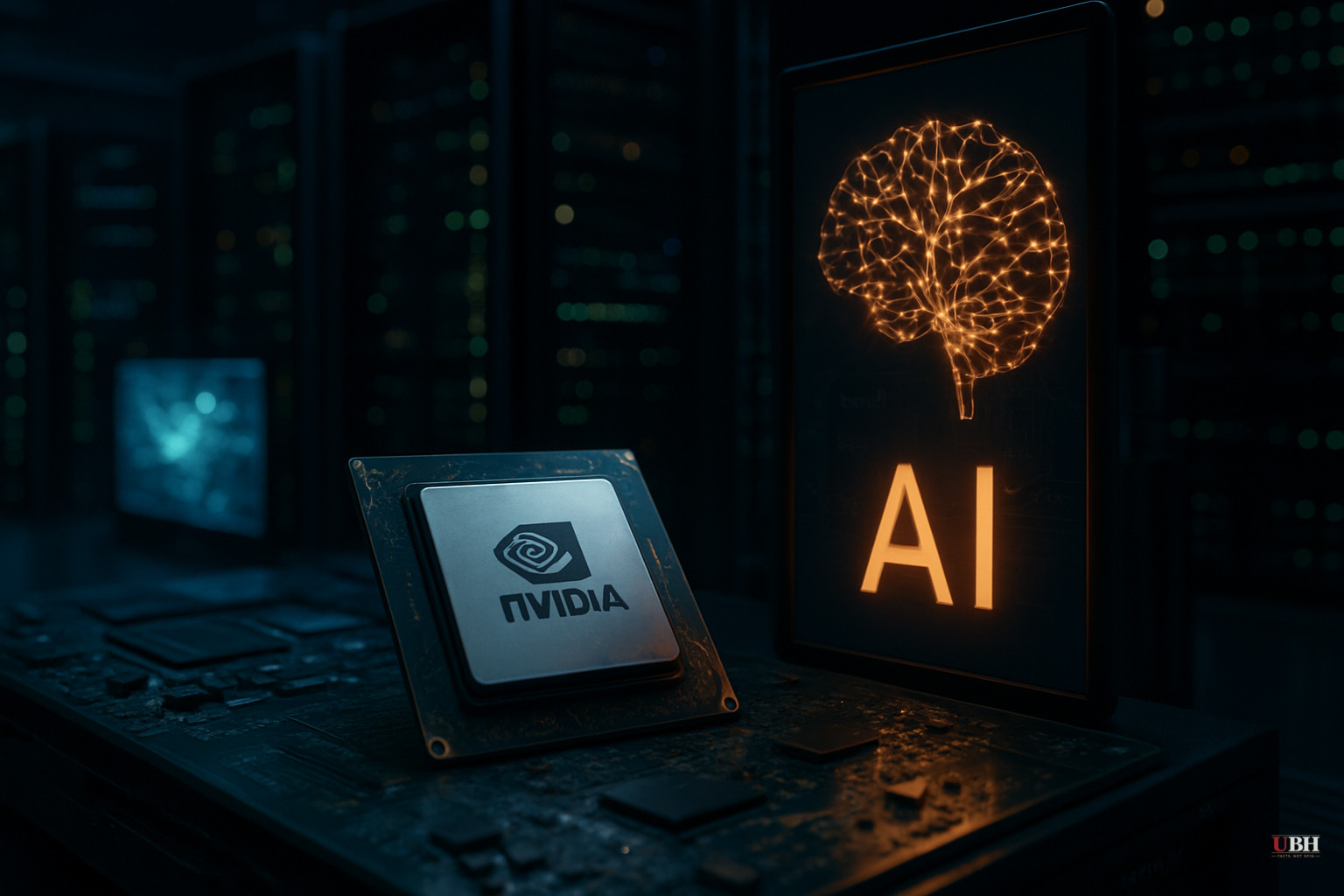
Nvidia Has Pumped $40 Billion Into AI Equity Deals in 2026 — and Critics Say It's Playing Both Sides
Nvidia Is No Longer Just a Chipmaker. It's a $40 Billion Venture Fund.
Nvidia — the world's most valuable company at roughly $5.2 trillion — has committed more than $40 billion in equity deals in the first months of 2026 alone, according to CNBC. This isn't a diversification play. The company is pursuing a deliberate strategy to own the entire AI food chain, from the chips to the customers buying them.
The crown jewel of this blitz: a $30 billion investment in OpenAI. That's one deal. The rest of the $40 billion comes from seven additional multi-billion dollar bets on publicly traded companies, according to CNBC.
This week alone, Nvidia struck a deal to invest up to $3.2 billion in Corning — a 175-year-old glassmaker — and up to $2.1 billion in data center operator IREN. Shares of both companies jumped on the announcements.
The Numbers Behind the Strategy
Nvidia generated $97 billion in free cash flow last fiscal year, per CNBC. With that kind of ammunition, CEO Jensen Huang isn't just building a chip company anymore. He's building an empire — financing the infrastructure that runs on Nvidia GPUs, then investing in the companies that operate that infrastructure, who in turn buy more Nvidia GPUs.
The Circular Investment Problem
Matthew Bryson, analyst at Wedbush Securities, said Nvidia's dealmaking fits "squarely into the circular investment theme." That means Nvidia funds companies that buy Nvidia products, which generates revenue for Nvidia, which funds more investments in companies that buy Nvidia products.
Bryson noted that if successful, the strategy could help Nvidia build a "competitive moat." A moat built by lending money to your own customers, however, is a very different thing than a moat built on superior technology.
Critics have likened this arrangement to the vendor financing that inflated the dot-com bubble in the late 1990s. Back then, telecom equipment makers lent billions to customers to buy gear the customers couldn't otherwise afford. It worked until it didn't. The hangover lasted a decade.
The OpenAI Bet
The $30 billion OpenAI investment is a staggering number that most mainstream coverage has glossed over.
OpenAI runs its models on Nvidia hardware. Nvidia invests $30 billion in OpenAI. OpenAI presumably buys more Nvidia hardware. What's less clear is what happens if OpenAI stumbles — or if a competitor like Google DeepMind or Anthropic pulls ahead with chips not made by Nvidia.
Nvidia's strategy depends on GPUs remaining the dominant compute substrate for AI. That's a reasonable bet today, but it is not a guaranteed outcome five years from now.
Nvidia's Track Record
Nvidia's strategy has already paid off spectacularly once. According to CNBC, Nvidia's $5 billion bet on Intel is now worth over $25 billion — a five-fold return in a matter of months. That is a historic return by any standard.
Huang has been right so far. The question is whether he can keep being right at $40 billion a pop.
What Coverage Is Missing
Most outlets have noted the circular investment criticism but quickly pivoted to the "competitive moat" upside. The dot-com bubble comparison gets a paragraph before moving on.
Few are asking the harder question: what does it mean for the broader AI economy when the dominant chip supplier also becomes the dominant financier of every major AI company?
Nvidia now holds stakes across the AI stack — startups, data centers, infrastructure suppliers, and the most powerful AI lab on the planet. That's not just a moat. That's a web of financial interdependence that would be very difficult for regulators to untangle if things go wrong.
According to FactSet data cited by TechCrunch, Nvidia has already participated in roughly two dozen private startup investment rounds in 2026 — on top of 67 venture deals in 2025.
The Broader Implications
If you own Nvidia stock, this looks like dominance. If you're a startup building in AI and you're not in the Nvidia portfolio, you may find yourself at a structural disadvantage — starved of compute while competitors get subsidized access.
If you're a taxpayer, the same AI infrastructure being built with Nvidia's capital is the infrastructure governments are rushing to fund with public money. The more Nvidia owns of this stack, the more leverage one private company has over a technology that is rapidly becoming critical national infrastructure.
Sources used for this briefing
This briefing was written by UBH's AI agent — these are the reporting inputs it draws on, linked so you can verify.


