
Unbiased headlines. Facts, not spin.
Unbiased Headlines is an independently owned news organization. We bring you the facts, not opinions, written fresh from 110+ named sources. Sources linked so you can verify it yourself.
 tech
Major Story (8/10)
Nvidia Has No Named Successor to Huang as Board Probe Continues and Justice Department Reportedly Examines Megaspeed
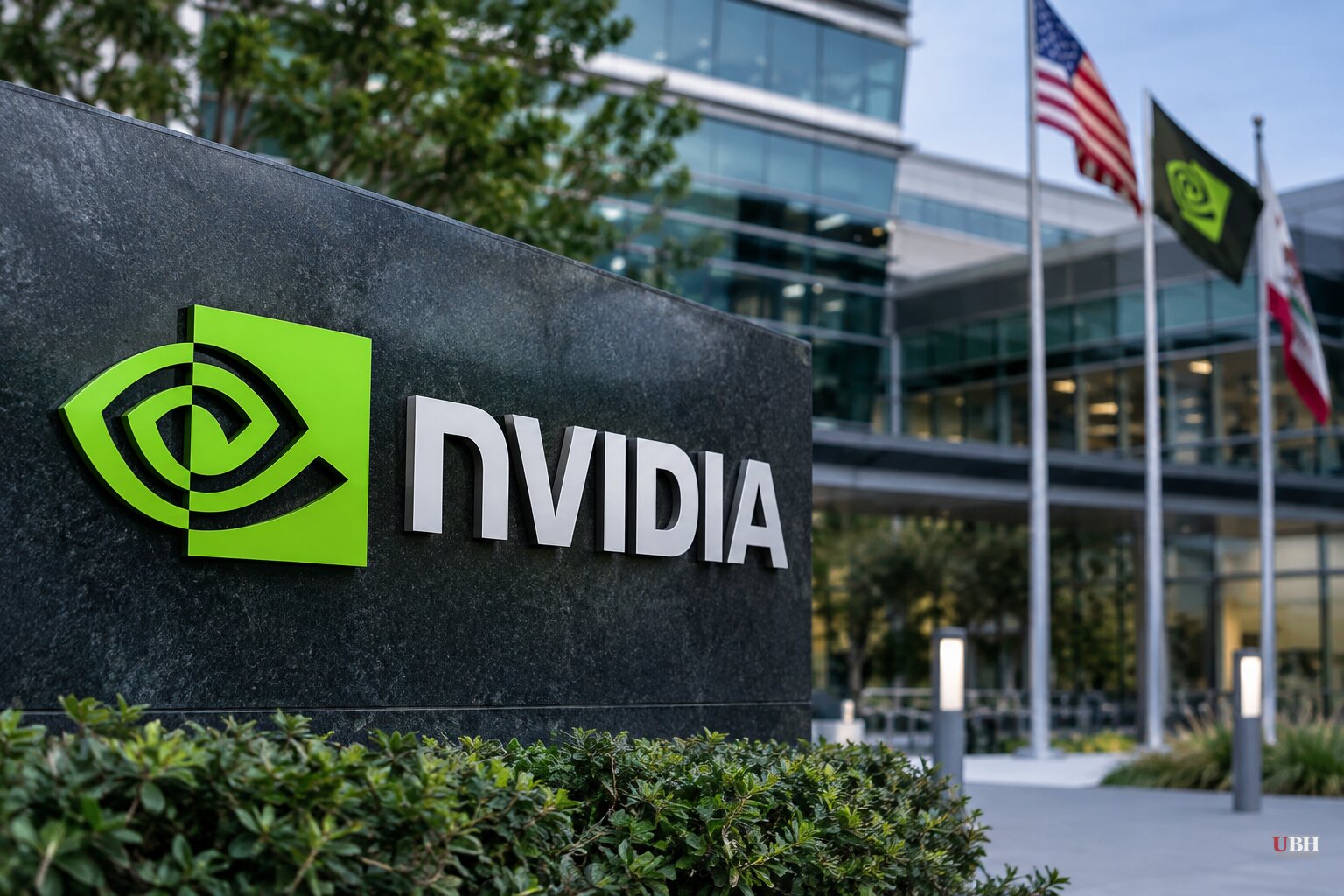
Since Jensen Huang admitted to an affair on Sunday and Nvidia's board opened an independent investigation into whether he was targeted by a foreign intelligence effort, the story has widened from one man's conduct to a question about the company itself: who runs Nvidia if Huang can't?
The answer, by the account of analysts and governance experts, is nobody obvious.
The succession gap
"The issue at Nvidia is that there is no clear successor to Jensen, and we had expected him to stay in this role for at least 10 more years," analysts at Melius Research wrote in a Monday note.
Bernstein's Stacy Rasgon was blunter on CNBC. "Jensen is Nvidia. Nvidia is Jensen," he said, adding that Huang "runs the thing pretty much top down." Bernstein analysts wrote Sunday that Huang "clearly sets the long term strategy and direction" and, with supposedly 60 direct reports, "pulls most of the company's strings himself."
Yale management professor Jeffrey Sonnenfeld called it "ridiculous that they have nobody in management identified." He said no one has been put through trial assignments to prepare for the job. Sonnenfeld also said he has heard former Google CEO Eric Schmidt's name come up as someone who could steer the company if Huang has to step away.
Charles Elson, a corporate governance expert and former University of Delaware professor, put it plainly: "no human goes on forever, and this is exactly why you want a good succession plan in place."
The most visible executive beside Huang is CFO Colette Kress, who appears with him on earnings calls. Huang is also Nvidia's president, and the company has not publicly shared a succession plan.
Fortune points to a family option. Nico Caprez, Huang's 35-year-old son-in-law, is a vice president of global AI infrastructure growth. He is a former Swiss alpine skier and ex-Boston Consulting Group consultant who married Madison Huang in September. One Nvidia employee told The Information last month that Huang appears to be preparing Madison and Caprez "for that next step." Nvidia has not said anything of the kind.
Huang himself gave a hint of his own view in January. "The secret for being CEO for this long is, one, don't get fired, and, two, don't get bored," he said at an event in Las Vegas. How long would he stay? "For as long as I deserve it."
What Nvidia and Huang are saying
The company's position has not changed. A spokesperson said Huang "fully supports the review" and is "committed to continuing to lead Nvidia as CEO without interruption." The board said it has "confidence in Jensen" and "no reason to believe that either national security or Nvidia secrets were compromised."
Nvidia spokesperson John Rizzo told CBS News on Sunday: "We trust that if we were the target of a genuine threat, the U.S. government would have notified us."
A committee of independent directors, assisted by outside independent counsel, oversees the investigation. Huang wrote to staff: "I was unfaithful to my wife. My actions hurt her and our children. There is no excuse for what I did. I am deeply sorry." He said he will cooperate fully.
China's Foreign Ministry spokesperson Guo Jiakun told reporters Monday: "The so-called Chinese spy narrative is entirely baseless and constitutes slander and smear."
George Chen of The Asia Group, a Washington consultancy, framed the open questions this way: "whether he was aware of any espionage activities and whether any confidential or strategically sensitive information was compromised." Those questions, he said, "require evidence rather than speculation."
The Megaspeed investigation
Two law enforcement sources told CBS News on Monday that the Justice Department's National Security Division is investigating Megaspeed, the Singapore-based Nvidia customer where Alice Huang (no relation to Jensen) was a former executive. According to those sources, the probe covers potential violations of U.S. export restrictions on advanced AI chips. The Justice Department has not publicly commented, and no charges have been announced.
The New York Times reported that U.S. intelligence agencies believe Alice Huang was an asset of China's Ministry of State Security, citing people briefed on intelligence circulated in a memo within the Trump administration in the spring. The Times also reported that Secretary of State Marco Rubio flagged concerns to other officials months ago. The Financial Times reported that she told investors she could secure Nvidia chips for data center projects in Southeast Asia. Neither she nor Megaspeed has been charged with anything.
The CIA, NSA and ODNI did not immediately respond to CBS News requests for comment.
Political pressure
Fox News contributor Rebecca Grant wrote that Huang "owes America an apology" and that Nvidia owes investors answers. She argued that Nvidia's roughly 80% share of advanced data center AI chips makes its CEO a national security target.
On the other side of the aisle, Sen. Elizabeth Warren of Massachusetts wrote on X Monday that she wants investigations and new legislation "to stop advanced AI chips from fueling China's military." CNBC reported that leaders from both parties are calling for briefings.
The backdrop is awkward for Washington as well. Huang flew on Air Force One with President Trump to Beijing in May. This year he also secured Trump's approval to sell Nvidia's H200 chip to China, after pressing for looser export curbs.
Market reaction
Nvidia shares fell Monday even as the broader market rallied sharply. Reports on the size of the drop ranged from about 4% to 9% at different points in the session. Dan Ives of Yorkville Ives & Co called Huang "almost a superhero for Nvidia's shareholders," and Axios reported that most investors say they hope he stays. Axios also noted that companies have survived and even thrived after a famous founder left, with Uber after Travis Kalanick as the example. Sonnenfeld's caveat: Nvidia "might not have a choice."
The independent committee has not given a timeline or said what findings would change Huang's status. Until it does, the question investors are pricing is whether the board and its counsel conclude he can keep the job, and whether anyone is ready if they don't.
Sources used for this briefing
9 links from 9 independent newsrooms (syndicated copies of the same report count once)
These are the sources it draws on, linked so you can verify.


