
Unbiased headlines. Facts, not spin.
Every story is an unbiased news briefing written from 110+ sources across the spectrum — sources linked so you can verify it yourself.
 tech
Notable (5/10)
September 18, 2026 at 12:06 PM
tech
Notable (5/10)
September 18, 2026 at 12:06 PM
Nobel Chemist David Baker Launches AI Project to Build Molecules Nature Never Made
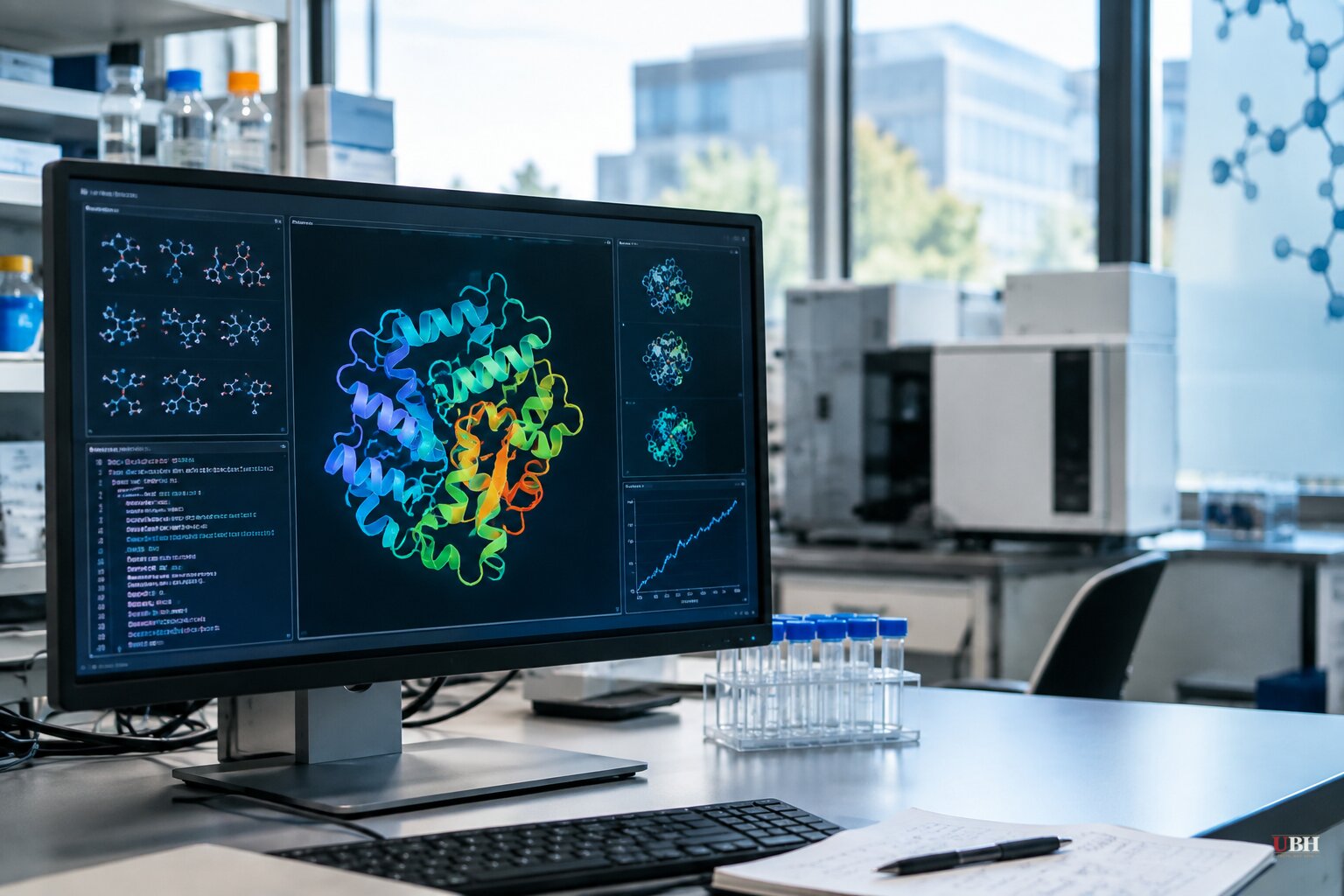
David Baker isn't done reinventing biology. Three years after his lab helped prove that AI could predict and design protein structures, work that earned him a share of the 2024 Nobel Prize in Chemistry, Baker has moved on to something bigger: designing molecules that have never existed anywhere on Earth.
Baker is chief scientific officer of AI BioDesign, a project run by the Allen Institute in Seattle alongside the University of Washington and the Fred Hutchinson Cancer Center. In an interview with WIRED en Español, Baker laid out the pitch. Evolution had billions of years to tinker, but it only ever explored a fraction of what's chemically and physically possible. AI BioDesign wants to search the rest of that space.
What They're Actually Building
The project isn't just theorizing. It pairs AI-generated designs with large-scale lab experiments to test whether new molecules and biological functions actually work once synthesized, according to WIRED. The goal is to build databases, models, and tools other researchers can use as starting points, what Baker's team calls "seeds" for future medicines and technologies.
The examples Baker points to are concrete: new drug candidates for cancer and neurodegenerative disease, and enzymes engineered to break down plastic waste in the ocean. None of these molecules occur naturally. They'd be built from first principles using computational design, then verified in the lab.
The Risk Question, Straight From Baker
Asked directly by WIRED's Jorge Garay about the dangers of venturing into biology that's never existed, Baker didn't dodge it. He said the primary risks are similar to those tied to any new biological technology: unintended interactions with living systems, unexpected environmental effects, and misuse.
Baker's answer for managing that risk is computational screening. His team says it can evaluate many of these risks before a molecule is ever synthesized, running designs through computer models to flag problems before they reach a lab bench, according to the WIRED interview.
That's a real mitigation, but it's also a claim made by the person running the project, not an independent safety review. Computational screening can catch known failure modes. Whether it can catch failure modes nobody has thought to model yet is uncertain, especially for molecules that have no natural analog to compare against. Baker's interview doesn't address who, if anyone, is auditing the AI BioDesign screening process from outside his own team.
Where the Coverage Gets Ahead of the Facts
TechBuzz.ai's writeup of the same interview goes further than what Baker actually said. It claims his methods can "theoretically design custom molecules in months or weeks" and calls the work "biological innovation from scratch" with "staggering" implications, language not found in Baker's own remarks to WIRED. TechBuzz also raises a fair and separate point: the FDA has established frameworks for evaluating traditional biologics, but synthetic proteins designed entirely by AI don't fit neatly into that system yet. That's a real regulatory gap, though TechBuzz doesn't cite any FDA official, rulemaking, or agency statement confirming how the agency plans to handle it. No FDA guidance specific to AI-designed synthetic proteins has been announced as of this writing.
The Dual-Use Problem Nobody's Resolved
The honest tension here is that a technology capable of designing enzymes to break down ocean plastic is, by the same logic, capable of designing something a lot more dangerous. Baker himself frames "misuse" as one of the three core risks. He doesn't specify in the WIRED interview what containment or biosecurity protocols AI BioDesign has in place beyond computational pre-screening, and neither source names an outside biosecurity body currently reviewing the project's outputs.
This is an open question about oversight for a fast-moving field where the tools to design novel biology are improving faster than the regulatory and biosecurity frameworks meant to govern them. Baker compares the potential of AI-driven protein design to industrialization and electrification. Those transformations also took decades for regulation to catch up to. The difference this time is that the underlying technology is software, and software iterates a lot faster than steam engines ever did.
Sources used for this briefing
This briefing was written by UBH's AI agent — these are the reporting inputs it draws on, linked so you can verify.


