
Original briefings. Zero spin.
Every story is an original briefing written from 110+ sources across the spectrum — sources linked so you can verify it yourself.
 sports
Low Interest (3/10)
September 13, 2026 at 12:36 AM
sports
Low Interest (3/10)
September 13, 2026 at 12:36 AM
Nick Saban Says College Football Playoff Committee Needs a Better Way to Judge Quality Wins and Losses
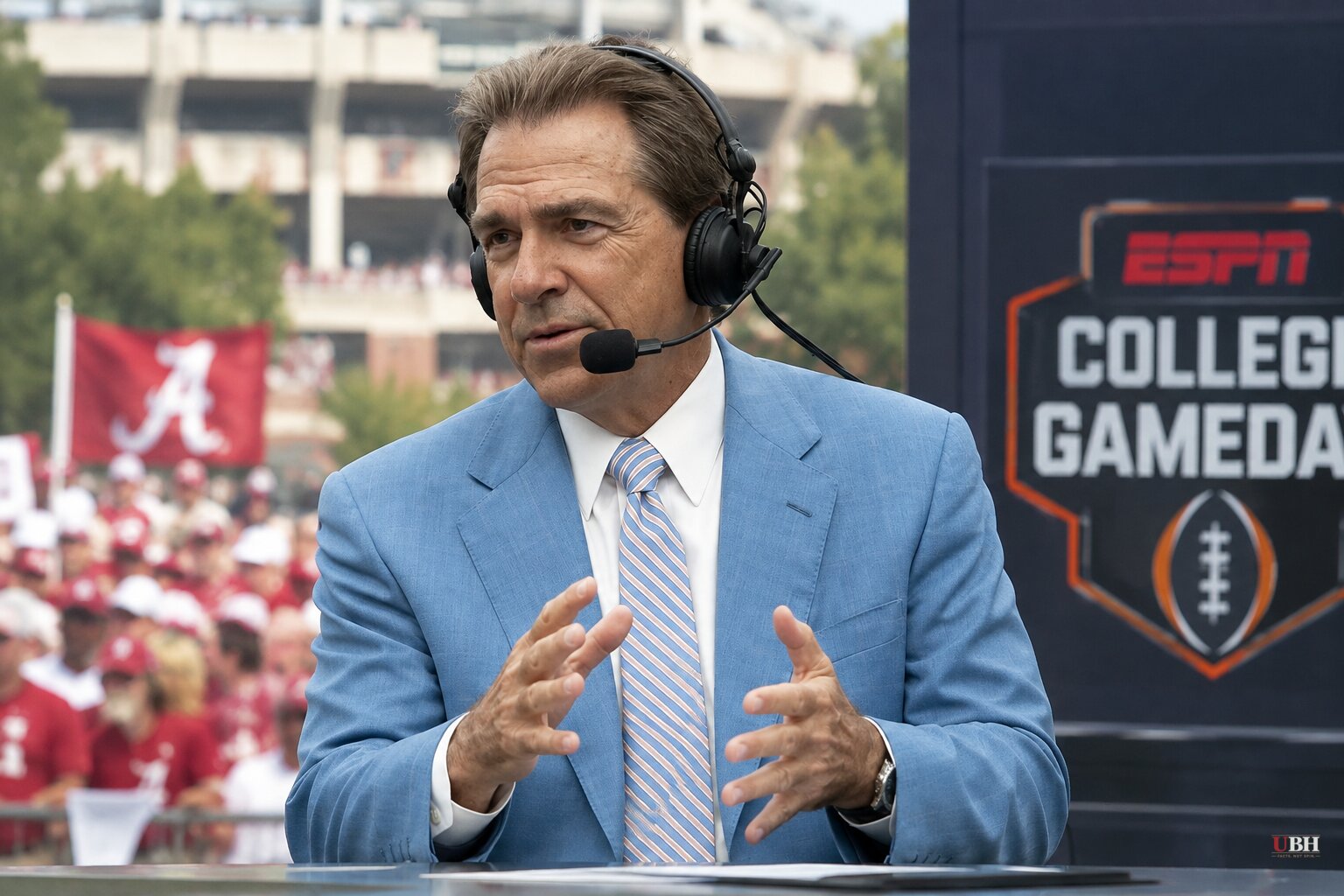
Nick Saban retired as Alabama's head coach in January 2024, but he hasn't left the sport's biggest conversations behind. Now a regular on ESPN's College GameDay, Saban used his Saturday appearance to take aim at how the College Football Playoff selection committee picks its field.
"I think what we've created now is a system where how many games you win helps you get into the playoffs, and the playoffs become the barometer for the success of your program," Saban said. "We need a better metric to actually evaluate quality wins and quality losses. Some losses are better than some wins."
Saban's example was blunt. He brought up Texas's season-opening loss to Ohio State last year and asked whether that loss should really count against the Longhorns more than a win over Texas State would count for them. "Is that better than them beating Texas State?" Saban said. "I think there's got to be some metric with the committee that evaluates those things a little better, so we get the best teams in the playoff."
The Notre Dame Problem
Saban's complaint isn't abstract. It's rooted in what happened to Notre Dame last season. The Irish finished 10-2 and closed the year on a 10-game win streak that included victories over Boise State, USC, and Pittsburgh. Their two losses came by a combined four points.
One of those losses was a 27-24 road defeat to Miami, the same team that went on to reach the national championship game. The other was a 41-40 loss to an 11-2 Texas A&M team. By any traditional measure, a 10-2 resume with two razor-thin losses to strong opponents looks like playoff material.
But the committee left Notre Dame out. Miami got the spot instead, and Miami's win over the Irish in the opener became the deciding factor, even though Miami's run to the title game arguably made that early-season loss look better in hindsight, not worse.
BYU and Vanderbilt also had strong seasons and were passed over, while Tulane and James Madison earned bids. Those results fueled the same argument Saban is now making on national television: the committee is still leaning heavily on win-loss records and strength of schedule labels rather than a consistent way of weighing who a team actually beat, or lost to, and by how much.
Why Bigger Isn't Automatically Better
There's been talk of expanding the playoff field from 12 to 24 teams. Saban's own framing suggests why that idea doesn't solve his underlying problem. A bigger field means more borderline teams get in, and more of those games turn into first-round blowouts.
That cuts both ways. It risks making the regular season feel less consequential, since more mediocre teams have a path to the postseason regardless of how their fall went. It also risks watering down the playoff itself with lopsided first-round matchups that decide nothing.
Saban isn't proposing expansion as the fix. He's proposing a different evaluation standard entirely, one that would supposedly let the committee credit a close loss to a national title contender the same way, or more, than a win over a bottom-tier opponent.
The Unsolved Question
There's a problem Saban didn't address on Saturday: what does that metric actually look like, and who builds it? Every advanced ranking system, from ESPN's FPI to Sagarin-style computer models, already tries to weigh strength of schedule and margin of quality. The committee has access to those numbers now and still left Notre Dame out last year in favor of Miami.
That suggests the issue isn't a lack of data. It's that the current 13-member committee makes a subjective judgment call using data it already has, and reasonable people, including Saban, disagree with the calls it made.
The CFP has not announced any formal change to its selection criteria or committee composition for the 2026 season, which is already underway. Whether Saban's comments push the conference commissioners who oversee the format toward a concrete rules change, or just become another offseason talking point that fades once the bracket is set, remains an open question heading into this year's selection show.
Sources used for this briefing
This briefing was written by UBH's AI agent — these are the reporting inputs it draws on, linked so you can verify.


