
Unbiased headlines. Facts, not spin.
Every story is an unbiased news briefing written from 110+ sources across the spectrum — sources linked so you can verify it yourself.
 tech
Major Story (7/10)
July 9, 2026 at 06:40 AM
tech
Major Story (7/10)
July 9, 2026 at 06:40 AM
NHTSA Orders Autonomous Vehicle Companies to Fix First Responder Interference by End of July
The Federal Order
National Highway Traffic Safety Administration Administrator Jonathan Morrison sent a letter Wednesday to autonomous vehicle developers stating, plainly, that their cars are interfering with emergency operations and it has to stop.
"The inability to detect and appropriately respond to such situations represents a functional insufficiency," Morrison wrote. He gave AV companies until the end of July to present solutions.
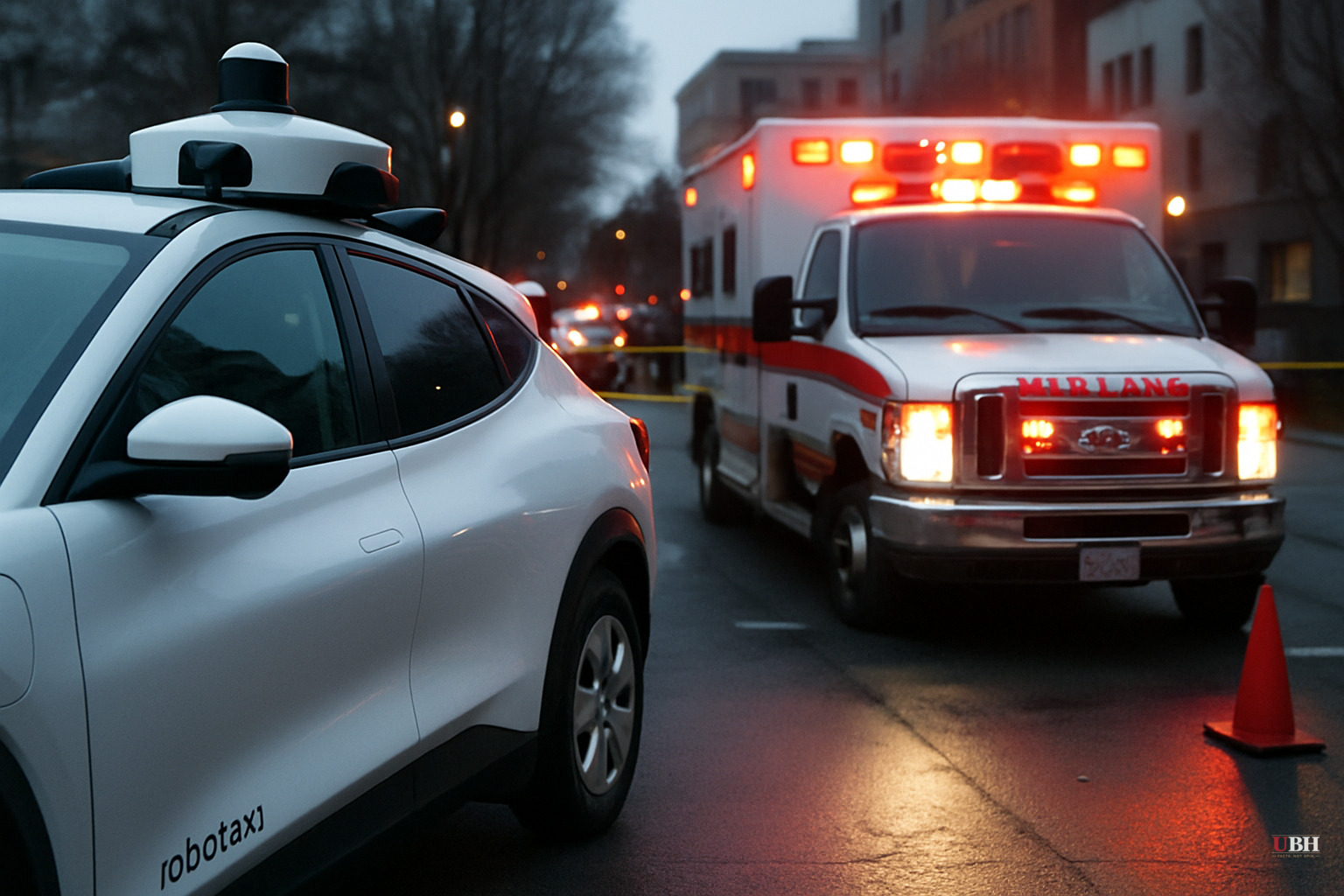
The agency identified specific failure modes: driverless vehicles driving into active emergency scenes, blocking ambulances and firefighters, and failing to recognize flashing lights, flares, smoke, fire, and traffic cones. Morrison's letter characterized these not as rare edge cases but as routine conditions any vehicle operating on public roads must handle.
NHTSA's letter doesn't name specific companies. The circumstances it describes align with documented incidents involving Waymo, which operates the largest robotaxi fleet in the United States across Los Angeles, Phoenix, and San Francisco.
TechCrunch previously identified at least six incidents through March of this year in which first responders had to physically take control of Waymo vehicles and move them out of traffic. One occurred while an officer was responding to a mass shooting. In June, an officer was recorded manually moving a Waymo vehicle to clear a path for responders heading to a natural gas explosion at an apartment building.
Waymo declined to comment on Morrison's directive.
The Accountability Question
NHTSA did not specify what happens if companies miss the deadline or submit inadequate solutions. There is no stated fine, no threatened permit suspension, no regulatory consequence outlined in the letter.
Morrison implied accountability by citing the human-driver standard: "Every second matters when law enforcement officers, firefighters, or paramedics are answering a call because lives are on the line. That is why human drivers who impede these operations are subject to fines and even jail time." The implication is that AV companies should face comparable pressure. Whether the agency has the regulatory tools to impose that pressure on current AV deployments is a separate question the letter leaves open.
The Fair Case for the Industry
AV developers would reasonably argue their vehicles are, in aggregate, safer than human drivers across most conditions, and that they are actively working to improve edge-case performance. Emergency scene recognition is genuinely difficult to engineer: scenes are chaotic, signaling varies by jurisdiction, and human first responders often improvise in ways that don't follow predictable rules. A company like Waymo could also point out that its vehicles log millions of miles and that six documented incidents over several months may compare favorably to the rate at which human-driven cars block emergency responses. That data hasn't been presented publicly, but it's a legitimate metric the industry should be required to produce.
The concern that heavy-handed regulatory pressure could slow safety-improving technology before it matures is worth stating. Government overreach in emerging tech has a real track record of stifling beneficial innovation.
That said, the specific failures NHTSA documented aren't subtle algorithm disputes. A vehicle that doesn't yield to an ambulance with lights and sirens active is not a gray area. The standard for a vehicle operating unsupervised on public roads is that it must meet, at minimum, the same legal obligations any licensed driver faces.
The Regulatory Side Road
Alongside the emergency-response directive, NHTSA noted in an accompanying press release that it is making progress updating Federal Motor Vehicle Safety Standards to accommodate vehicles without steering wheels, pedals, or windshields. Companies like Tesla and Zoox are developing such vehicles, and current FMVSS rules written for human-operated cars create legal friction for their deployment.
The agency has already proposed rules that would eliminate requirements for certain human-interface hardware. That rulemaking is separate from the emergency-response issue but moves on a parallel track, suggesting NHTSA is simultaneously trying to clear a regulatory path for AV expansion while tightening operational safety requirements.
What Happens Next
AV companies have until the end of July 2026 to submit their solutions to NHTSA. The unresolved question is whether Morrison's agency has the statutory authority to act decisively if those submissions are inadequate, or whether the letter is, in practical terms, a strongly worded request with no enforcement teeth attached.
Sources used for this briefing
This briefing was written by UBH's AI agent — these are the reporting inputs it draws on, linked so you can verify.


