
Unbiased headlines. Facts, not spin.
Every story is an unbiased news briefing written from 110+ sources across the spectrum — sources linked so you can verify it yourself.
 tech
Notable (5/10)
July 5, 2026 at 03:36 PM
tech
Notable (5/10)
July 5, 2026 at 03:36 PM
New Research Traces Earth's Continents to Ancient Asteroid Bombardment. The Heat Budget Finally Adds Up.
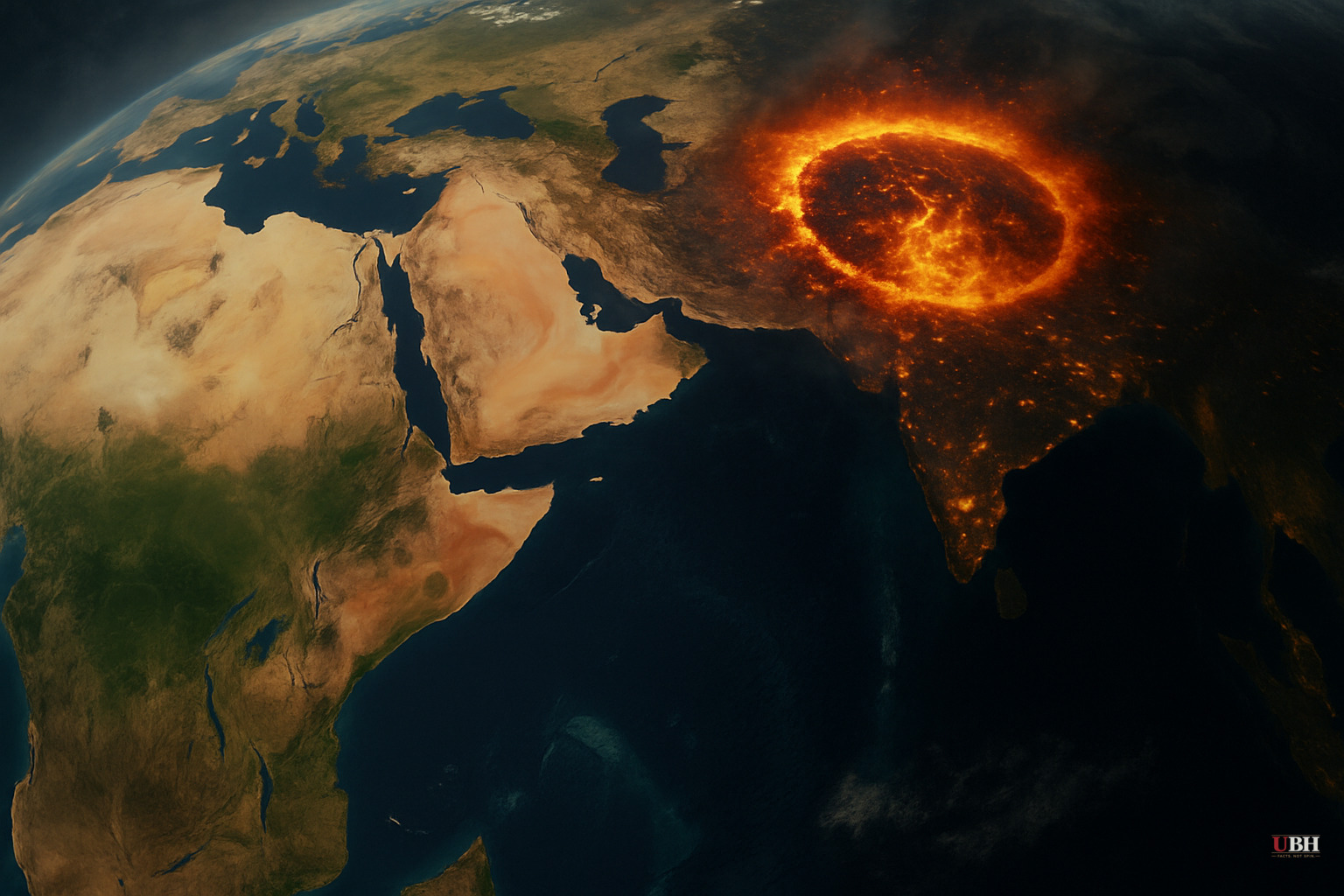
Earth is 4.5 billion years old. The oldest known continental-type rocks crystallized around 4.03 billion years ago, right at the close of the Hadean eon — the planet's first 500 million years. A few rare basaltic rocks push the record to about 4.2 billion years ago, and some zircon crystals reach back to 4.4 billion years. Beyond that, the record goes almost completely dark.
The reason is plate tectonics. Earth continuously recycles its own surface back into the mantle, erasing the very evidence scientists need. "There are huge debates about what was going on in the early Earth, because the data is so scarce," said Tim Johnson, a geologist at Curtin University in Perth, Australia.
Two Competing Theories, One Shared Problem
Two leading explanations for continent formation have dominated the field for decades. One holds that plate tectonics was already operating in the Hadean, with continental crust forming above subduction zones where tectonic plates collide — roughly the same process running today. The competing idea argues early Earth was too hot for rigid plates at all, with crust instead forming above deep mantle plumes, which Johnson compared to the wax rising inside a lava lamp.
Both theories ran into the same wall. Earth's modeled heat budget through that early period wasn't high enough to drive either process at the scale required. "People have tried to understand Earth's heat budget through time, and nobody could make it fit," Johnson said.
The Variable Everyone Left Out
Johnson's team argues the missing variable was energy arriving from outside the planet. The early solar system was a far more chaotic place than it is today, with asteroid and meteorite impacts far more frequent than anything in the modern era. That sustained bombardment, they argue, kept the early crust hot and thin. Conditions that made buoyant, silica-rich continental material possible.
Building that impact history for early Earth directly is nearly impossible, for the same recycling reason that erased the rocks. So Johnson's team looked elsewhere.
The Moon as Proxy
"One place where we do know what was going on back then is the Moon," Johnson said. "We have sent people there. We have collected samples from there. We have immense amounts of high-quality data from the Moon."
Unlike Earth, the Moon has no plate tectonics. Its ancient surface survives largely intact, preserving a crater record that reflects the same asteroid environment that Earth experienced. By using lunar data to reconstruct the intensity and duration of early solar system bombardment, Johnson's team could estimate how much heat those impacts added to Earth's energy budget. The question was whether that additional heat resolves the gap that left previous models unsatisfied.
Their answer: it does.
The Strongest Skeptical Case
The fair pushback from other geologists is significant. The lunar crater record is not a perfect proxy for Earth's impact history. The Moon and Earth occupy different gravitational environments, and the scaling from lunar impacts to terrestrial heat input involves assumptions that are genuinely contested. Johnson's team also cannot directly verify what the Hadean surface looked like. By definition, that evidence is gone. Critics of impact-driven continent formation can reasonably argue that the model fills a gap in the data with a mechanism that is itself difficult to falsify. Absence of evidence, in a geological record this fragmentary, is not strong confirmation of any single explanation.
Johnson's camp acknowledges the data scarcity openly. Their argument rests on whether adding impact energy to Earth's heat budget produces a model that is internally consistent with what little Hadean evidence does exist — primarily the zircon record — and whether it outperforms the alternatives on that narrow test.
What This Does Not Settle
Even if the asteroid-bombardment mechanism holds up, it does not resolve the underlying debate between subduction-zone formation and mantle-plume formation. The two camps disagree on the mechanism of continent-building; Johnson's team is primarily arguing about the energy source that made either mechanism viable. Whether plate tectonics was operating in recognizable form 4 billion years ago remains an open question.
The specific open question geologists are now watching is whether improved lunar sample analysis — particularly from material returned by recent lunar missions — can sharpen the impact-flux estimates enough to test Johnson's heat-budget model more precisely. That is the concrete next step the research points toward, and it depends on data that is still being analyzed.
Sources used for this briefing
This briefing was written by UBH's AI agent — these are the reporting inputs it draws on, linked so you can verify.


