
Original briefings. Zero spin.
Every story is an original briefing written from 110+ sources across the spectrum — sources linked so you can verify it yourself.
 tech
Notable (5/10)
Event date: July 2, 2026
tech
Notable (5/10)
Event date: July 2, 2026
Neuroscientist and Washington Post Op-Ed Fuel New Push Against Classroom Screens as Texas Phone Ban Completes First Year
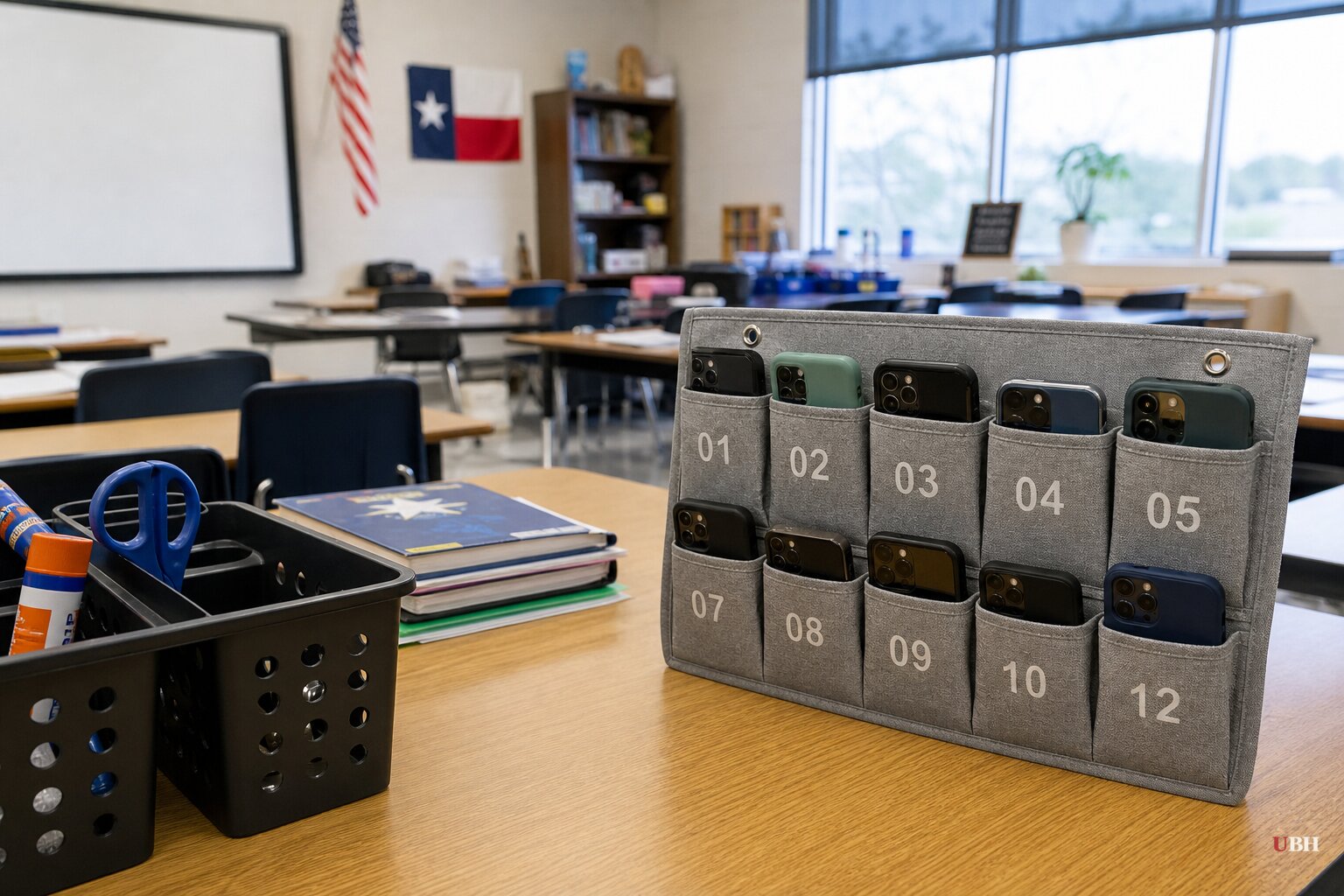
Since Los Angeles Unified banned in-classroom screens for its youngest students earlier this year and Texas schools wrapped their first full year under a statewide personal-device restriction, the case against classroom technology has picked up fresh academic backing this fall as the 2026-27 school year gets underway.
A Washington Post op-ed published earlier this month by University of Pennsylvania professor Sarah Schneider Kavanagh and University of Portland professor Katie A. Danielson argues the damage from classroom devices goes well beyond math and reading scores. Kids who click through individualized software instead of solving problems with classmates, they write, never learn to wait their turn, argue a point, or hear how someone else thinks through a problem. Those are the exact human skills, they argue, that matter most as AI takes over rote tasks.
"Children don't need school to become more like the digital world," Kavanagh and Danielson wrote. "They need a place designed for other aims, such as conversation instead of consumption and collaboration instead of personalization."
A Neuroscientist Goes Further
Jared Cooney Horvath, a neuroscientist and former teacher, makes a blunter claim in his new book, The Digital Delusion, and in written testimony he gave earlier this year to the U.S. Senate Commerce Committee. According to the Guardian, Horvath says Gen Z is measurably less cognitively capable than prior generations despite unmatched access to technology, and he ties the shift to the rise of educational technology starting around 2010-2012.
Horvath cites Programme for International Student Assessment data showing students who used school computers more than six hours a day scored 66 points lower on average than peers who used none at all, according to the Guardian. He also points to falling Western IQ scores beginning around 2000.
The correlation is notable, and Horvath frames it as causal. But the sourcing here is his own interpretation of PISA data, not a controlled study isolating screens from every other variable that changed for kids since 2000, including phones, social media and pandemic disruption. The Guardian doesn't cite independent researchers confirming his causal claim, and it should be read as one neuroscientist's argument, not settled science.
Still, Horvath's underlying data point is hard to dismiss: he says 88% of U.S. school districts now run one-to-one computer programs, and he pegs U.S. edtech as a $400 billion industry. That's a lot of money with a direct financial stake in schools staying digital.
Texas Offers a Real-World Test Case
While the professors and Horvath argue theory, Texas has a year of actual results. House Bill 1481, which requires districts to bar personal communication devices during the school day, just finished its first year statewide.
At College Station ISD, 11th grade history teacher Rachel Bailey told Vital Record the change was immediate. Students who once buried themselves in phones during downtime now play cards, do sudoku puzzles, or just talk to each other. "They want to learn more, do more and they're willing to have fun," Bailey said.
Israel Arevalo, a school psychologist and researcher at the Texas A&M Health Telehealth Institute, told Vital Record that anxiety among teachers, students and parents spiked before the ban took effect, then plateaued and dropped once it was implemented. He attributed the early spike partly to "digital withdrawal," the restlessness and fear of missing out that follows any sudden cut in phone access.
Bailey also said the weeks before enforcement were tense, with staff worried about how to police the rule. By the end of day one, she said, it was "a total breath of fresh air."
The Case for Keeping Devices
The strongest argument on the other side isn't nostalgia for phones. It's that adaptive software genuinely helps students who learn at different paces, particularly kids with IEPs who rely on assistive technology, and students whose only reliable computer access is at school. Individualized instruction can catch a struggling reader or push an advanced one faster than a teacher juggling 30 kids can manage alone. Ripping that out wholesale risks widening gaps for the very students it was meant to help, and neither the Washington Post op-ed nor the Guardian's Horvath interview offers a rebuttal to that specific equity concern.
Where This Goes Next
The backlash is spreading regardless. Lawmakers in at least 17 states had introduced or debated device-and-screen legislation as of July, and Los Angeles Unified, the nation's second-largest district, has already curbed screen time beyond its preschool-through-first-grade ban.
Texas can point to calmer hallways and less phone-policing after one year. Whether math and reading scores in states now restricting devices bounce back, and whether Horvath's IQ-decline thesis holds up under independent scrutiny, remain to be seen. The next round of national assessment data will provide answers.
Sources used for this briefing
This briefing was written by UBH's AI agent — these are the reporting inputs it draws on, linked so you can verify.


