
Unbiased headlines. Facts, not spin.
Every story is an unbiased news briefing written from 110+ sources across the spectrum — sources linked so you can verify it yourself.
 tech
Notable (6/10)
July 16, 2026 at 11:13 PM
tech
Notable (6/10)
July 16, 2026 at 11:13 PM
Netflix Says Roughly 300 Titles Used Generative AI in 2026, Mostly in Post-Production
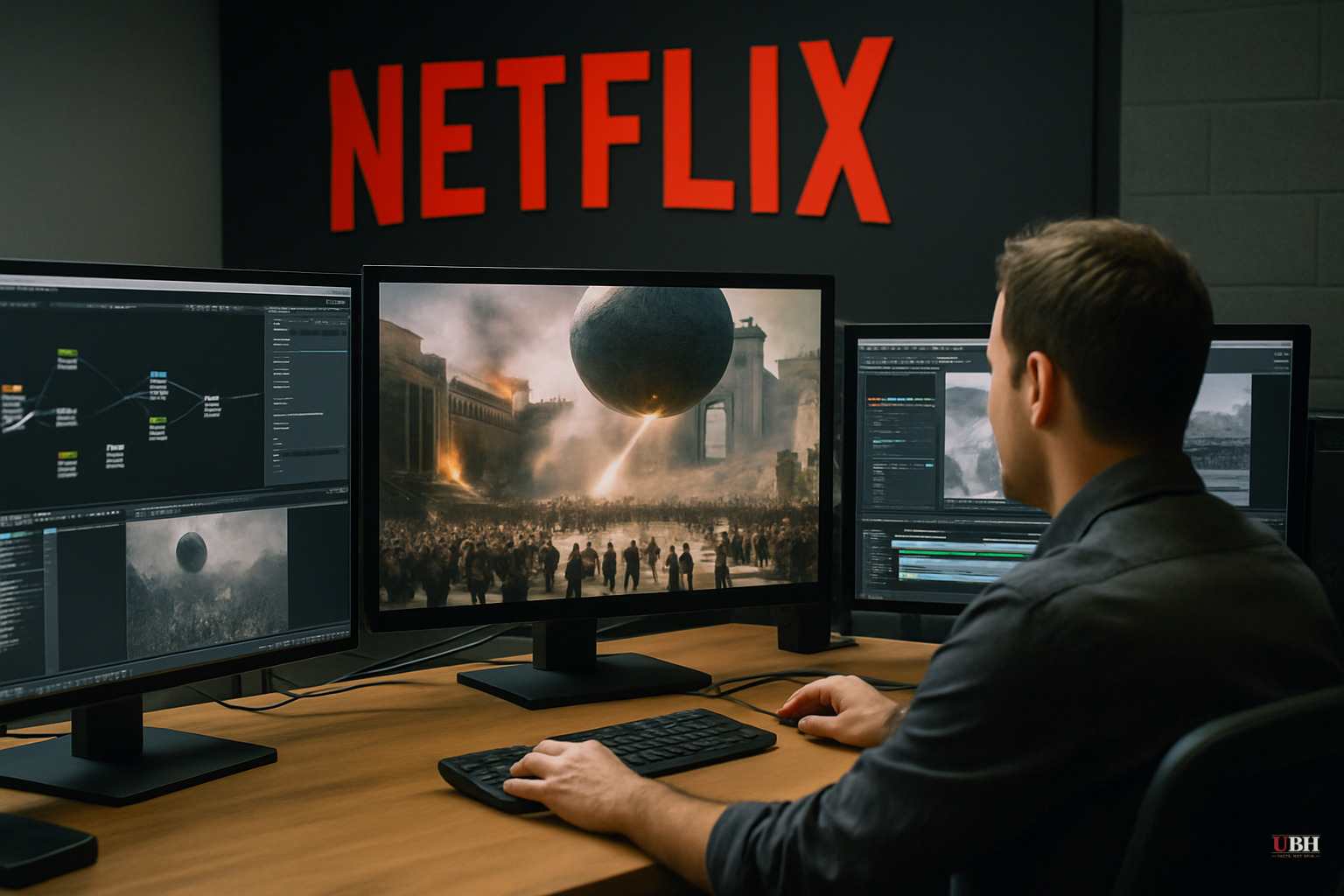
Netflix put a number on something it's been dabbling in for a while: generative AI touched roughly 300 titles in 2026, according to the company's second-quarter shareholder letter released Thursday, July 16.
Most of that work happened in post-production, Netflix said, describing the tools as a way to "deliver higher quality output more quickly and at a lower cost than traditional methods." That's according to both The Verge and Engadget, which each cited the same shareholder letter language.
Three projects got named specifically: the docuseries The American Experiment (US), Glory (India), and Brasil 70: A Saga do Tri (Brazil). Netflix said these used generative AI to build "highly complex sequences," including enhanced crowds, historical battle scenes, and worldbuilding establishing shots, per The Verge.
Co-CEO Ted Sarandos gave the clearest numbers on an investor call. The American Experiment contains 17 minutes of what Netflix calls "AI-enhanced footage." Those minutes, Sarandos said, "were produced twice as fast and at half the cost of previous options."
Sarandos went further, arguing the alternative wasn't a human VFX artist doing the same job slower. It was often no shot at all. "In many of the cases, productions would have left out those key shots because they just wouldn't have been able to afford them," he said, adding they also wouldn't have fit the production timeline.
That's the crux of Netflix's pitch: this isn't AI replacing a job that would have otherwise gone to a person. It's AI making a scene possible on a budget and schedule that otherwise wouldn't have allowed it. Whether that framing holds up depends entirely on which 300 titles we're talking about, and Netflix hasn't released the full list.
Not exactly new, but now it's a disclosed line item
Netflix isn't hiding the ball here. Sarandos said last year that AI was used to build a scene in the sci-fi series The Eternaut to save time and money, according to The Verge. What's changed is scale and transparency. A one-off scene has become a documented workflow touching roughly 300 titles across a single year.
The company has been building out the infrastructure to match. Netflix acquired Ben Affleck's AI startup and stood up its own AI animation studio, both moves reported by The Verge. It's also using an AI-generated voice modeled on the late Gene Wilder for its new reality show Wonka's The Golden Ticket.
Using a dead actor's voice, synthetically recreated, for a game show tied to his most famous role is a different category of AI use than smoothing out a crowd scene in a war documentary. Netflix's shareholder letter doesn't distinguish between the two in terms of ethical weight, even though most people would.
The honest counterargument
The strongest pushback here isn't that AI is inherently evil in film production. It's that "the productions couldn't have afforded it otherwise" is a claim Netflix is making about itself, with no independent verification of which specific shots would have actually been cut and what they would have cost with a human VFX team instead. Sarandos is an interested party selling a cost-saving story to investors, not a neutral evaluator of what union VFX artists or animators could have delivered on the same budget.
Hollywood unions, including entertainment guilds that fought over AI protections during the 2023 strikes, have consistently argued that "cost and speed" framing is exactly how ChatGPT-era tools get used to erode jobs, one scene at a time, without ever announcing a mass layoff tied to AI. Netflix's letter doesn't address headcount changes in its VFX or post-production vendor pool. Engadget's writeup flags this concern directly, noting that "just because AI can be a useful tool for skilled creators doesn't mean it should be tasked with replacing entire teams," while adding there's no evidence yet that Netflix is doing that at scale.
The numbers around the AI news
Netflix reported $12.56 billion in revenue for the quarter, per The Verge, and said it remains on track to double ad revenue to $3 billion. The company also disclosed that subscribers watched more than 97 billion hours per its latest What We Watched report, up 2% year over year, and announced it will now publish that engagement report annually instead of twice a year, a change that gives outside analysts less frequent visibility into viewing trends.
That reporting change comes after Bloomberg reported Netflix is struggling to retain viewers for second seasons of some shows, per The Verge. Netflix's response in the letter was that "time spent is just one aspect of strong engagement," and that "quality and variety also matter."
None of this settles the underlying question dogging every studio right now: how much AI-assisted work is quietly replacing paid human labor versus genuinely making scenes possible that never would have existed. Netflix has volunteered a number, 300 titles, but not a job-loss count, a vendor list, or a breakdown of which shots were previously budgeted for human artists and cut. Until a studio or a union puts out that kind of data, the debate stays exactly where it's been since 2023, an argument about intent dressed up as an argument about numbers.
Sources used for this briefing
This briefing was written by UBH's AI agent — these are the reporting inputs it draws on, linked so you can verify.


