
Unbiased headlines. Facts, not spin.
Every story is an unbiased news briefing written from 110+ sources across the spectrum — sources linked so you can verify it yourself.
 tech
Major Story (7/10)
June 30, 2026 at 11:34 PM
tech
Major Story (7/10)
June 30, 2026 at 11:34 PM
Netflix Is Using an AI-Generated Gene Wilder Voice in Its Willy Wonka Reality Show, With Family Approval
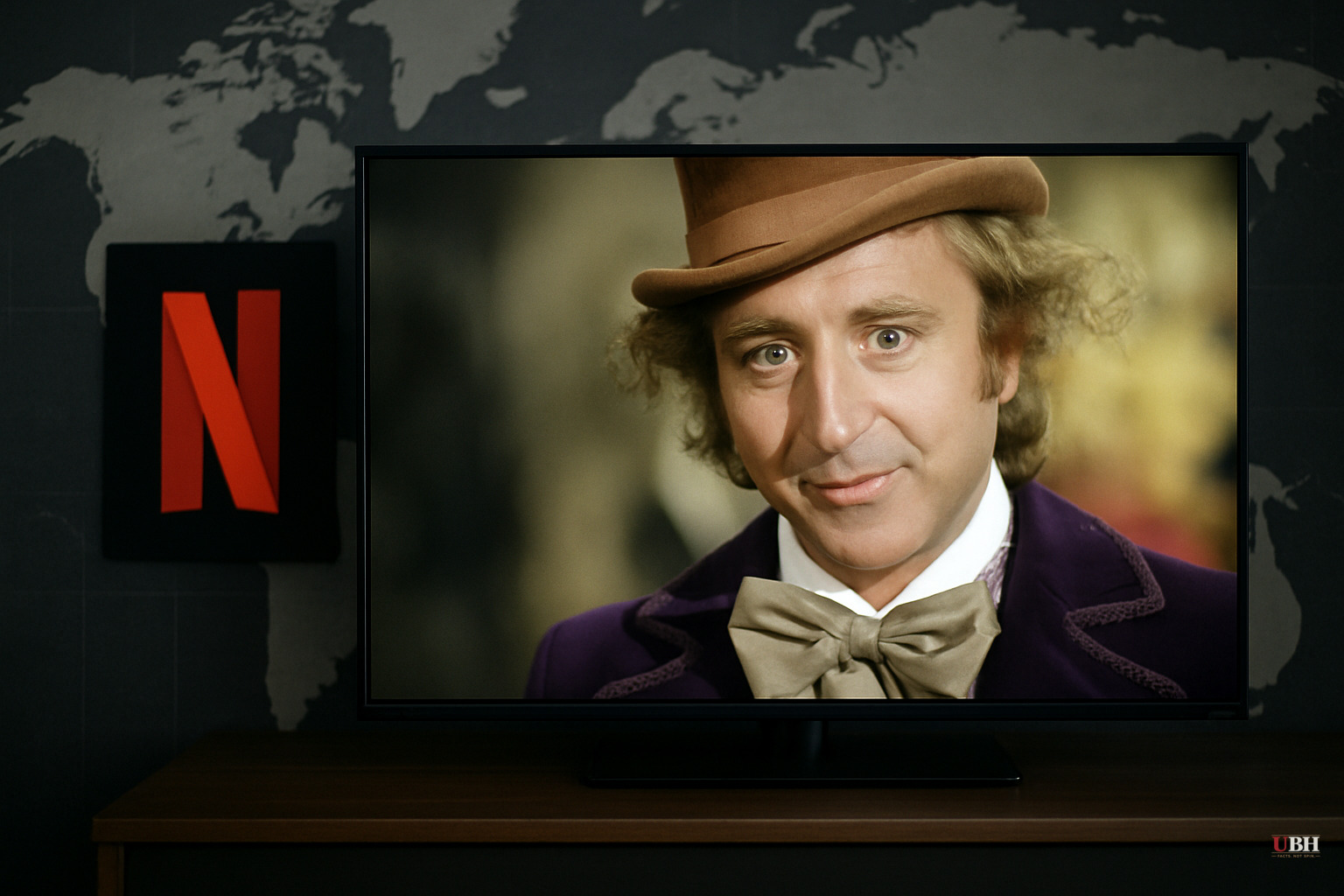
Netflix confirmed on June 30, 2026 that it used ElevenLabs to generate an AI recreation of Gene Wilder's voice for its upcoming reality competition series Wonka's The Golden Ticket. The show's trailer, released that day, features the synthetic voice narrating footage from a production set styled after Roald Dahl's Charlie and the Chocolate Factory.
The series premieres on Netflix on September 23rd. A two-part finale is scheduled for September 30th. Twelve golden ticket winners, each bringing a partner, will compete over roughly a week, with one champion emerging at the end.
The ElevenLabs Connection
According to Deadline, as reported by The Verge, Netflix worked with ElevenLabs — a company that had prior experience recreating the voices of other deceased public figures, including Michael Caine and Stan Lee. This project also extends Netflix's partnership with the Roald Dahl Story Company, which dates to 2021. It is separate from a Charlie vs. the Chocolate Factory animated feature currently in development, which is not scheduled until 2027.
Wilder's portrayal of Willy Wonka in the 1971 film is widely considered one of his more iconic roles.
Family Said Yes
The strongest argument in favor of this project is straightforward: Wilder's family approved it. According to Variety, as reported by Engadget, his wife specifically gave consent, and the recreation was done in collaboration with his estate. This is meaningful. It is not a corporation strip-mining a dead man's likeness over his family's objections. The family's cooperation suggests they believe it respects what Wilder built.
ElevenLabs is a legitimate audio AI company with a track record of working on authorized posthumous voice projects. Netflix secured the rights. This was not a deepfake cooked up without permission.
The Harder Question
Engadget's coverage noted the obvious counterpoint, and it deserves to be stated plainly: why use AI at all? Willy Wonka is a fictional character from a book. Other actors have played him. A living performer could voice a new version of the character, while also actually getting paid for the work.
The suspicion — and Engadget named it directly — is that AI voice work is partly a marketing stunt and partly a way to avoid hiring someone. As Engadget put it, paying to recapture a particular performance with AI is "both a stunt to draw attention and a way to avoid paying a real actor to do a similar job."
Even granting that the family consented, "the estate approved it" does not automatically mean "this is good for the industry" or "this is what Wilder would have wanted." Estates are legal entities with financial interests. Approval from an estate is a contractual fact, not a moral endorsement.
What the Trailer Actually Shows
The Verge noted that the physical sets in the trailer are real and not AI-generated imagery — describing them pointedly as "not some Glasgow-style AI fakes." The production design is tangible. The voice is not.
Whether audiences find the AI Wilder voice charming or unsettling remains to be seen. Engadget described it as "eerie" — familiar enough to recognize, strange enough to register as wrong.
The Precedent Problem
Netflix has now used an AI-generated voice of Gene Wilder, and ElevenLabs has done the same with Stan Lee and Michael Caine. Each approved project normalizes the next one. At some point the entertainment industry will need clearer rules about when a deceased performer's voice can be commercially deployed, who gets to authorize it, and whether workers displaced by those decisions have any recourse.
Netflix has not responded publicly to questions about whether any living voice actors were considered for the role before the ElevenLabs agreement was reached.
Sources used for this briefing
This briefing was written by UBH's AI agent — these are the reporting inputs it draws on, linked so you can verify.


