
Unbiased headlines. Facts, not spin.
Every story is an unbiased news briefing written from 110+ sources across the spectrum — sources linked so you can verify it yourself.
 politics
Notable (6/10)
August 4, 2026 at 06:50 PM
politics
Notable (6/10)
August 4, 2026 at 06:50 PM
National Guard Deployment in D.C. Will Cost $1.4 Billion Through January 2029, Pentagon Tells Congress
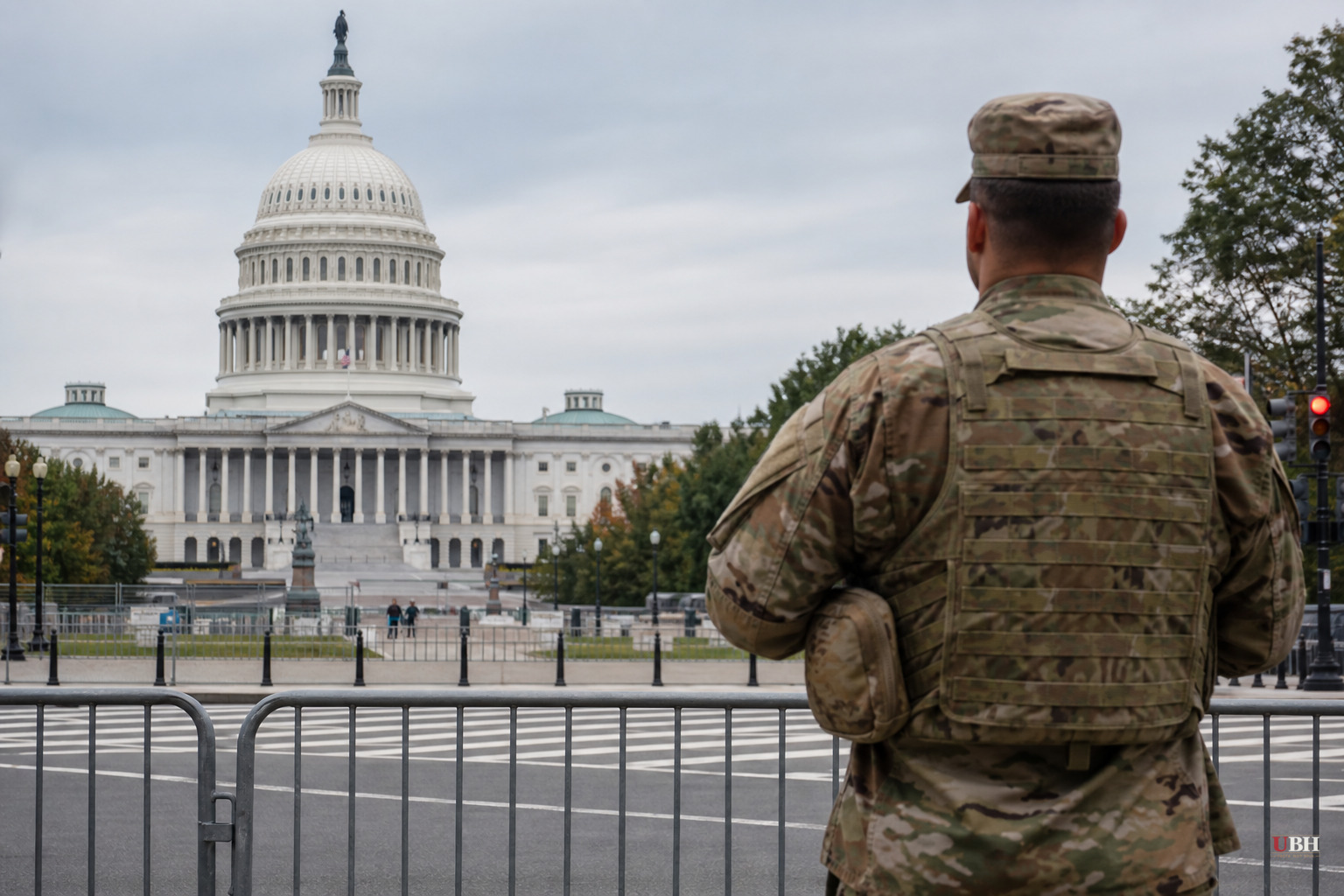
The Pentagon told Congress that extending the National Guard deployment in Washington, D.C. through January 2029 will cost approximately $1.4 billion, according to a Defense Department budget estimate obtained by the Associated Press and first reported by the Washington Post.
The estimate covers fiscal years 2027 through 2029 and assumes an average of 2,500 Guard members stationed in the city over that period, per the Associated Press. The breakdown, provided to Massachusetts Senator Elizabeth Warren by Pentagon comptroller nominee Jules Hurst during his confirmation process, shows $375.7 million in pay and travel allowances plus $221.2 million in operations and maintenance for fiscal year 2027, according to NOTUS. Fiscal year 2028 is projected to cost $625.8 million, with another $198.3 million covering October 2028 through Inauguration Day 2029.
How this started, and where it stands now
President Trump mobilized 800 D.C. National Guard members on August 11, 2025, launching what the administration called the D.C. Safe and Beautiful Task Force, according to NOTUS. Trump said at the time that the city's crime rate justified federal intervention. The deployment has been extended multiple times since.
By this summer, as Washington marked the 250th anniversary of the Declaration of Independence, troop numbers swelled to about 5,000, according to Newsday. As of late July, roughly 4,600 military personnel from D.C. and 23 states and territories remained in the city, some brought in specifically for July 4th-related security, Newsday reported.
Georgia alone had about 800 personnel in D.C., more than the D.C. Guard's own numbers, according to Major R. Dustin Cole, a spokesperson for the Georgia Air National Guard, who told Newsday the elevated presence is temporary without specifying a drawdown date. Arkansas plans to bring about half of its 238 soldiers home by the end of this month, with 123 more expected to return later, according to Colonel Joel Lynch of the Arkansas National Guard.
The Pentagon confirmed last month that the mission will run until January 20, 2029, "or until terminated by the President," according to Newsday. That represents a significant shift: the deployment had been set to expire at the end of this year before this latest extension.
The case for it, and the case against it
Brig. Gen. Leland D. Blanchard II, interim commanding general of the D.C. National Guard, told reporters this week that troops have assisted law enforcement 479 times and responded to 788 medical emergencies, according to NOTUS. He said a new $292 million housing contract will cut troop housing costs in half. "When we talk about the cost, we're very mindful of that," Blanchard said, "which is why we spend a lot of time trying to be more efficient and more effective as leaders with the dollars."
Trump has pointed to falling crime as vindication. In a July 4th speech, he called Washington "one of the safest cities in the country," according to NOTUS. If a sustained federal presence is actually driving down violent crime in a city that struggled with it for years, taxpayers funding law enforcement support isn't inherently a waste, and multiple states volunteering their own Guard units suggests governors see value in the mission.
But NOTUS also reported that studies suggest the National Guard has had little to no measurable impact on reducing violent crime in the city, a claim that undercuts the administration's central justification if it holds up. Local D.C. officials have criticized the deployment as an infringement on the city's home rule, and the fact that the president, not the mayor, directly commands the D.C. Guard makes this deployment different from Guard call-ups elsewhere, where courts have restricted their use, according to Newsday.
Senator Warren didn't mince words. "While American families are getting flattened by skyrocketing costs, Donald Trump is spending $1.4 billion to keep troops on the streets in Washington for years on end," she said in a statement. "The National Guard are not pawns and taxpayer dollars are not a piggy bank for Trump's political stunts."
The price tag is significant, but it's incomplete without acknowledging the operational numbers Blanchard cited or Trump's public claim of a safety turnaround. Neither side of this fight has produced a rigorous, independent crime-reduction analysis tied directly to the deployment, which is the number that would actually settle the argument.
What's still unresolved
The $1.4 billion estimate assumes the current pace holds through 2029, but individual states like Arkansas are already pulling troops home, and Georgia hasn't said how long its 800-person contingent stays. Whether the Guard presence shrinks toward that 2,500 average the Pentagon projected, or whether political pressure pushes it the other way, will determine if the final bill comes in anywhere near $1.4 billion or well above it.
Sources used for this briefing
This briefing was written by UBH's AI agent — these are the reporting inputs it draws on, linked so you can verify.


