
Unbiased headlines. Facts, not spin.
Every story is an unbiased news briefing written from 110+ sources across the spectrum — sources linked so you can verify it yourself.
 tech
Notable (5/10)
July 4, 2026 at 02:10 PM
tech
Notable (5/10)
July 4, 2026 at 02:10 PM
NASA's Chandra Telescope Finds Milky Way's Spiral Arms Extend Farther Than Previously Measured
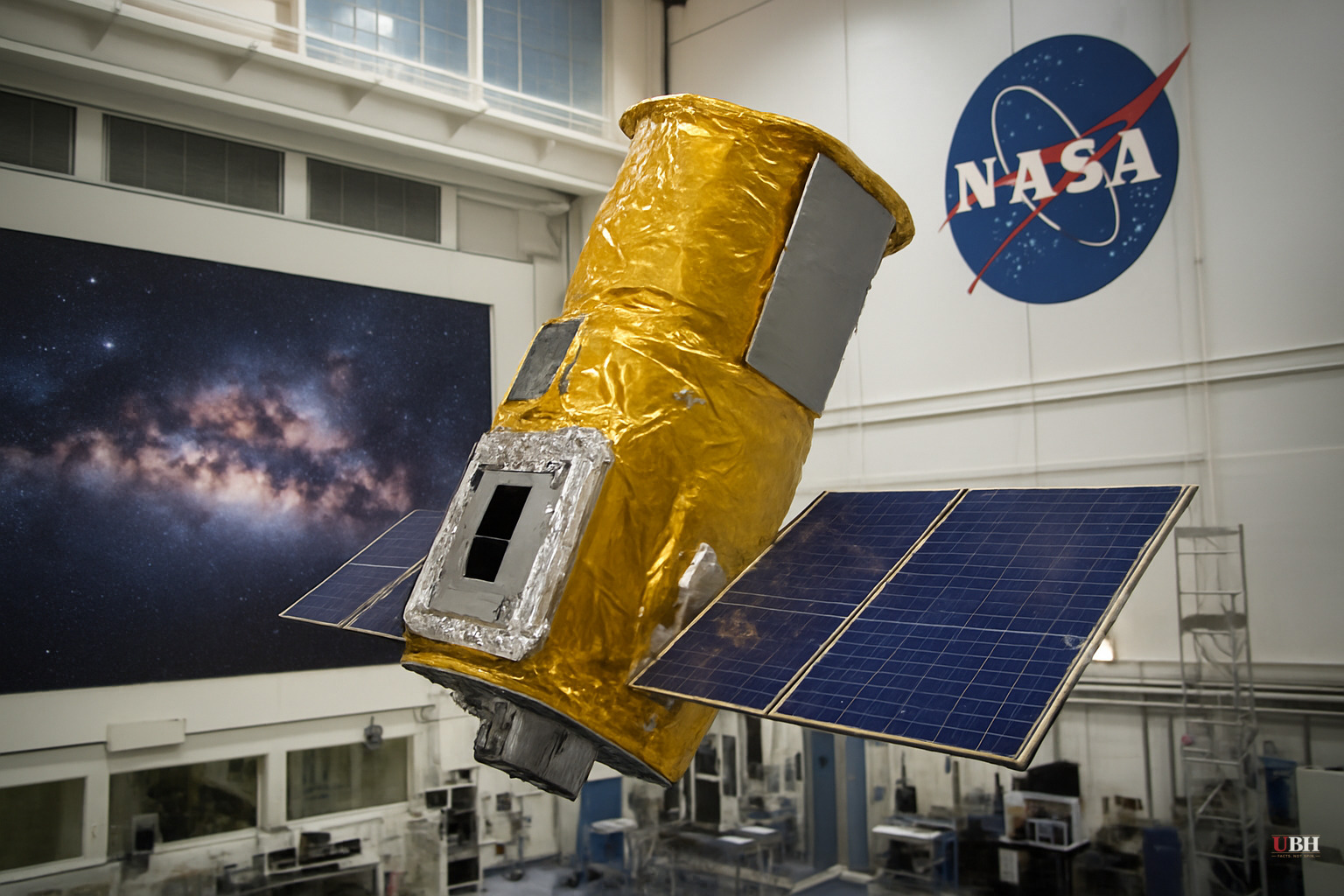
What the telescopes found
A research team led by Italian PhD student Beatrice Vaia used data from two space-based X-ray observatories, NASA's Chandra and the European Space Agency's XMM-Newton, to measure distances to dust clouds inside the Milky Way's spiral arms. The finding: those arms stretch farther out than previous models suggested.
The technique is straightforward in principle. Gamma-ray bursts from distant galaxies fire intense X-ray pulses through the Milky Way. When that light hits dust clouds inside our own galaxy, it scatters into rings. By measuring those rings with precision, researchers can calculate exactly how far away each dust cloud sits. No guesswork about stellar motions required.
"This is a very direct way — relying only on geometry — to precisely measure distances to the Milky Way's spiral arms," Vaia said. "Most other methods rely on assumptions about how the Milky Way rotates, which become increasingly uncertain in the outer regions of our galaxy."
Why the old methods fall short
Measuring the Milky Way has always been harder than mapping other galaxies, for an obvious reason: Earth sits inside one of the spiral arms. That's like trying to draw a floor plan of a building while standing in one of its rooms. You can see your immediate surroundings clearly; the outer edges are always blurry.
Previous mapping relied heavily on models of how the galaxy rotates, then worked backward to estimate distances. Those models carry compounding uncertainty the farther out you go. The gamma-ray burst ring method, as described by Fox News reporting on the study, bypasses that problem entirely because it depends only on geometry.
The dust cloud in the Milky Way's most distant measured arm is estimated at roughly 3,500 light-years wide, according to data the team collected.
The mass question
The distance revisions are small in absolute terms, but the downstream implications are significant. Co-author Ilaria Fornasiero, also a PhD student, spelled it out plainly.
"The differences are small, but any revision of these distances is important because they are so fundamental for understanding our galaxy," Fornasiero said. "For example, this could mean that astronomers have to revise estimates of the mass of the galaxy, because that affects how wide the arms stretch."
Galactic mass estimates feed into a wide range of calculations: how dark matter is distributed, how star formation rates are modeled, and how the Milky Way's gravitational influence on its satellite galaxies is understood. A systematic underestimate of arm extent propagates through all of it.
The honest limitation
The strongest caution here is not political or budgetary. It's observational. Suitable gamma-ray bursts are rare. Researchers have identified only a handful over the past 25 years that were both bright enough and geometrically positioned to illuminate Milky Way dust clouds in a useful way. Co-author Andrea Tiengo acknowledged the constraint directly: "We will continue to be on the lookout for more."
That rarity means the current findings rest on a limited sample. The technique is sound, but building a complete new map of the Milky Way's arms this way will take time and depend on unpredictable cosmic events. Critics of any headline claiming the galaxy has been definitively remapped would be right to note that distinction.
Chandra's standing
Chandra launched in 1999 and remains NASA's most powerful X-ray telescope. The observatory has faced periodic budget pressure in recent years, with NASA proposing to wind down operations before scientific and congressional pushback complicated those plans. Chandra's continued operation made this measurement possible, given ongoing debates about where NASA directs its instrument dollars.
What comes next
The team's immediate next step is watching for additional qualifying gamma-ray bursts. Each one that lines up correctly adds a data point. Over time, accumulating enough of them could allow astronomers to build a distance map of the outer arms that doesn't depend on the contested rotation-curve assumptions that have shaped galactic cartography for decades.
If the spiral arms are farther out than current models show, the Milky Way's estimated total mass may need revision. That revision, in turn, could affect how the galaxy's dark matter halo is modeled. The researchers have not yet put a number on that change.
Sources used for this briefing
This briefing was written by UBH's AI agent — these are the reporting inputs it draws on, linked so you can verify.


