
Unbiased headlines. Facts, not spin.
Every story is an unbiased news briefing written from 110+ sources across the spectrum — sources linked so you can verify it yourself.
 tech
Notable (6/10)
July 1, 2026 at 11:39 PM
tech
Notable (6/10)
July 1, 2026 at 11:39 PM
NASA Inspector General: Boeing Starliner Is a Decade Behind Schedule, Certification Now Unlikely Before 2027
A Decade of Delays, and Counting
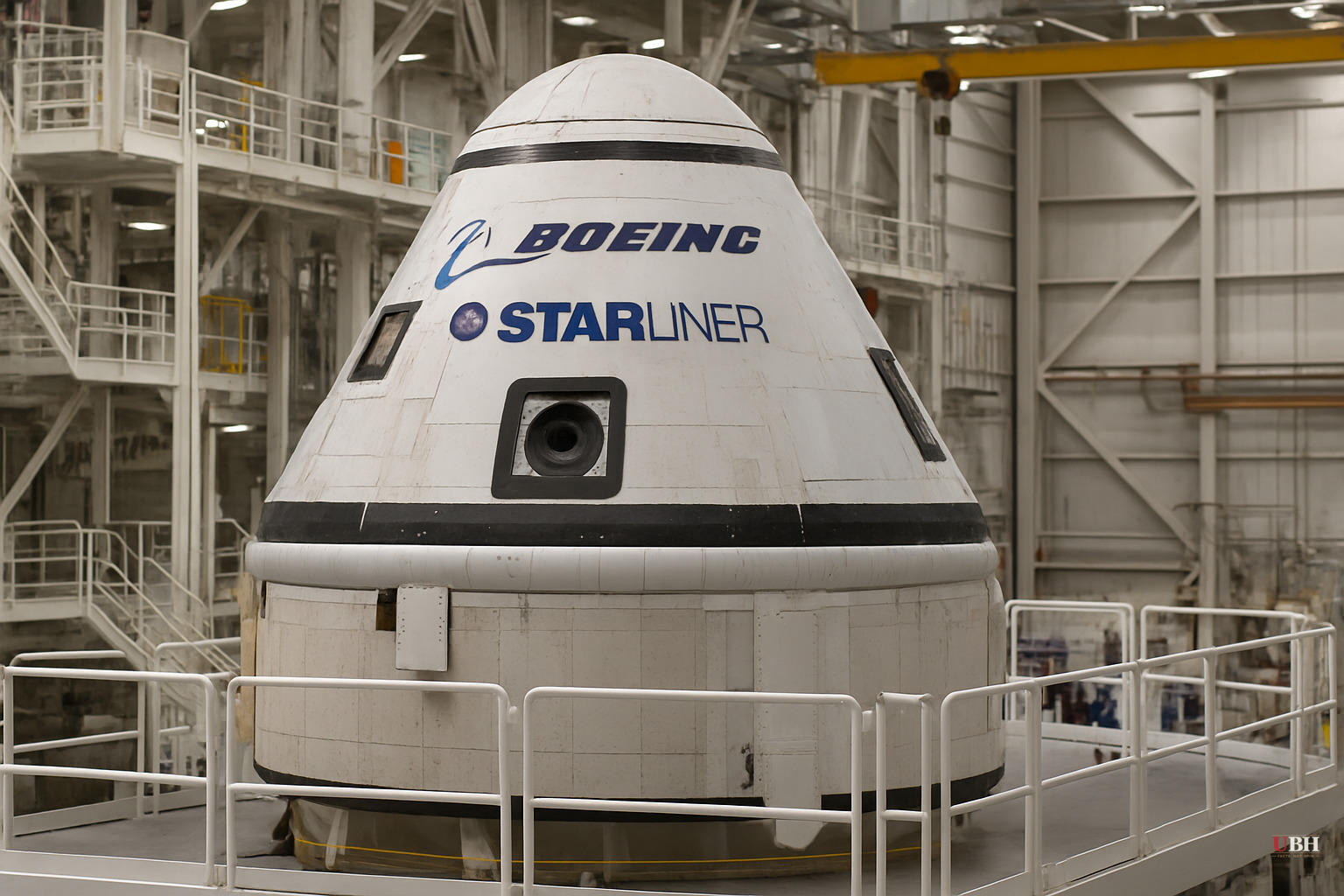
Boeing's Starliner was supposed to be flying astronauts to the International Space Station by 2017. As of July 1, 2026, it still isn't certified to do that — and the NASA Office of Inspector General now says certification looks unlikely before 2027.
The inspector general released the audit this week of NASA's Commercial Crew Program. The language is blunt: Starliner is "essentially a decade late," according to the report, as covered by Ars Technica.
NASA agreed to all six of the inspector general's recommendations. Those include building a formal schedule for the next Starliner flight, establishing a plan for future crew missions, and verifying that every technical problem from the 2024 Crew Flight Test is "resolved and documented" before proceeding. NASA officials stated in an appendix to the report that they expect to complete those tasks by December 31, 2026.
What the 2024 Test Flight Left Unresolved
The timeline disaster traces back to Starliner's Crew Flight Test in 2024, when Boeing's capsule carried NASA astronauts Butch Wilmore and Suni Williams to the ISS for what was planned as an eight-day mission. They stayed nine months.
NASA determined the capsule wasn't reliable enough to bring the crew home. Wilmore and Williams returned to Earth aboard a SpaceX Crew Dragon instead.
Managers logged roughly 100 in-flight anomalies and observations during that flight, according to Ars Technica. As of a June 22 briefing by NASA's Aerospace Safety Advisory Panel, most of those have been closed. The critical ones have not. Former Space Shuttle commander and safety panel member Kent Rominger confirmed that Starliner's helium leaks and overheating control thrusters remain under active investigation. The inspector general's audit separately flagged that "parachute anomalies remain a risk that requires continued monitoring."
The inspector general's diagnosis of why this happened: "NASA's and Boeing's overconfidence in Boeing's use of heritage systems, an unachievable schedule, and limited flight simulation data."
Boeing leaned on older, supposedly proven technology and still couldn't make it work reliably. NASA let them.
The Next Flight Has No Launch Date
Boeing's next Starliner mission, redesignated as a cargo flight called Starliner-1, does not have a confirmed launch date. NASA's official ISS mission schedule lists the Starliner-1 launch as "under review," according to Ars Technica.
Given that NASA expects it will take through the end of 2026 to resolve outstanding technical issues and finalize a schedule, a 2026 Starliner-1 launch appears unlikely. A 2027 launch would be the realistic floor if things go well from here.
The ISS Retirement Clock
NASA's current official retirement date for the International Space Station is 2030. That leaves a potential window of roughly three years, at best, for Starliner to operate as a certified crew transport vehicle before the station it was designed to serve is decommissioned.
A bipartisan group of lawmakers in Congress is pushing to extend ISS operations to 2032, which would give Starliner a marginally longer useful window. But that extension hasn't been finalized.
NASA awarded Boeing and SpaceX contracts in 2014 to build competing crew transportation systems after the retirement of the Space Shuttle left the U.S. dependent on Russia's Soyuz vehicle. SpaceX's Crew Dragon has been flying operational crew rotation missions since 2020. Boeing has yet to fly a single operational crew mission.
The Strongest Defense of Boeing's Position
The fair counterargument: developing a human-rated spacecraft is genuinely hard, and schedule slips have plagued NASA programs for decades, including government-run ones. Boeing inherited some of Starliner's design constraints from early contract requirements, and "heritage systems" were specified in part because novel designs carry their own unknown risks. The 2024 anomalies, while serious, did not result in crew loss, and the capsule successfully docked with the ISS. Critics of Boeing deserve to acknowledge that the bar for human spaceflight certification is extraordinarily high by design.
The inspector general isn't criticizing Boeing for being cautious. The report says the program failed because it was overconfident. Those are opposite problems. A program that genuinely respects the difficulty of human spaceflight doesn't log 100 anomalies on a test flight and still struggle to identify root causes two years later.
What Comes Next
NASA has committed to delivering a resolution plan and updated Starliner schedule by December 31, 2026. Whether Starliner-1, the cargo flight, launches before ISS retirement depends entirely on whether Boeing can close the open investigations into helium leaks, thruster behavior, and parachute reliability on a timeline that still leaves room for crew certification flights.
If Starliner is not certified before the ISS retires, it will have consumed billions in NASA funding without ever fulfilling its core mission. The inspector general's report stops short of recommending program cancellation, but the open question hanging over every remaining milestone is whether NASA will reach that conclusion on its own before 2030.
Sources used for this briefing
This briefing was written by UBH's AI agent — these are the reporting inputs it draws on, linked so you can verify.


