
Unbiased headlines. Facts, not spin.
Unbiased Headlines is an independently owned news organization. We bring you the facts, not opinions, written fresh from 110+ named sources. Sources linked so you can verify it yourself.
 sports
Notable (5/10)
Event date: October 18, 2026 ·
MLB Owners Seek $245.3 Million Salary Cap, Union Chief Calls It a 'Nuclear Bomb' as Dec. 1 Lockout Nears
Baseball's labor war moved to center stage on Friday, Oct. 23. Hours before the Milwaukee Brewers and Tampa Bay Rays opened the World Series at American Family Field, Commissioner Rob Manfred and players' association head Bruce Meyer held separate press sessions. Neither gave an inch.
The current collective bargaining agreement expires at 11:59 p.m. on Dec. 1. Management is expected to lock out the players immediately. That would threaten spring training, set to start Feb. 9, and opening day on March 24.
What the owners have put on the table
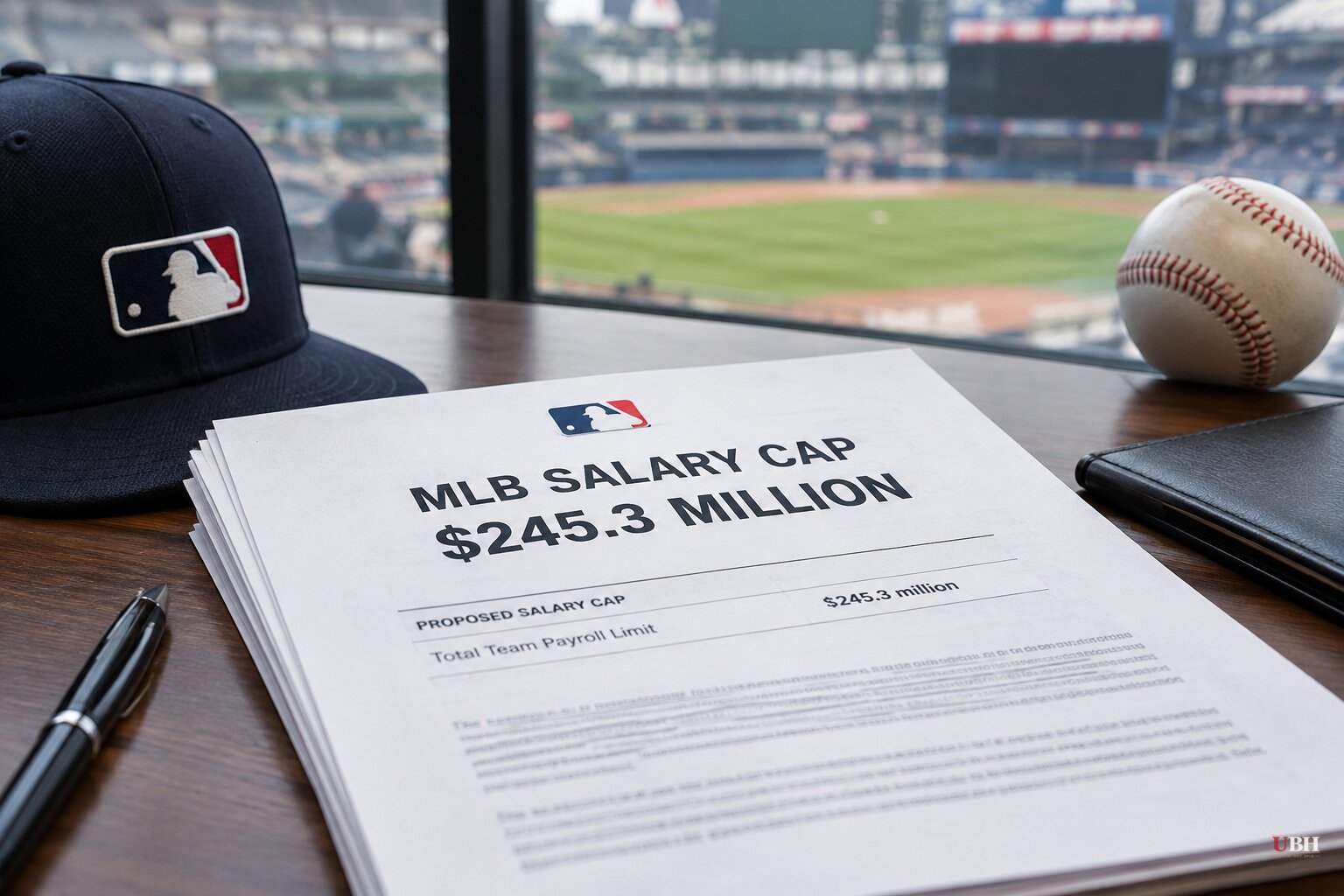
MLB's opening proposal this summer was built around a hard salary cap. It would set the 2027 cap at $245.3 million, measured by luxury tax payroll, with a floor of $171.2 million that all 30 clubs would have to meet. Revenue would be split 50/50 between clubs and players, and all local media revenue would be shared equally.
Individual contracts would also be limited. A player could not take more than 15% of a team's payroll. According to ESPN, a free agent changing teams this offseason could sign for at most five years and $202 million. A player re-signing with his own club could get up to six years and $265 million.
For comparison, Juan Soto's deal with the New York Mets is a record $765 million over 15 years.
The owners' other proposals include granting some players free agency a year sooner, shortening the schedule to 154 games and adding postseason games. Meyer says all of them depend on the cap being accepted.
Meyer: 'nuclear bomb'
Meyer called the cap a "nuclear bomb" and said the other proposals amount to "a charade" because they are tied to it. "This would be a tough negotiation even without their demand for the nuclear bomb of the salary cap," he said.
He also accused ownership of spending the season telling fans their product is broken. "It is kind of sad that the league and the owners have once again been focusing not on the greatness of the game, not on the greatness of the players, not on the greatness of the playoffs, but they've been focusing on basically telling the consumers of their product that their product is broken," Meyer said.
The union points to the matchup on the field as evidence. This is the first World Series in 35 years between two teams in the bottom half of payroll. Milwaukee ranked 19th as of Aug. 31, and Milwaukee is 30th among MLB teams in market size. The Brewers knocked out the two-time defending champion Los Angeles Dodgers. Tampa Bay beat Cleveland, which has the smallest payroll in the league, in the ALCS.
"There's no reason whatsoever that the Pirates can't do what the Brewers have done or what the Rays have done. None whatsoever, right?" Meyer said.
Manfred: the matchup proves the opposite
Manfred read the same series the other way. "It's not that no small market can win, it's just that it's pretty rare," he said. He said the data shows "our larger markets have a very statistically significant advantage in terms of making the playoffs and going deeper into the playoffs."
He also told reporters that owners are unified. "We have an unprecedented level of unanimity among ownership that it is something that we need to do," Manfred said.
Asked how the sides could reach a deal when the union rejects a cap outright, Manfred said that "re-thinking where you are is a really important part of trying to make a deal." He called it "a skill in collective bargaining" and said that "it's easy to say, 'I'm here and I'm never moving.'"
The money argument
Baseball is the only major North American league without a salary cap. Reason argues that the owners' push is about labor costs, not competitive balance. It notes that some studies have found revenue sharing, not caps, creates balance, and that Formula 1 team valuations jumped after teams agreed to a cost cap. CBS Sports reports a similar view of ownership's internal thinking: that the lack of a cap is seen as holding down franchise values.
Manfred has argued the cap is needed for competitive reasons. The owners say the salary floor shows good faith because it would force some low-spending clubs to pay players more.
History is not encouraging
Every CBA negotiation from 1972 through 1994-95 ended in some kind of work stoppage. The 1994 strike cost fans the final two months of that season and the first month of 1995, and the World Series was canceled. The owners were unified then too, and they did not get a cap.
The last round, in 2021-22, produced a 99-day owner lockout that delayed the start of the 2022 season. The NHL lost an entire season before it got its cap.
There is also no pressure to settle early. Both sides are expected to hold their positions until games and paychecks are actually at risk.
The open question is who blinks first. MLB's own proposal asks players to give up the free-agent market that produced Soto's $765 million deal. The union has said it will not accept a cap at any level. The next hard date is Dec. 1, and the next one after that is Feb. 9.
Sources used for this briefing
5 links from 5 independent newsrooms (syndicated copies of the same report count once)
These are the sources it draws on, linked so you can verify.


