
Original briefings. Zero spin.
Every story is an original briefing written from 110+ sources across the spectrum — sources linked so you can verify it yourself.
 politics
Major Story (7/10)
August 6, 2026 at 03:10 PM
politics
Major Story (7/10)
August 6, 2026 at 03:10 PM
Missouri Secretary of State Blocks Referendum Petition on GOP's New Congressional Map
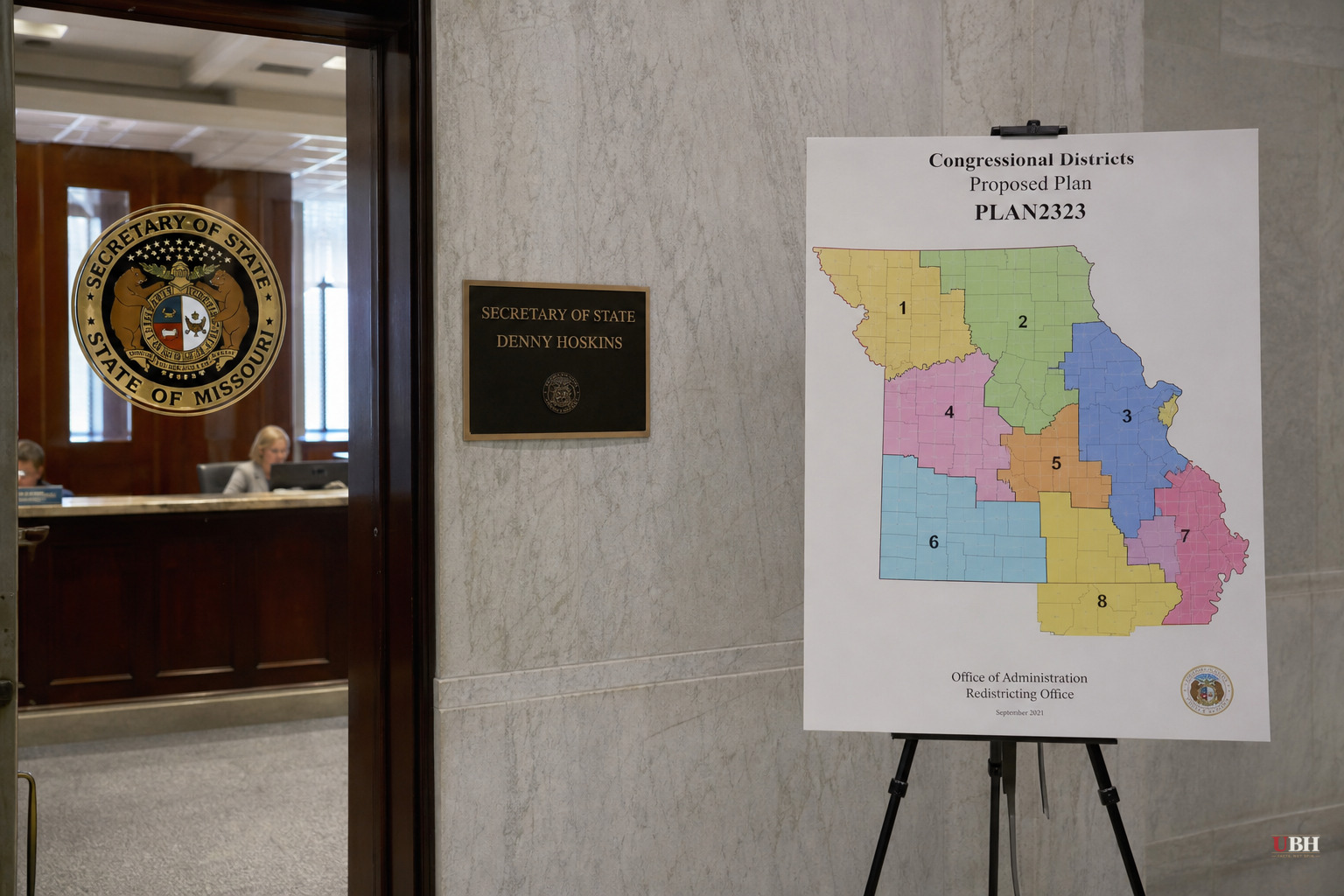
Missouri's Secretary of State Denny Hoskins, a Republican, rejected a citizens' petition on Tuesday that sought a November referendum on the state's newly redrawn congressional map. The map, pushed by the Republican-led legislature at Donald Trump's urging, was already used in this week's primaries.
Hoskins didn't reject the petition for lack of signatures. According to the Guardian, organizers had submitted hundreds of thousands of them. Instead, Hoskins argued the whole effort was void from the start: he says Missouri's constitution doesn't allow congressional redistricting plans to be challenged by voter referendum, period. "Challenging a congressional map is unconstitutional under Missouri law," Hoskins said.
If Hoskins is right about what Missouri law actually permits, the signature count never mattered. If he's wrong, he's blocked a referendum that voters had a right to force onto the ballot. The question of whether Hoskins' interpretation is correct will now be decided by the courts.
People Not Politicians Missouri, the group organizing the referendum push, isn't backing down. Executive director Richard von Glahn accused Hoskins of trying to silence voters. "Secretary of State Hoskins is making a last desperate attempt to silence the people's voice in Missouri," von Glahn said, adding there were more than enough valid signatures to qualify.
The group says it will contest Hoskins' decision in court, which means Missouri's courts, not Hoskins, will likely have the final word on whether this referendum was ever legally viable.
What the map actually does
Missouri Republicans already hold six of the state's eight congressional seats. The new map redraws the Kansas City-based 5th District, currently held by longtime Democratic Rep. Emanuel Cleaver, stretching it deep into rural central Missouri to dilute its Democratic lean and give Republicans a real shot at a seventh seat.
Missouri followed Texas as the second GOP-controlled state to redraw its congressional lines mid-decade after Trump called on red states to do so last year, aiming to protect the party's narrow U.S. House majority ahead of the 2026 midterms. Redistricting typically happens once a decade after the census, not mid-cycle, so this kind of proactive redraw is itself a break from the normal pattern, one both parties have used opportunistically when they've had the votes to do it.
A second rejection, same day
Hoskins didn't stop at the redistricting referendum. He also rejected a separate proposed constitutional amendment, backed by the Respect Missouri Voters coalition, that would have made it harder for the legislature to interfere with the citizen initiative process itself.
That amendment would have barred lawmakers from making it tougher to qualify future initiatives for the ballot, and would have required an 80% supermajority in both the House and Senate to reverse or amend anything voters approved directly, instead of a simple majority. Organizers had also submitted thousands of signatures for that measure.
Hoskins rejected it on different grounds: he says it violates Missouri's constitutional rule against packing multiple unrelated subjects into a single amendment. Bob Johnson, a former Republican state senator now part of the coalition, called the rejection "brazen disregard for the will of the people" and said the group plans its own legal challenge.
The genuine tension here
There's a real, non-partisan question buried in both rejections: how much power should a secretary of state have to keep a signature-qualified measure off the ballot on legal-technicality grounds, versus letting voters decide and sorting out constitutionality afterward through the courts?
Supporters of both measures argue that gatekeeping by an elected official from the party that benefits from the status quo looks like the fox guarding the henhouse. Regardless of which party holds the secretary of state's office, this concern reflects the inherent tension in allowing any official to block measures on procedural grounds. But Hoskins isn't just asserting an opinion; he's citing specific provisions of Missouri's constitution on procedural redistricting referendums and on single-subject amendment rules. Whether those citations hold up is a legal question the Missouri courts will now have to answer, not something either side gets to simply declare true.
No trial date has been set for either lawsuit. Missouri's Tuesday primaries have already taken place under the new map, and that outcome will not be affected by how the litigation shakes out, meaning the practical impact of this fight likely won't be felt until the 2026 general election, and possibly not until redistricting fights resurface again after the next census.
Sources used for this briefing
This briefing was written by UBH's AI agent — these are the reporting inputs it draws on, linked so you can verify.


