
Unbiased headlines. Facts, not spin.
Every story is an unbiased news briefing written from 110+ sources across the spectrum — sources linked so you can verify it yourself.
 tech
Notable (5/10)
July 14, 2026 at 03:13 AM
tech
Notable (5/10)
July 14, 2026 at 03:13 AM
Microsoft's Nadella Says Companies Using AI Are Paying Twice, Once in Cash, Once in Trade Secrets
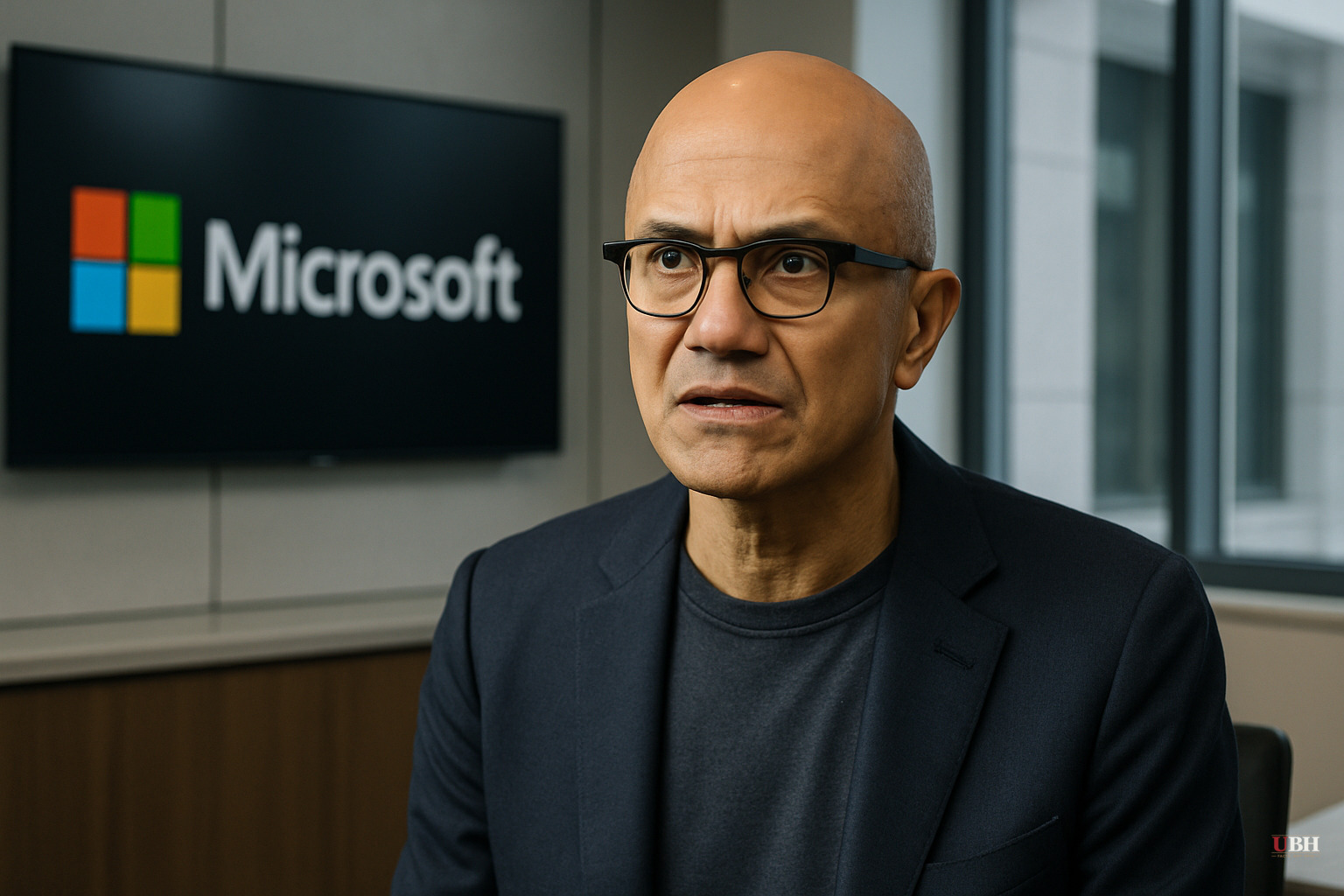
Microsoft CEO Satya Nadella published a blog post Sunday laying out a warning that's been circulating in smaller Silicon Valley circles for a while now: companies using AI models are paying for that intelligence twice.
Once with money. Once with something Nadella says is worth more: their own proprietary business knowledge.
"You essentially pay for intelligence twice, once with money, and again with something even more valuable: the proprietary knowledge you must reveal to make that intelligence useful," Nadella wrote, according to TechCrunch. "The better you want the model to perform, the more of that knowledge you have to feed it."
His argument: every prompt, every tool an AI agent uses, and especially every correction a human makes when the model gets something wrong, becomes training signal. Nadella calls it "exhaust." Over time, that exhaust adds up to institutional knowledge, the kind of insight a competitor could never buy on the open market, and enterprises are giving it away for free every time they use a chatbot.
The Trojan Horse Problem
Venture capitalist Jason Calacanis and Palantir CEO Alex Karp have both raised versions of it, per TechCrunch, warning that AI labs like OpenAI and Anthropic could effectively become competitors to the very companies paying them for access. Feed a model enough of your business's operational quirks, pricing logic, or customer service scripts, and you've handed a potential rival a blueprint, whether the lab intends to use it that way or not.
Nadella runs one of the three companies, alongside OpenAI and Anthropic, that actually builds and sells these frontier models. He's not a bystander. He's an insider naming a problem that sits right at the center of Microsoft's own business, given its multibillion-dollar investment in OpenAI.
The Hypocrisy Charge
Nadella's sharpest line is about fairness. AI labs built their models by scraping enormous amounts of public data off the internet, arguing it's fair use. Nadella says fine, but then those same labs turn around and write contracts banning customers from doing the reverse, studying a model's outputs to learn how it works.
That reverse-engineering technique is called distillation. It's how you take a big expensive model and extract its knowledge into a smaller, cheaper one.
"While the great innovation that comes from model providers having fair use rights to train models on public data is needed, I find it ironic that the status quo is to then turn around and impose restrictive terms on distillation," Nadella wrote, per TechCrunch.
In February, Anthropic accused Chinese open-source model developers of sending millions of prompts to Claude specifically to harvest its outputs for training, and pushed the U.S. government for tighter export controls, according to TechCrunch. The same companies warning customers not to distill their models have separately alleged their own IP is being distilled by foreign competitors. Nadella's point is you can't have it both ways.
What Nadella Actually Wants
Nadella's proposed fix is exactly what you'd expect from the CEO of a massive cloud computing company: he wants enterprises to own their own data, including every prompt and every correction, and to build "proprietary learning environments" on cloud infrastructure rather than feeding that data straight into a third-party model's training pipeline.
That's a real solution, but it's also a sales pitch. Microsoft Azure competes directly with the cloud infrastructure that OpenAI and Anthropic run their own models on. If enterprises get spooked enough about data leakage to build isolated, walled-off AI environments, Microsoft is positioned to sell them the infrastructure.
What's Unresolved
No contract terms, no specific OpenAI or Anthropic customer agreement, and no dollar figure tied to this alleged data leakage have been published or verified independently. Nadella's post is an argument, not a disclosure of a specific breach or a specific violated contract.
Whether any AI lab is actually using individual enterprise customer data to train competing products, as opposed to using aggregated, anonymized signals, remains an open question that no source here answers directly. OpenAI and Anthropic have not issued a public response to Nadella's post as of this writing. Whether regulators, courts, or standard-setting bodies eventually force AI labs to spell out distillation rights in plain contract language, the way software licensing terms eventually got standardized, is the next thing to watch.
Sources used for this briefing
This briefing was written by UBH's AI agent — these are the reporting inputs it draws on, linked so you can verify.


