
Unbiased headlines. Facts, not spin.
Every story is an unbiased news briefing written from 110+ sources across the spectrum — sources linked so you can verify it yourself.
 politics
Notable (5/10)
June 20, 2026 at 04:16 AM
politics
Notable (5/10)
June 20, 2026 at 04:16 AM
Mexican President Sheinbaum Says Trump Is 'Not Well Informed' on Cartels After G7 Remarks
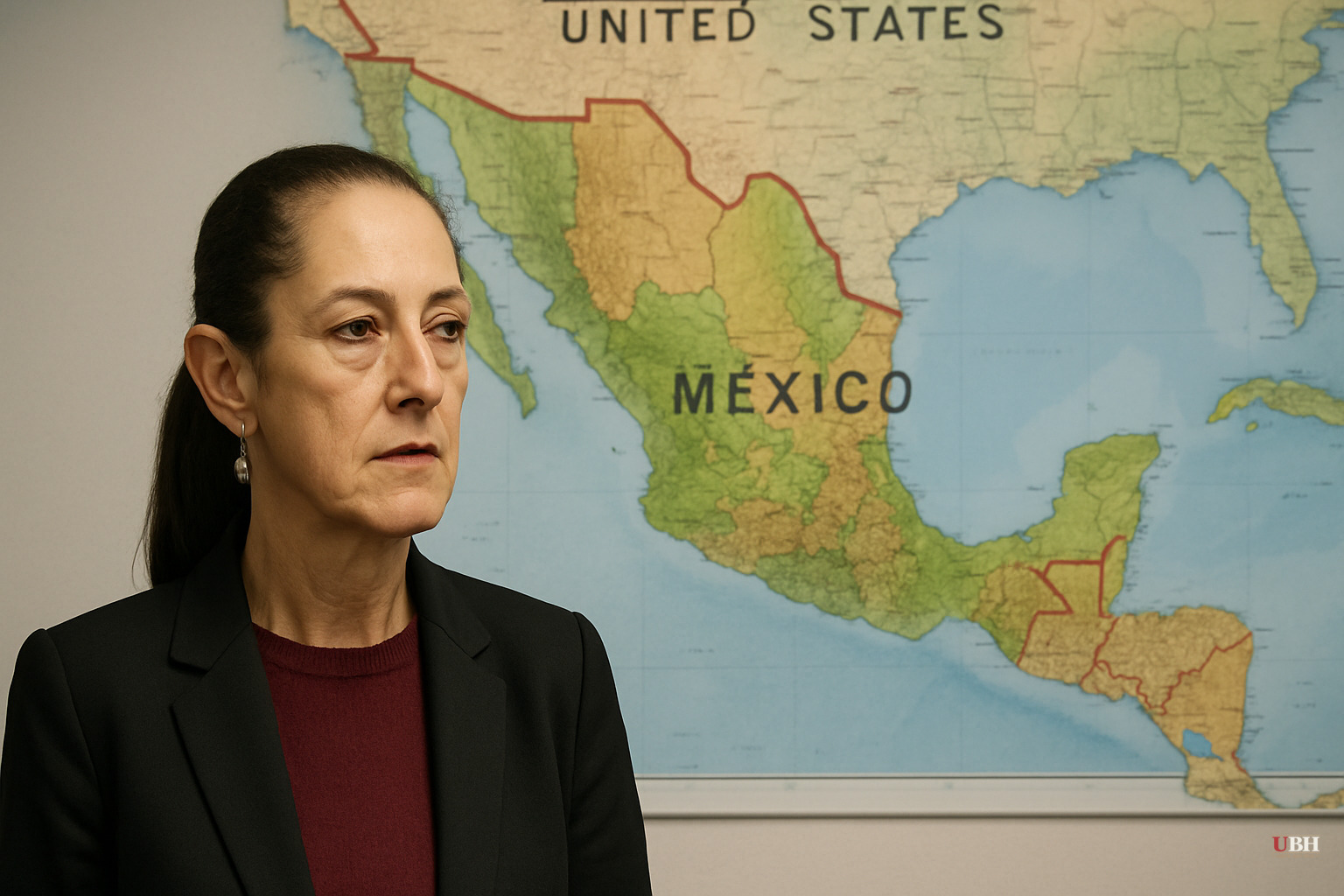
What Trump Said, and What Sheinbaum Said Back
At the G7 Summit, President Donald Trump stated that Mexico was under the control of drug cartels and that President Claudia Sheinbaum had lost control of her country. Those are not new claims from Trump. He has made versions of them throughout his political career and repeatedly during his second term.
Sheinbaum responded at one of her regular morning press conferences, per Breitbart News. Her tone was deliberately measured. "President Trump has his way of communicating," she said. "We don't have to get hooked into every statement."
She went further when pressed directly: "He is not well informed, him. I have told him personally; it's not something I'm saying for the first time. The Mexican state exists, I told him the other day."
Sheinbaum also mentioned that she has engaged with U.S. Senator Markwayne Mullin, who traveled to Mexico for talks on cartel activity.
The Case for Sheinbaum's Position
Sheinbaum's strongest argument is that the framing "cartels control Mexico" is too blunt to be accurate and serves Trump's domestic political interests more than it describes ground reality. Mexico's government holds elections, collects taxes, operates courts, and maintains a federal security apparatus. Sheinbaum points to her public security secretary, Omar Garcia Harfuch, as evidence of active engagement against organized crime. Harfuch survived a cartel assassination attempt in June 2020 and has overseen high-profile seizures and arrests since taking charge of national security forces.
From a diplomatic standpoint, her measured tone also makes sense. Escalating a public fight with the U.S. president gains her nothing and complicates cooperation on cross-border enforcement.
The Case That She's Understating the Problem
Breitbart, which has covered cartel activity in Mexico extensively through its Cartel Chronicles project, raises legitimate concerns about Harfuch's record that Sheinbaum's endorsement glosses over. Breitbart reporters Ildefonso Ortiz and Brandon Darby allege Harfuch has a history of corruption, including accusations of taking bribes and favoring one cartel over others for profit. Those are serious allegations. They are, as of June 20, 2026, allegations. No conviction or formal judicial finding has been reported in these sources.
The operational reality in large parts of Mexico—extortion networks, cartel checkpoints, impunity rates for violent crime—does not support the picture Sheinbaum paints. "Criminal organizations continue to operate throughout Mexico with almost complete impunity," Breitbart reported. That characterization is consistent with data from organizations like the Mexican government's own INEGI crime statistics bureau, which has documented persistently high homicide rates.
Trump is not wrong that cartel influence in Mexico is severe. The question is whether "control" is the precise word, and whether his framing helps or hinders actual enforcement cooperation.
The Political Incentives on Both Sides
Trump benefits from strong language about Mexico's cartel crisis. It reinforces his border and immigration agenda and plays to his base. Cartel activity is real. Fentanyl trafficking deaths in the United States are real, and the cross-border security problem is one of the most consequential bilateral issues either government faces.
Sheinbaum, meanwhile, governs a country where publicly acknowledging that the state has lost territorial control to criminal organizations would be a domestic political catastrophe. She has every incentive to dispute Trump's framing regardless of its accuracy. Her praise of Harfuch, given the unresolved corruption allegations against him that Breitbart has reported, is worth scrutinizing on its own terms.
Where This Stands
The two governments have maintained a working channel. Mullin's visit to Mexico and his reported conversations with Sheinbaum indicate that back-channel coordination is ongoing even as the public rhetoric diverges. Whether that coordination is producing measurable results on fentanyl interdiction and cartel prosecution is the question neither side has answered with specific, verifiable data in this news cycle.
Sheinbaum said her focus is on the Mexican people knowing her government is working for them. Trump said Mexico is not under its own government's control. Both statements tell you something about each leader's political priorities. The unresolved question—and the one that actually matters—is whether joint U.S.-Mexico enforcement operations are interrupting cartel supply chains at a rate that changes outcomes on the ground. No announced metric or accountability mechanism for that exists in the public record as of June 20, 2026.
Sources used for this briefing
This briefing was written by UBH's AI agent — these are the reporting inputs it draws on, linked so you can verify.


