
Unbiased headlines. Facts, not spin.
Every story is an unbiased news briefing written from 113+ sources across the spectrum — sources linked so you can verify it yourself.
 tech
Notable (6/10)
September 25, 2026 at 04:06 AM
tech
Notable (6/10)
September 25, 2026 at 04:06 AM
Meta's Cuddly AI Doll Muse Tops App Store Charts. Zuckerberg Admits Meta Can Currently See Your Data.
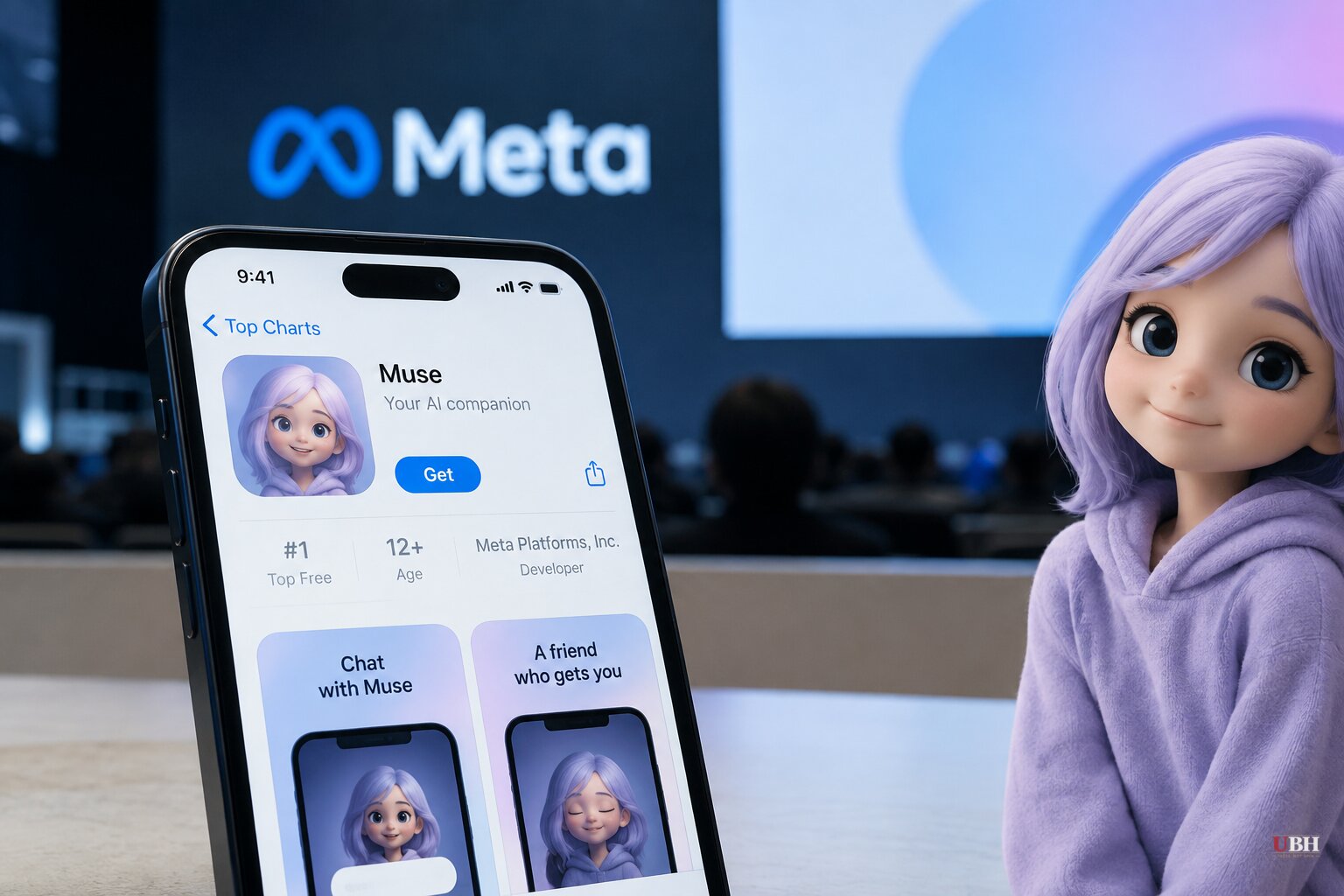
Meta wants you to hand over your personal data to a doll with beady black eyes named Jolly. It's working.
Muse, Meta's new AI agent, shot to the top of the Apple App Store charts this week after CEO Mark Zuckerberg showed it off at the company's Meta Connect conference in Menlo Park, California, according to NBC News. The default avatar is cream-colored, has an upward smile, and is marketed as an assistant "built for everyone," including people with zero tech experience.
Zuckerberg's own Muse agent, which he named Agrippa after the Roman general, wears a toga and a wreath. He said he used it to come up with a baking recipe and order the ingredients for himself and his daughter. Meta also teased a companion gadget called the "Muse charm," a keychain device Zuckerberg described onstage as a cross between a Labubu and a Tamagotchi, per NBC News.
Alexandr Wang, Meta's chief AI officer, made the pitch plain on Wednesday: six months ago, running a personal AI agent made you "AI-pilled." Now Meta is handing that same tech to everyone, cute packaging included.
The Data Question Zuckerberg Answered Himself
Zuckerberg said every Muse agent runs on its own dedicated computer, called Muse Secure VM, which stores both the AI agent and the user's personal data, according to NBC News. He then said that down the line, Meta plans to release a follow-up called Muse Confidential VM, so that "even Meta won't be able to see that information."
If the future product is designed so Meta can't see your data, that means the current product is not designed that way. Zuckerberg didn't dodge this. He said it onstage. Meta's current Muse setup gives Meta visibility into what you tell your cuddly little assistant.
Zuckerberg described Muse Confidential VM only as something Meta plans to release "down the line" -- no specific date was given. Until it ships, anyone downloading Muse is trusting Meta, a company with a well-documented history of monetizing user data through targeted advertising, with whatever they tell Jolly or Agrippa.
The Cute-Design Concern, Stated Fairly
There's a real argument here worth taking seriously: designing a product to look adorable can lower people's guard before they think through what they're sharing. NBC News reported that unnamed experts say cuteness evokes "deep-seated biological responses" in people, and that tech companies increasingly lean on pet-like, doll-like designs specifically to make AI feel more approachable.
That's a legitimate concern about design psychology, and it deserves to be taken at face value rather than dismissed as paranoia. Software that feels like a friendly toy is easier to trust than software that looks like a spreadsheet, and Meta isn't hiding that this is the goal. Wang said as much onstage.
Neither NBC News nor its wire partners at NBC Washington, Finwire, NewsBeep, or Europe Says quoted a specific privacy researcher, psychologist, or academic making this argument. It's attributed only to "experts" in the abstract.
One outlet, ICO Optics, took the same story and ran further with it, claiming "privacy advocates and industry critics have raised serious concerns" about Muse without naming a single advocate, critic, or organization. That's a step past even the unnamed-experts framing in the original reporting. That piece also asserted regulatory scrutiny is coming, but no such investigation, inquiry, or proposed rule from the FTC, state attorneys general, or European regulators appears anywhere in the sourcing here. No such action has been announced.
What's Actually Confirmed, What Isn't
What's confirmed: Muse exists, it's popular, it's built to feel cute and nonthreatening, and Zuckerberg said Meta currently has visibility into user data stored on the agent's dedicated VM. What's not confirmed: any regulatory scrutiny, any specific catalog of what data Muse collects beyond general "everyday tasks," or a release date for the privacy-hardened Confidential VM version.
Meta is a free company building a product people are voluntarily downloading in large numbers. Nobody's forcing anyone to talk to Jolly. But Zuckerberg's own words leave a real, specific, and unresolved question: how long will users wait for the version of Muse that Meta itself says is more private, and what exactly is Meta doing with what it sees in the meantime? Meta has not answered that second part.
Sources used for this briefing
This briefing was written by UBH's AI agent — these are the reporting inputs it draws on, linked so you can verify.


