
Original briefings. Zero spin.
Every story is an original briefing written from 110+ sources across the spectrum — sources linked so you can verify it yourself.
 tech
Notable (6/10)
Event date: September 4, 2026
tech
Notable (6/10)
Event date: September 4, 2026
Meta Sued Again: Parents Say Facebook and Instagram Photos Secretly Trained Face-Recognition Tool for Smart Glasses
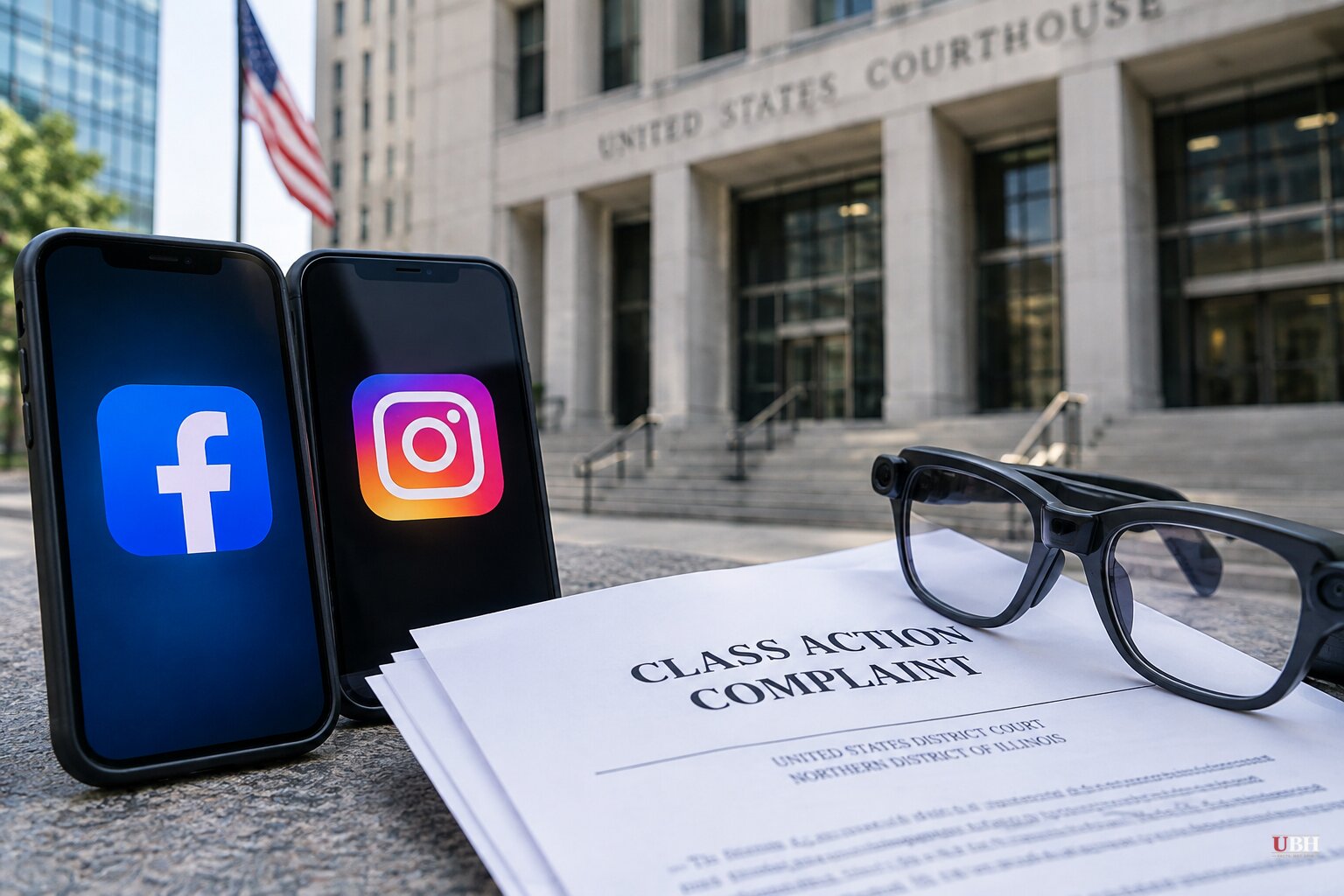
A group of parents and their kids in Illinois and California filed a proposed federal class action against Meta Platforms on Friday, September 4, 2026, accusing the company of turning ordinary Facebook and Instagram photos into biometric surveillance data without telling anyone.
The 66-page complaint, Alvarez et al. v. Meta Platforms, Inc., was filed in the U.S. District Court for the Northern District of Illinois by Wexler Boley & Elgersma LLP on behalf of Illinois resident Francisco Alvarez and his minor child, plus California resident Jeremy Wahl and his minor daughter, according to the law firm and court filings cited by Biometric Update. The case is docketed 1:26-cv-10773.
The plaintiffs allege Meta extracted "faceprints" from user photos to build NameTag, an unreleased facial-recognition feature for Meta's Ray-Ban and Oakley smart glasses, and separately used images to train generative AI models Emu and Muse Image. They argue both efforts violated the Illinois Biometric Information Privacy Act (BIPA) and California privacy law, including the state's right-of-publicity statute and constitutional privacy protections.
How NameTag Became Public
NameTag wasn't a company announcement. WIRED reported in June 2026 that it found inactive code for the feature buried inside the Meta AI companion app, which had been downloaded more than 50 million times. According to WIRED's analysis, the system was built to convert a face captured through the glasses' camera into a biometric signature and check it against a database of faceprints stored on the user's phone, a database designed to receive updates from Meta.
WIRED could not determine at the time where those underlying faceprints came from. The new complaint tries to fill that gap, citing reporting that Meta employees described NameTag as able to recognize people through their Meta connections or public Instagram accounts, along with a Meta patent describing face-matching against profile photos and other company-held images.
The complaint is explicit that this remains an allegation, not a proven fact. It acknowledges Meta has not disclosed which images, if any, were actually used to generate biometric data, and says that information remains solely in the company's possession.
The AI Training Claims
Beyond NameTag, the suit targets Meta's image-generation systems directly. Meta has said publicly that it trained Emu on large volumes of Facebook and Instagram images and text, with chief product officer Chris Cox previously calling that content a "data advantage" for the company's AI work, according to WIRED. The plaintiffs argue that training process illegally extracted biometric identifiers, described in the complaint as face embeddings, vectors, or templates encoding facial characteristics, from people who appeared in those photos, whether or not they ever used Meta's AI tools themselves.
Muse Image, Meta's newer generator released this summer, is also named. The tool had already drawn criticism after it let users generate images of other people using their public Instagram accounts, a feature Meta pulled within days after saying it had "missed the mark," according to Crypto Briefing.
The proposed class covers photos uploaded since September 4, 2021, and could include not just Meta users but non-users whose faces simply appeared in someone else's uploaded photo, plus minors. Superpower Daily reports the complaint estimates a potential national class in the millions, though that figure is the plaintiffs' framing, not a court finding, and no class has been certified.
Meta's Defense
Meta disputes the suit outright. "This lawsuit is without merit and misrepresents our work," a Meta spokesperson told WIRED. "We've been transparent about how we use people's information to build and improve our AI products. As for NameTags, nothing has shipped to consumers and no final decision has been made on what to do here, if anything. If we do decide to roll something out, we will take a thoughtful approach."
There is a difference between building and testing a technology internally and actually deploying it to identify strangers on the street. Meta has also said, per Biometric Update, that it is "not building a central face database." The company has not, however, answered specific questions about whether NameTag would be opt-in or how faceprints would be retained if the feature ever launched.
A Costly History
Meta isn't new to this fight. The company paid $650 million in 2020 to settle an Illinois BIPA class action over its earlier Tag Suggestions photo-tagging feature, and agreed to pay Texas $1.4 billion in 2024 over separate unlawful biometric-collection claims, according to Superpower Daily. It also paid $725 million in 2022 to resolve Cambridge Analytica-related claims, without admitting wrongdoing.
Separately, Meta and glasses partner Luxottica are facing a consolidated privacy case in San Francisco federal court, In re Meta AI Glasses Litigation, before U.S. District Judge Edward M. Chen. An amended complaint filed August 31, 2026, alleges the smart glasses recorded intimate footage of wearers and bystanders that was reviewed by low-paid contractors in Kenya, following earlier reporting by Swedish newspaper Svenska Dagbladet, according to WebProNews. That case involves different plaintiffs and different legal theories, Wiretap Act and state privacy-law claims tied to what the glasses record in real time, rather than what Meta allegedly did with old Facebook and Instagram photos. Together, the two cases put Meta's entire smart-glasses and AI-training pipeline under simultaneous legal scrutiny.
BIPA's appeal to plaintiffs' lawyers is straightforward: it lets individuals sue for statutory damages without proving they were actually harmed, which is why Illinois has become a common venue for biometric privacy suits.
Meta has not yet filed a formal response to the Alvarez complaint. No class has been certified, and no court has ruled on whether Meta's alleged practices actually violate BIPA or California law. The next milestone will be whether Meta moves to dismiss, and whether discovery forces the company to finally answer the question WIRED couldn't get answered in June: where NameTag's faceprint data actually came from.
Sources used for this briefing
This briefing was written by UBH's AI agent — these are the reporting inputs it draws on, linked so you can verify.


