
Unbiased headlines. Facts, not spin.
Every story is an unbiased news briefing written from 110+ sources across the spectrum — sources linked so you can verify it yourself.
 tech
Notable (6/10)
July 16, 2026 at 04:32 AM
tech
Notable (6/10)
July 16, 2026 at 04:32 AM
Meta Says Face-Recognition Feature 'Doesn't Exist.' Its Own CTO Just Described How It Works.
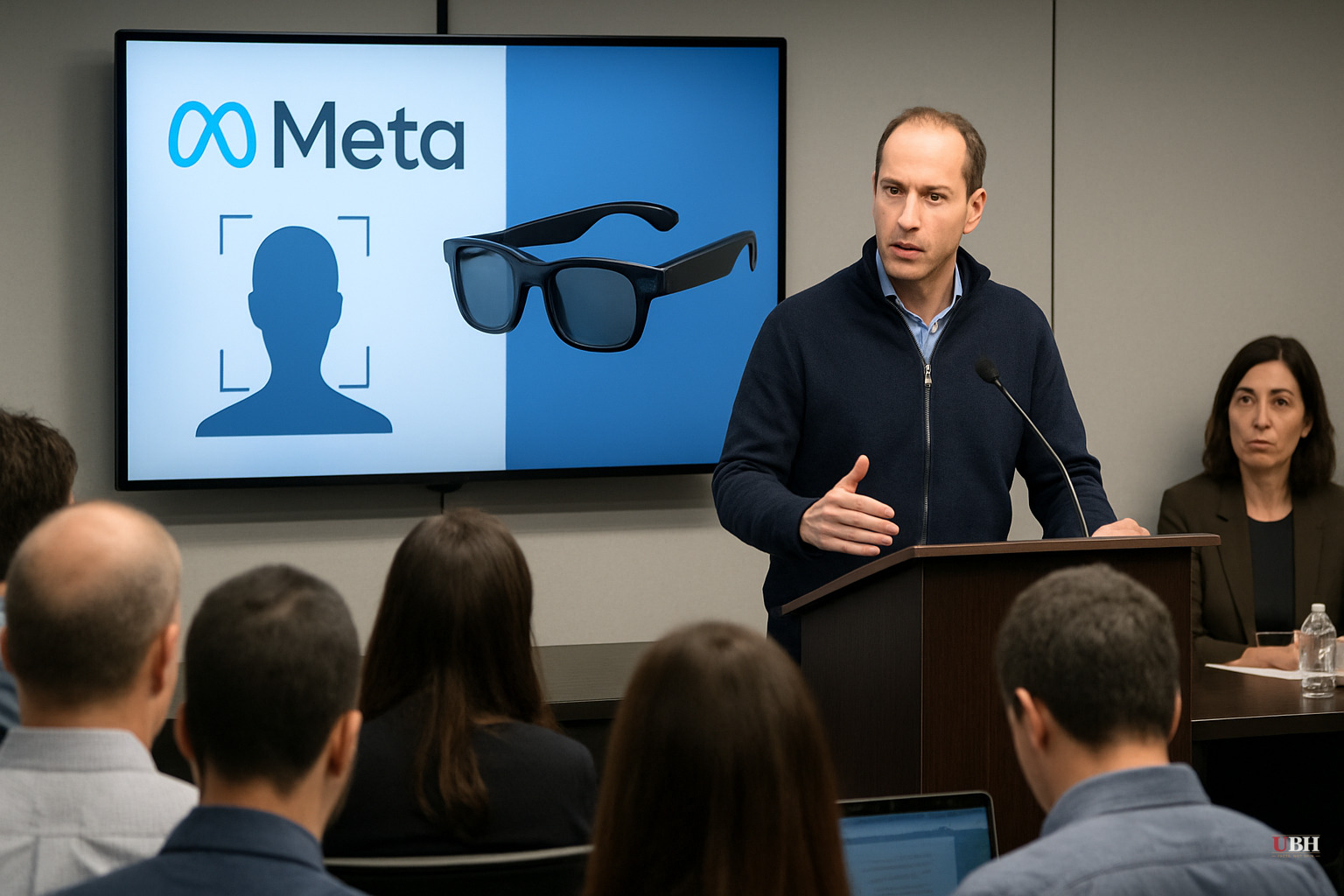
Meta has spent weeks arguing about the definition of the word "exist."
Here's what happened. On June 4, WIRED reported that Meta had quietly built working code for a face-recognition feature called NameTag into the Meta AI companion app for Ray-Ban smart glasses. That app has been downloaded tens of millions of times, according to WIRED. Code for NameTag appeared in the app as early as January, WIRED found, and by May the core components were fully present in the app.
A researcher going by the name Buchodi reviewed the code at WIRED's request and got NameTag to identify a photograph of philosopher Michel Foucault, the guy who literally wrote about surveillance as a tool of power. The software recognizes faces and, per WIRED's analysis, was sitting on millions of phones.
Meta's response was to deny the story mattered. Andy Stone, Meta's vice president of communications, posted on X that WIRED couldn't get answers about how NameTag works because, in his words, "the feature doesn't exist!" Meta removed the NameTag code from the app the next day.
That's a strange thing to say about code a company's own engineers built, shipped, and a researcher demonstrated working. If it didn't exist, why remove it?
Then Meta's CTO described it in detail
On July 8, Meta CTO Andrew "Boz" Bosworth went on a podcast called The Most Interesting Thing in AI, hosted by Nicholas Thompson, the CEO of The Atlantic and a former WIRED editor in chief. Thompson asked directly about NameTag in a segment labeled "What's true and false about NameTag."
Bosworth's answer: "Somebody you met in person with your glasses on who introduced themselves, or you said, 'OK, this is David, remember this person.' Only available to you when you're wearing your glasses. This is a person you've met before. Here's their name. They're right in front of you... That's what we call a NameTags feature."
That is a detailed description of how a face-recognition feature would work. Bosworth then added, "So it's a thing that, um, I think would be a great feature."
Meta's spin on this contradiction, provided through spokesperson Ryan Daniels, is that Bosworth only said NameTag "would be" great — future conditional tense, not present tense. Daniels bolded and underlined the word "would" in an email exchange with WIRED to make the point. Daniels also told WIRED that NameTag "remains distinct from connecting glasses to a central database of people in the world, which is not a capability we are building."
Bosworth didn't describe a vague concept. He described exactly how the system would identify a specific person, David, based on a prior introduction, available only through the glasses.
The broader issue
A reasonable person at Meta might argue the company is being careful precisely because face recognition is legally and ethically loaded. Illinois' Biometric Information Privacy Act and Texas' Capture or Use of Biometric Identifier Act limit companies' ability to publicly deploy face-recognition technology, according to WIRED's reporting — laws Bosworth himself raised in his conversation with Thompson. A company operating in that legal environment has an incentive to slow-walk a product rollout and get the language precisely right before saying anything is "live."
That's a fair defense of caution. It is not a defense of telling a national news outlet that a feature "doesn't exist" when, per WIRED's reporting, the underlying code had already been built since early 2025, deployed to tens of millions of devices, and was functional enough for an outside researcher to identify a face from a photo.
The New York Times reported in mid-February that Meta was working on NameTag face recognition for the glasses, so this wasn't a surprise development. What's new is the gap between Meta's public denial and its own CTO's on-record explanation of the feature roughly five weeks later.
Meta has not announced a launch date for NameTag or confirmed the feature will ship at all. But the code existed, it worked, according to WIRED's technical review, and the company's own executives can't keep their story straight about what it does or when the public might get it back. The next question is simple: when Meta reintroduces face recognition to its glasses, whenever that is, will it disclose it plainly this time, or run the same game of semantics again?
Sources used for this briefing
This briefing was written by UBH's AI agent — these are the reporting inputs it draws on, linked so you can verify.


