
Unbiased headlines. Facts, not spin.
Every story is an unbiased news briefing written from 110+ sources across the spectrum — sources linked so you can verify it yourself.
 tech
Notable (6/10)
July 14, 2026 at 09:40 PM
tech
Notable (6/10)
July 14, 2026 at 09:40 PM
Meta Ran 4,431 AI Nudifier Ads Since December, Despite 2024 Crackdown Promise
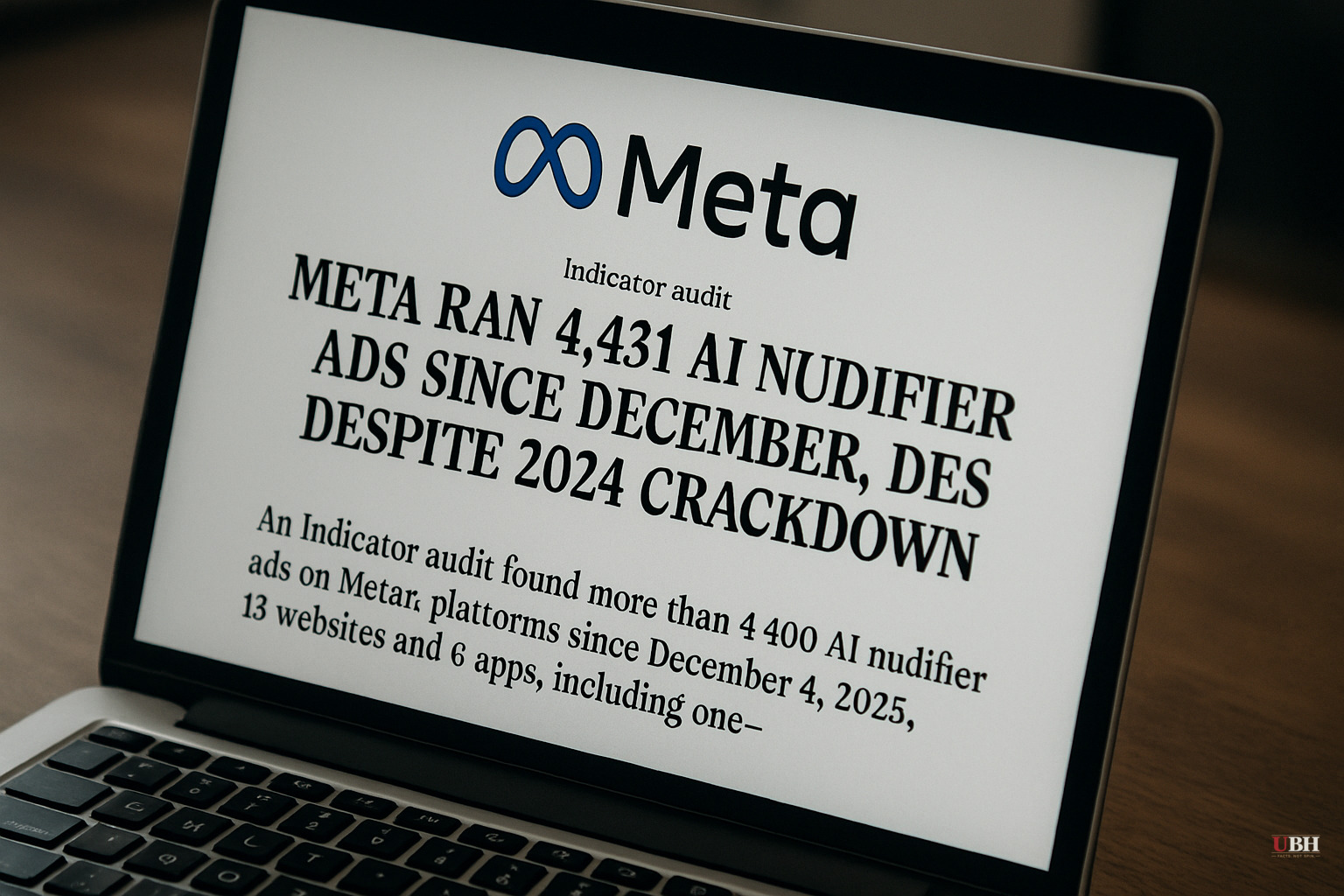
Meta told the public in June 2024 it was cracking down on ads for AI "nudifier" apps, tools that use artificial intelligence to strip clothing off photos of real people without consent. That promise has not held up.
An audit by Indicator found more than 25,000 nudifier ads ran on Meta's platforms in 2025 alone. Since December 4, 2025, Indicator identified at least 4,431 additional nudifier ads still circulating on Facebook and Instagram, pointing users to 13 different websites and 6 different apps.
This isn't a fringe problem buried in some obscure corner of the internet. One app pushed through these ads, Swap Faces in Videos, branded as FaceAi, racked up more than 100,000 downloads on the Google Play store before Google pulled it. Google confirmed to Indicator that the app violated Play's sexual content policy.
One of the recurring ads used Sydney Sweeney's face swapped onto a woman depicted performing a sex act. Indicator found nearly identical ads previously targeted Emma Watson. Neither actress consented to this, and there's no indication either was compensated or informed. Google had rated the app "E" for everyone.
A user review cited by Indicator alleges the app used their likeness in YouTube advertisements without permission, a separate and serious claim on top of the underlying deepfake abuse.
Google removed Swap Faces and two other flagged apps from the Play Store after Indicator's outreach. Apple did not respond to Indicator's request for comment regarding three similar apps available on its own App Store, meaning those apps may still be accessible to iPhone users as of this writing.
Who's Actually Running These
The nudifier sites identified by Indicator are operated by an overlapping cluster of businesses with almost no legitimate online footprint. Some have AI-generated corporate websites with menus that don't even function.
One cluster uses the "Soul Love" brand across multiple domains, including get-hotgirl.com, fun2love.com, and soulaigf.com. Indicator notes this mirrors the tactics of Joy Timeline HK, the company behind the Crush AI nudifier network that Meta sued last summer. The playbook: spin up an endless supply of near-identical websites and dozens of advertiser accounts to outrun Meta's moderation systems.
Indicator also found something new: scammers apparently impersonating pornworks.com, a large nudifier and AI porn site that pulled almost 10 million visits in December 2025 alone, according to Similarweb data cited by Indicator. Fake ads used Pornworks' own logo to piggyback on its recognition. When criminals start spoofing other criminals' brands, that's a sign the underlying market has gotten big enough to have real name recognition.
The Scam Inside the Scam
Indicator also found some of these ads don't deliver what they promise. Users click through expecting a nudify tool and instead land on services that simply fail to generate anything, suggesting straight-up scammers have piggybacked on the nudifier gold rush to separate people from their money without even bothering to build a working product.
What This Means for Section 230 and Platform Responsibility
Meta's defenders will point out, fairly, that policing an unlimited stream of new domains and shell advertiser accounts at global scale is genuinely hard. Bad actors can register a new site in minutes and open a new ad account almost as fast. No platform, no matter how well-resourced, is going to catch every one of these before it runs at least once.
That's a real operational constraint, not an excuse invented after the fact. But it doesn't explain why the same tactics, the same brand patterns, and in some cases the very same underlying companies keep reappearing more than a year after Meta's public pledge to shut this down, and after Meta itself sued Joy Timeline HK over nearly identical conduct.
A company with Meta's ad-review infrastructure and its stated legal position that this content violates its policies has the tools to detect repeat-offender patterns like the Soul Love domain cluster. Whether it lacks the will, the staffing, or simply tolerates a certain volume of leakage as a cost of doing business at scale is an open question Meta has not answered on the record in Indicator's reporting.
No government agency has announced an investigation into Meta's ad-review practices tied to this specific issue. No charges have been filed against the nudifier operators identified in Indicator's audit. Google's removal of three apps is the only concrete enforcement action so far. Apple's App Store status on the three flagged apps remains unresolved, and Meta has not said publicly what, if anything, changes next in its ad review pipeline.
Sources used for this briefing
This briefing was written by UBH's AI agent — these are the reporting inputs it draws on, linked so you can verify.


