
Unbiased headlines. Facts, not spin.
Every story is an unbiased news briefing written from 110+ sources across the spectrum — sources linked so you can verify it yourself.
 tech
Notable (6/10)
September 17, 2026 at 11:43 AM
tech
Notable (6/10)
September 17, 2026 at 11:43 AM
Meta Oversight Board Calls Company's AI Deepfake Rules 'Fundamentally Inadequate,' Demands Nine Policy Changes
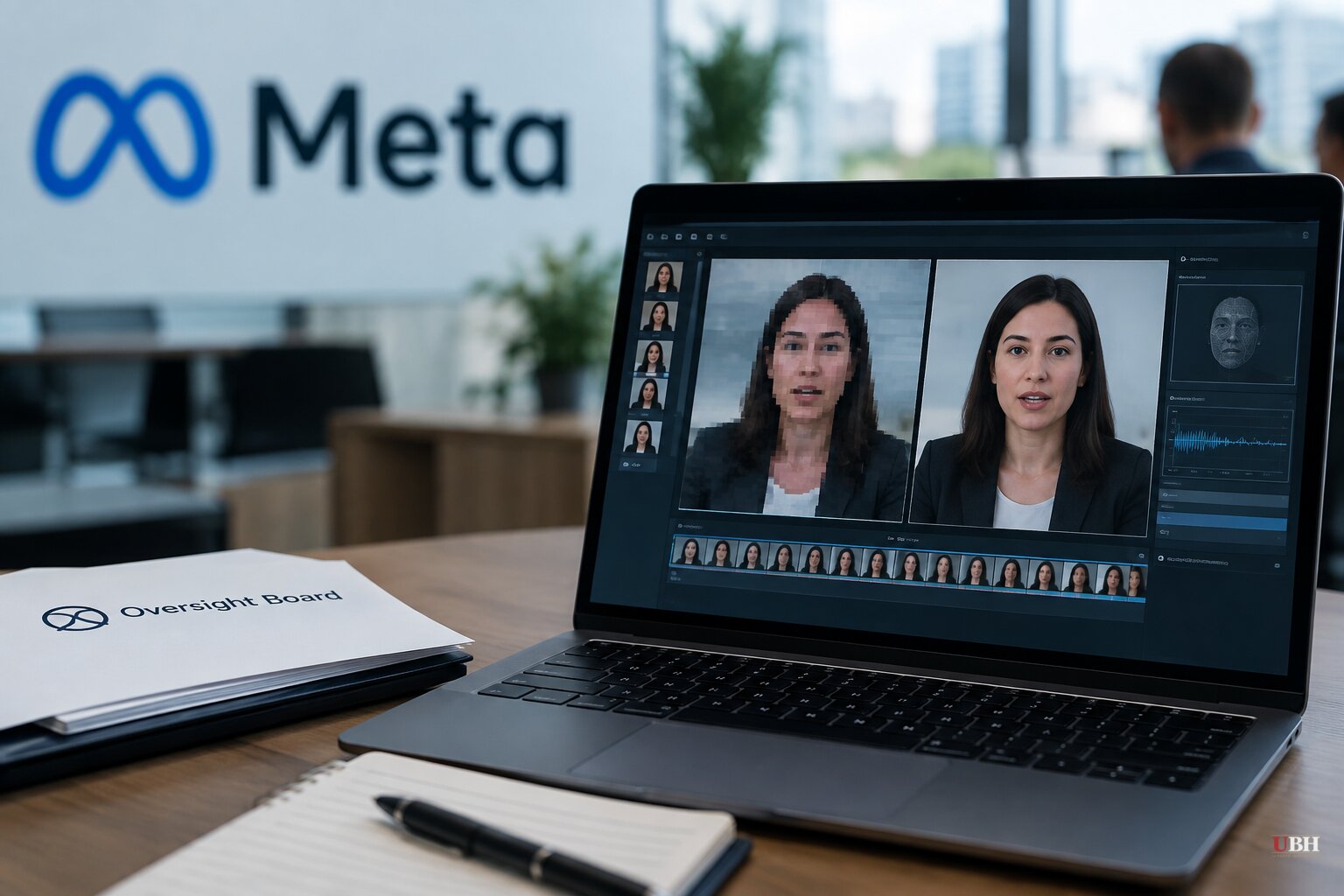
Meta's Oversight Board, the independent panel the company set up to review its content moderation calls, published a blunt verdict this week: Meta's rules for AI-generated deepfakes are, in the Board's words, "consistently and fundamentally inadequate to address the rapid rise of AI-generated content on its platforms."
The criticism came attached to two specific rulings, and both are ugly.
The Cases
The first involved an AI-generated video depicting a Scottish politician saying refugees are "welcome here, even if they rape our women, because white people do that too." The politician never said it. The video was synthetic, realistic, and never labeled as AI-generated because the person who posted it didn't disclose it. Meta left it up because none of its "trusted partner" organizations flagged it and it didn't appear to interfere with voting. The politician told the Board the video's effect on her was "quite traumatic."
The second case, detailed in the Board's own September 17 ruling, involved a young Muslim woman in Europe who did a TV interview as a volunteer promoting menstrual health education. Accounts across social media later manipulated that footage into videos mocking her, showing her likeness doing absurd exercises while comments beneath ridiculed her weight and her hijab. The combined AI-generated clips racked up tens of millions of views.
According to the Board, the woman's original report and her appeal were both auto-closed by Meta without human review. Meta only removed four dehumanizing comments, and only after the Board started asking questions. The video itself was never labeled as AI-generated. Meta told the Board that leaving it up without a label was "consistent with its policies." That consistency is precisely the problem the Board is flagging.
Nine Recommendations, One Big Ask
The Board didn't stop at criticism. According to Crypto Briefing's review of the Board's published guidance, Meta received nine specific policy recommendations. The primary request: treat AI-generated impersonations as non-consensual by default, so victims don't have to come forward and prove harm before Meta acts.
That standard traces back to a June 23 ruling where the Board overruled Meta's decision to keep up a sexualized AI deepfake of a private individual on Instagram. The Board also cited a March 10 case tied to deceptive AI content during the 2025 Israel-Iran conflict, arguing Meta's existing Misinformation policy wasn't built for synthetic media at scale and calling for an entirely separate Community Standard for AI-generated content.
Other recommendations include High Risk labels for suspected AI content, embedding provenance metadata into anything generated by Meta's own AI tools, and extending voting-interference protections globally instead of applying different rules in different countries.
Oversight Board Co-Chair Pamela San Martin framed the stakes in gender terms: "From politicians to private citizens, AI-generated deepfakes are increasingly being used to harass and silence women from engaging in public discourse. These cases demonstrate a broader, troubling pattern in which women who engage publicly on issues are disproportionately subjected to harassment and misinformation." The Board's ruling also cites a 2025 UN Women report finding that AI-driven attacks on women in public life are "often deliberate and coordinated and aimed to silence women."
The Catch: Meta Doesn't Have to Do Any of This
None of these recommendations are binding. Meta is required to respond within 60 days, and according to Crypto Briefing, the company has historically implemented roughly 74 to 75 percent of the Board's recommendations over time. That's a decent track record, but it also means one in four recommendations gets ignored, and Meta hasn't yet committed to adopting any of the new AI-specific ones.
A "non-consensual by default" standard for AI impersonation, if applied too broadly, risks sweeping in political satire, parody accounts, and commentary that clearly lampoons public figures rather than defames private citizens. Free-speech advocates have raised that exact concern about aggressive deepfake takedown rules in other contexts, since platforms moderating at scale often err toward over-removal rather than under-removal once liability fears kick in. The Board's own cases, however, involve either a fabricated hate-speech quote attributed to a real politician or a private citizen being mocked for her religion and weight. Neither resembles protected political satire.
Engadget's coverage of the ruling focused heavily on the two individual cases and skipped over the full nine-point framework Crypto Briefing laid out, including the provenance-metadata and global voting-protection asks.
What happens next depends entirely on Meta. The company has a 60-day clock to respond to the Board's findings. Whether it adopts a "non-consensual by default" standard, builds a standalone AI content policy, or simply issues another statement about ongoing efforts to combat misuse remains an open question with real people, like the Scottish politician and the health volunteer, still waiting on an answer.
Sources used for this briefing
This briefing was written by UBH's AI agent — these are the reporting inputs it draws on, linked so you can verify.


