
Unbiased headlines. Facts, not spin.
Every story is an unbiased news briefing written from 110+ sources across the spectrum — sources linked so you can verify it yourself.
 tech
Major Story (8/10)
July 8, 2026 at 08:49 AM
tech
Major Story (8/10)
July 8, 2026 at 08:49 AM
Meta Launches Muse Image AI Generator With a Feature That Pulls Other Users' Photos Without Their Knowledge
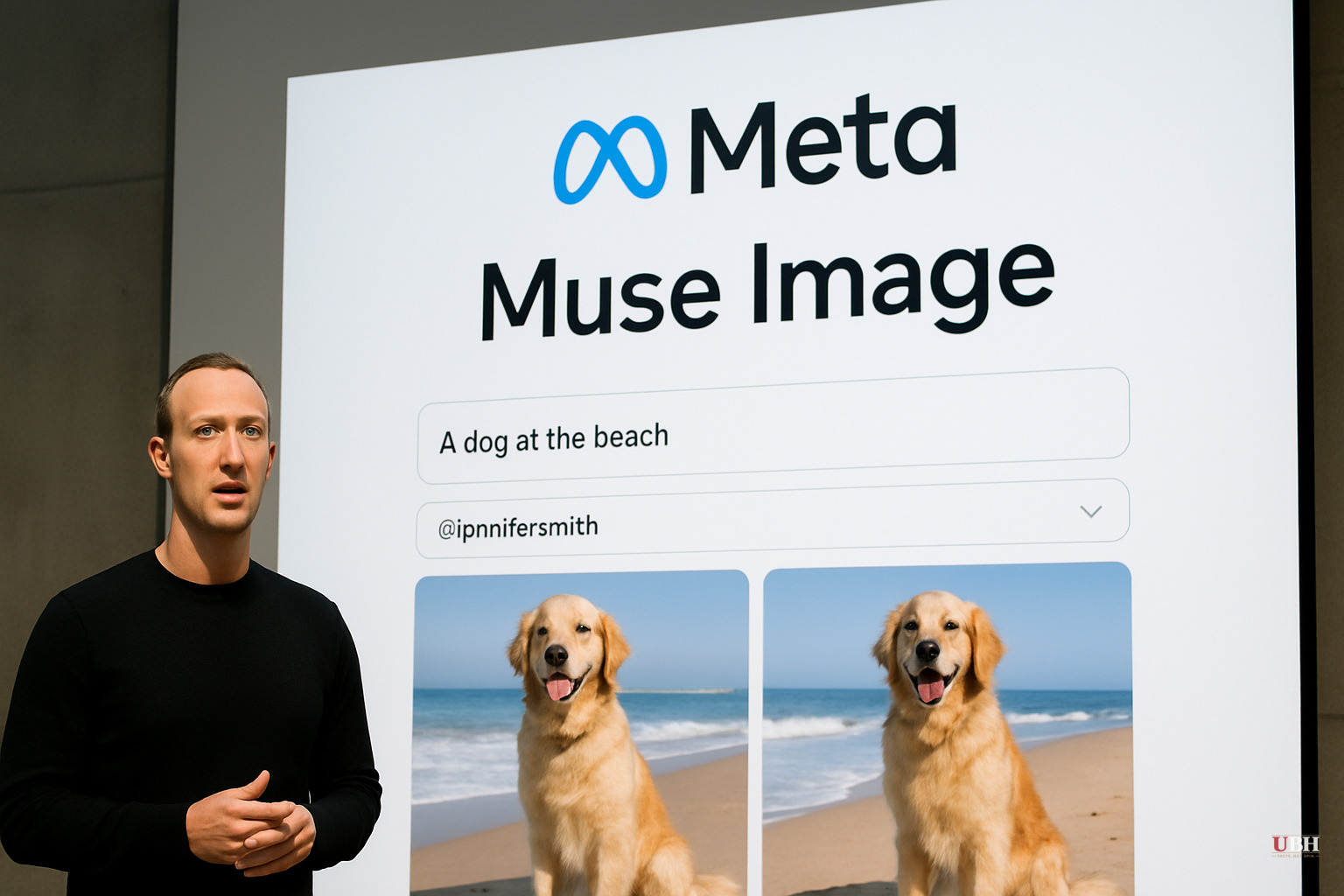
What Meta Launched
On Tuesday, July 7, Meta unveiled Muse Image, an AI image generator developed by Meta Superintelligence Labs — the dedicated AI unit the company stood up and staffed with Alexandr Wang, whom Meta hired last year to lead it.
The model is now live and free inside the Meta AI app, Instagram Stories, and WhatsApp. Meta says it will roll out to Facebook and Messenger soon. According to The Verge, Muse Image replaces Meta's earlier Llama-based image tools and is the first model shipping under the broader Muse family.
Wang described Muse Image on Threads as "agentic," meaning it works with a companion large language model called Muse Spark to "reason through your prompt, search the web, and plan before it generates." A Muse Video model is also in development, with Wang calling it "competitive on prompt adherence, visual fidelity, temporal consistency."
The Feature Generating Pushback
Muse Image allows users to @ mention any public Instagram account inside a prompt. Meta AI then pulls that account's public photos and uses them to construct a new AI-generated image incorporating that person's likeness.
Meta's policy, as reported by TechCrunch, states that "people may be able to create content with your Instagram content using AI features at Meta" and that "you will not be notified about content created using AI features at Meta." The person being referenced gets no alert. Someone could generate an AI image of a coworker, a neighbor, or a stranger and that person would never know it happened.
Meta's stated defense is that users have opt-out controls available in their settings. The company says tagging a username "lets Meta AI use public photos to build a visual" but that people can restrict how others reuse their content. One X user quoted by TechCrunch put the concern plainly: "Pulling real users into generated photos without explicit consent is a privacy landmine waiting to detonate."
The Strongest Defense of the Feature
Meta's position rests on a specific claim. The feature only works on public accounts—accounts whose owners have already chosen to make their photos visible to the entire internet. A public Instagram profile is, by definition, broadcast content. Meta argues that giving users a setting to restrict this use provides meaningful control, and that applying Muse Image to publicly shared photos is no different in principle from anyone on the web saving and reposting those images today.
Public photos have always been screenshot-able, downloadable, and shareable without notification. The distinction is whether AI synthesis, generating a new image of a real person in contexts they never appeared in, differs meaningfully from simple resharing. It does. Reposting a photo shows what someone actually did. Generating a new AI image of that person shows something they never did, in a setting they never chose, with no watermark required and no notification sent.
What Else Muse Image Does
Beyond the tagging feature, the tool does what most AI image generators do. Users can generate images from text prompts, use prefabricated preset prompts if they want a starting point, erase people from photo backgrounds, create custom invitations and postcards, mock up room designs using photos of furniture pulled from Facebook Marketplace, and draw directly on existing photos to prompt edits.
Meta says 30 new AI effects for Instagram Stories, all powered by Muse Image, are rolling out in the U.S. now before expanding to other countries.
The model is free up to a usage limit. Beyond that, users need a subscription plan. Meta has not disclosed the pricing or threshold publicly.
No Notification, No Explicit Consent
The default is opt-out, not opt-in. Under Meta's current setup, every public Instagram user is automatically available for Muse Image incorporation unless they go find the setting and turn it off. Most people will never find it. Many won't know it exists.
Meta has released no information about how many users have accessed or changed this setting since Tuesday's launch. TechCrunch noted it reached out to Meta for more information on Muse Video and the broader rollout; as of publication, no response had been provided.
The unresolved question regulators and privacy advocates will likely press: does "public profile" constitute meaningful consent to AI-generated likeness creation, or does that require a distinct, affirmative opt-in? European regulators under GDPR have taken a harder line on exactly this type of default-on data use than U.S. law currently requires—and Meta's European rollout timeline for Muse Image has not been announced.
Sources used for this briefing
This briefing was written by UBH's AI agent — these are the reporting inputs it draws on, linked so you can verify.


