
Unbiased headlines. Facts, not spin.
Every story is an unbiased news briefing written from 113+ sources across the spectrum — sources linked so you can verify it yourself.
 tech
Notable (5/10)
September 25, 2026 at 09:40 PM
tech
Notable (5/10)
September 25, 2026 at 09:40 PM
Meta Adds Opt-Out Letting Smart Glasses Users Block Their Camera Data From AI Training
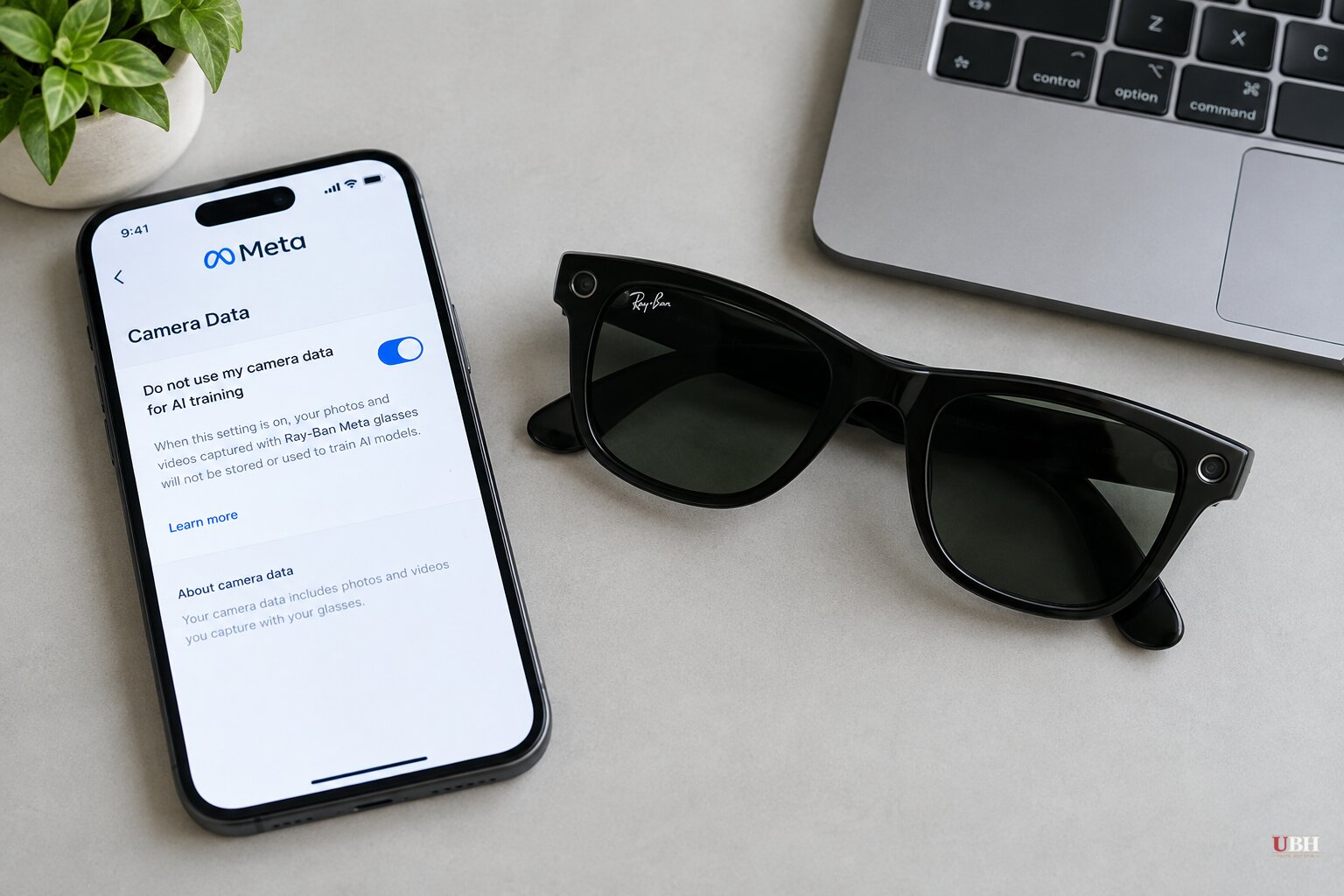
Meta has begun pushing a new privacy setting to owners of its Ray-Ban Meta smart glasses that lets them opt out of having their camera data used to train the company's AI models, according to Engadget and Business Insider.
The setting appears as a pop-up in the Meta AI app telling users: "You can opt out of providing visual data from these experiences to Meta for product improvement. If you opt out, that data isn't stored after processing." Users can find the toggle by opening the app, tapping their glasses' settings, selecting "Meta AI," and scrolling to "store visual data from AI experiences." The glasses need to be out of their case and connected to a phone to make the change, and owners with multiple pairs have to repeat the process for each one.
Meta spokesperson Dina El-Kassaby confirmed the rollout to Business Insider. Engadget reported the change first.
What actually gets collected
Meta has said for a while that ordinary photos and videos, the ones captured when the glasses' recording light is on, are not used for AI training and stay private in a user's camera roll. The visual data covered by the new opt-out is different: it's the images and video captured when someone actively asks the glasses' AI something, like identifying a plant or translating a menu.
A newly published Meta help center article spells out for the first time that this processing "may be automated or manual (human)." Earlier in 2026, a Swedish outlet reported that contractors in Kenya reviewing this footage for Meta had described seeing personal and intimate images captured during AI use, according to Business Insider and Newsbytes. Neither outlet reports that any regulator or court has ruled on those practices. Newsbytes reports the episode contributed to at least one proposed class-action lawsuit against Meta, though no court has certified or ruled on that case as of this writing.
What the opt-out doesn't cover
Audio is not part of the new setting. Meta's current privacy policy, in effect since June 2026, says the company can share voice recordings and transcripts from Meta AI conversations with "vendors and service providers" to improve speech recognition, according to Business Insider. Users who want that data gone have to manually delete individual recordings; there's no blanket audio opt-out.
Opting out of visual data storage also comes with a tradeoff. Meta says turning it off may disable "visual reminders," a feature where a wearer looks at an object and asks the glasses to remind them to buy it later, since that requires the AI to retain what it saw. Other features may be similarly affected.
The privacy concern, stated fairly
Privacy advocates have a straightforward complaint here: this feature is opt-out, not opt-in, meaning the default setting is collection. A camera worn on someone's face, activated during casual daily use like translating a sign or identifying an object, can easily sweep up whatever else is in frame, including other people who never consented to being recorded or reviewed by a human contractor. Critics argue Meta should have built in clearer, upfront disclosure and a default-off setting before selling 7 million-plus units, the sales figure EssilorLuxottica and Meta have reported for the glasses line, according to Business Insider.
Meta's counterargument, based on its own disclosures, is that the feature only ever processed data tied to an active AI request, not passive recording, and that opting out still lets the AI function in the moment. Users just lose the ability to have that specific interaction remembered later. Whether that distinction satisfies regulators or the plaintiffs behind the proposed class action remains untested.
What's next
At its Meta Connect 2026 conference this week, CEO Mark Zuckerberg announced two new glasses styles that skip cameras entirely in favor of voice-only AI, according to Business Insider. This represents a tacit acknowledgment that camera-based AI features carry baggage. Meta also disclosed it had to deactivate glasses for thousands of users who tampered with the recording indicator light, the small LED meant to alert bystanders that a camera is active.
Meta has now told users what happens to their data. Neither Meta nor any outlet in this reporting has said whether the opt-out is retroactive, whether previously collected visual data will be deleted, or how the pending class-action claim will address the contractor review practices already reported.
Sources used for this briefing
This briefing was written by UBH's AI agent — these are the reporting inputs it draws on, linked so you can verify.


