
Unbiased headlines. Facts, not spin.
Unbiased Headlines is an independently owned news organization. We bring you the facts, not opinions, written fresh from 110+ named sources. Sources linked so you can verify it yourself.
 sports
Notable (5/10)
Event date: November 17, 2026 ·
McEnroe and Walberg Press Congress for 20% Cap on International Athletes on College Rosters
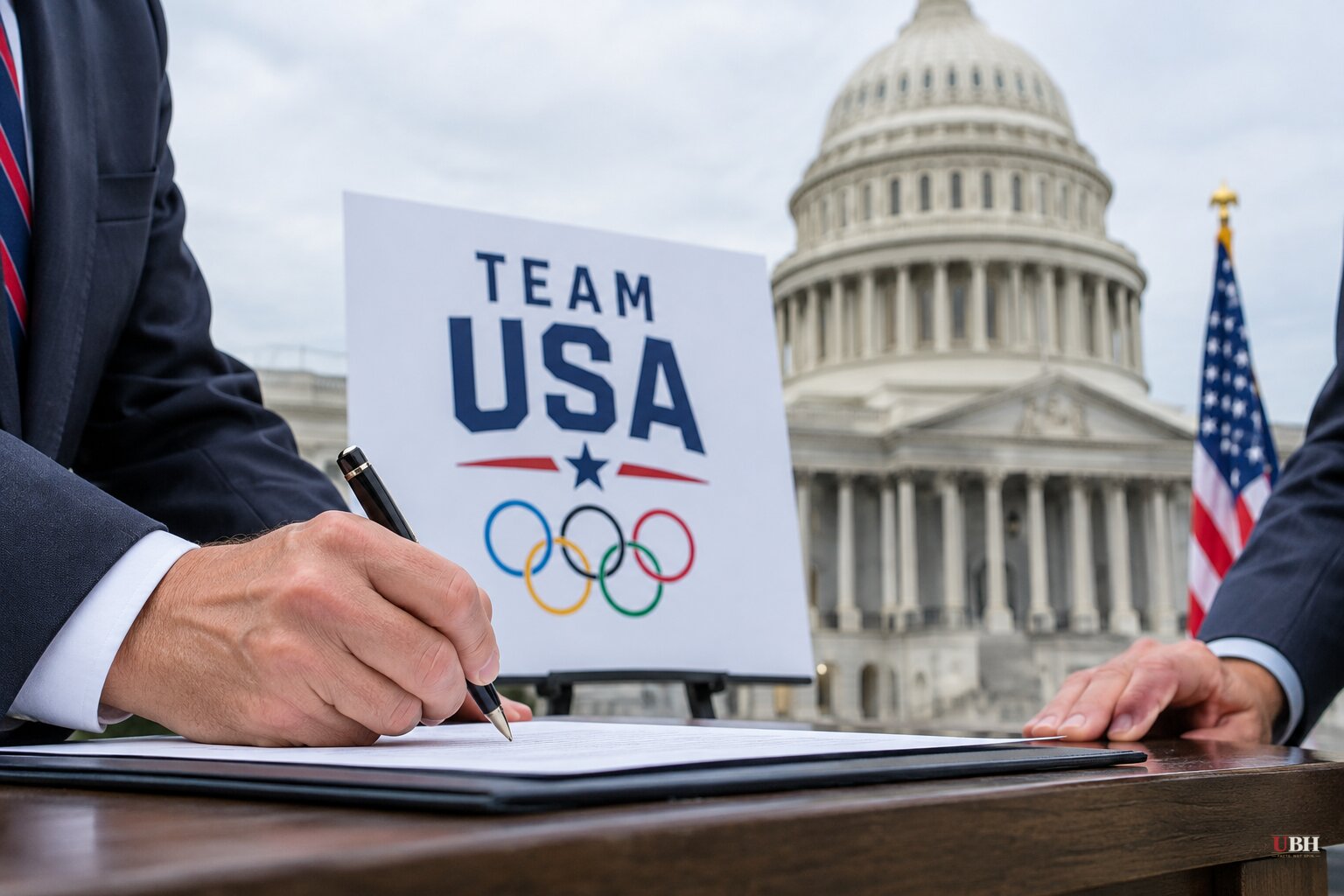
House Education and Workforce Committee Chairman Tim Walberg (R-MI) and International Tennis Hall of Fame President Patrick McEnroe held a press conference at the House Triangle outside the U.S. Capitol today, Wednesday, Nov. 18, to promote the TEAM USA Act.
The bill, H.R. 10351, is formally the Training and Education for American Members in University Sports and Athletics Act. It would limit international athletes to 20% of each varsity roster at colleges that take part in federal student aid programs.
Sen. Jon Husted (R-OH) has introduced companion legislation in the Senate, S. 5392.
What the bill does
The cap applies team by team. Under the bill, a 10-player tennis roster could carry two international athletes. Teams with fewer than 10 athletes could carry no more than one, according to a Tampa Bay Times analysis of the bill's text.
Legal permanent residents would not count against the limit, provided they have not been paid by or received a scholarship from a foreign country's Olympic program.
The cap would take effect with the 2029-30 academic year, according to a description of the bill from a college tennis coach writing at jetennis.
The numbers behind the push
The committee says international athletes receiving college scholarships have nearly tripled since 2001, from roughly 8,945 to about 25,000.
McEnroe, who played tennis at Stanford in the 1980s, said international players are closing in on 70% of Division I tennis spots. He put both the men's and women's shares in the mid-60s and rising. He said men's soccer is well over 50% international and that many rosters are nearly 100% foreign.
"I do not think that is good for the ecosystem of youth sports," McEnroe said.
Figures cited at a September House subcommittee hearing, where McEnroe testified, put the Division I tennis share at more than 60%. The jetennis writer notes that in this year's SEC and ACC men's finals, three of the 24 players on court were American.
The Tampa Bay Times reviewed the Oct. 14 men's soccer match between South Florida and Jacksonville. Twelve of the 22 starters listed international hometowns. Five listed Florida hometowns.
The Olympic argument
Walberg leaned on the Paris Olympics. He said 65% of Team USA athletes had ties to NCAA athletics. But only 385 of the 1,036 NCAA Olympians in Paris competed for the United States. The other 63% represented other countries.
Walberg and McEnroe argued that foreign governments should fund their own Olympic programs rather than lean on U.S. taxpayers and American campuses.
McEnroe also said coaches have told him privately they would welcome a cap, though few will say so publicly for fear of losing their jobs. He said the pressure to win immediately pushes programs toward older overseas recruits, some of them with years of professional events behind them.
"Well, I think there is a good chance that we can push this through, which would limit the amount of international athletes in our collegiate system to 20%, which I think is quite fair," McEnroe told OutKick after the event.
The press conference lineup also included Dr. Curtis Turner, head of St. Frances Academy, and Michael Davidson, founder of Citizen Dad and Eagle Society.
The coaching-side objection
Not everyone who accepts the numbers thinks a cap addresses the cause. The jetennis writer, who has coached in Portugal, Spain and the United States, calls the concern about American opportunities "legitimate" and the numbers "real." The writer's objection is to what the bill leaves alone.
"It would redistribute roster spots," the coach wrote. "It would leave open the question every college coach is quietly answering when they recruit: why are so many American 18-year-olds less ready than the players they are choosing instead?"
The coach says international recruits often differ from Americans less in talent than in preparation. Many come from club systems with large volumes of competitive matches, such as interclub leagues and adult events, while the typical American path leans on private lessons and ranking-point tournaments.
In an ongoing survey of college coaches across NCAA, NAIA and NJCAA programs, the writer says early responses put work ethic, resilience and coachability ahead of UTR and national ranking.
Why rosters are tight
Room on rosters is a big part of the context. The jetennis writer notes that many Division I schools now operate under roster limits following the House settlement, making each spot scarcer. The writer also says the pandemic-era extra year of eligibility squeezed opportunities for everyone.
McEnroe framed the stakes beyond the elite level. Ninety-nine percent of college athletes never turn pro, he said, and college sports exist to help people get an education and become useful members of society.
What comes next
The bill needs bipartisan support in the House and the Senate to pass. Its Republican sponsors have introduced the legislation in both chambers, and McEnroe has now backed it in a WSJ piece in May, a House hearing in September and today's Capitol event.
If Congress passes it, schools in federal student aid programs would have until the 2029-30 academic year to bring every roster under the 20% line.
Sources used for this briefing
7 links from 7 independent newsrooms (syndicated copies of the same report count once)
These are the sources it draws on, linked so you can verify.


