
Unbiased headlines. Facts, not spin.
Every story is an unbiased news briefing written from 110+ sources across the spectrum — sources linked so you can verify it yourself.
 tech
Major Story (7/10)
June 27, 2026 at 08:11 PM
tech
Major Story (7/10)
June 27, 2026 at 08:11 PM
Matter Smart Home Standard Launches Version 1.6 with a Feature That Should Have Existed from Day One
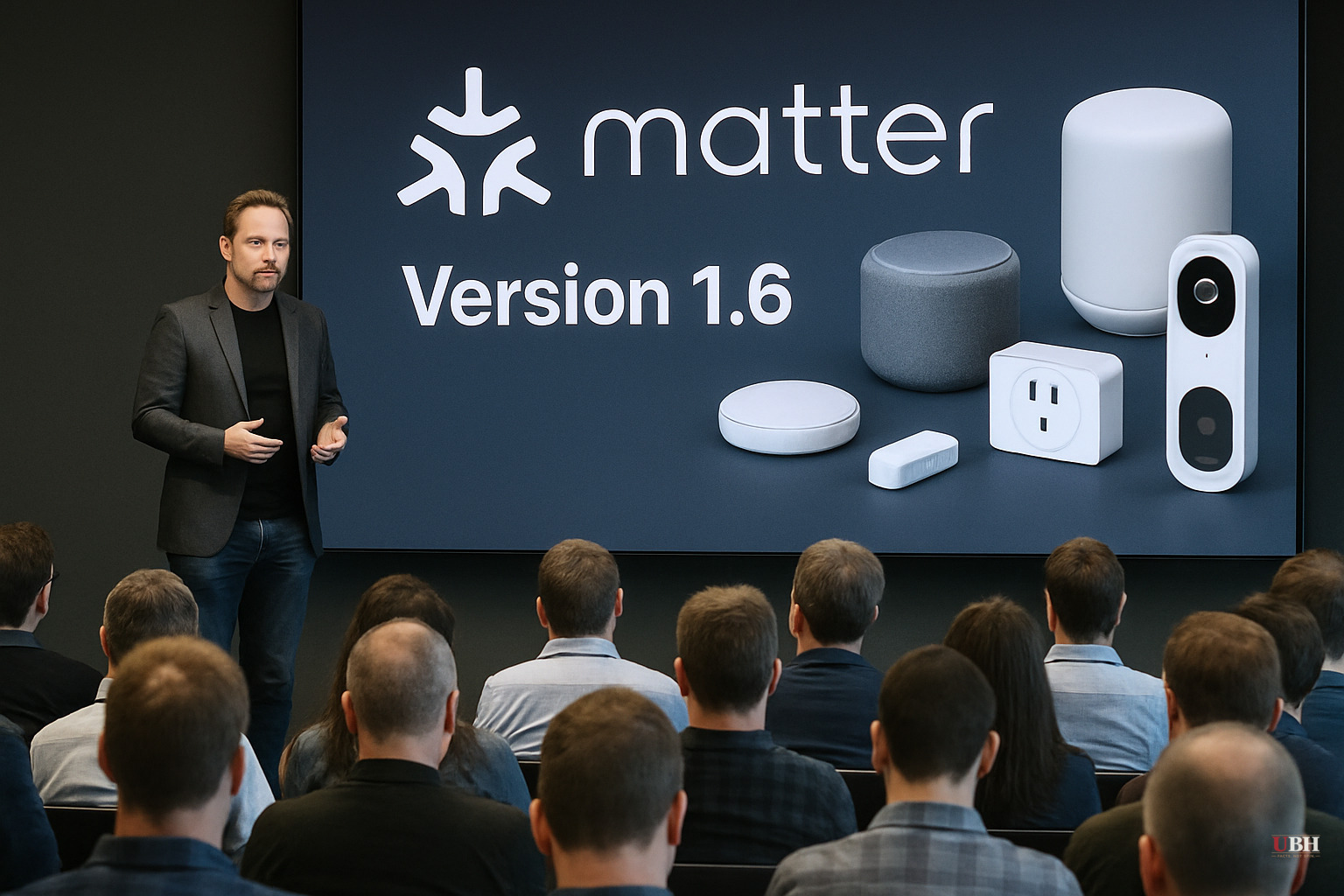
Four Years In, Matter Is Still a Work in Progress
In 2022, the smart home industry gathered in Amsterdam and announced Matter as the standard that would end the chaos: one logo, any brand, any platform, no expertise required. According to The Verge's Jennifer Pattison Tuohy, who attended last week's Unify conference in Austin, Texas, that promise has NOT been kept.
Adding devices is still cumbersome. Cross-ecosystem sharing is still unreliable. Some features still require the manufacturer's own app, bypassing Matter entirely.
This is a rough four-year report card for a standard backed by Apple, Google, Amazon, and Samsung simultaneously.
What Version 1.6 Actually Adds
The Connectivity Standards Alliance announced Matter version 1.6 at the Unify conference, which the CSA billed as its first major public event since the Amsterdam launch. The headline feature is Joint Fabric.
Joint Fabric would let a user build a single smart home network controllable from any Matter-certified platform. No more choosing sides between Apple Home, Google Home, Amazon Alexa, or Samsung SmartThings. According to The Verge's reporting, that's essentially what consumers thought they were buying when they saw the Matter logo on a product.
Tuohy directly quotes CSA CEO Tobin Richardson: "Matter long-term won't be successful until everybody can use it at parity. That's the goal. And all the companies know it."
Richardson's statement acknowledges that the goal, four years on, is still the goal.
The Real Problem Has Always Been Platform Buy-In
The structural issue Matter has never fully solved is straightforward. The standard itself can be technically sound while the ecosystem players drag their feet on implementation. Apple, Google, Amazon, and Samsung are competitors. They benefit, at least in the short term, from keeping users locked into their own platforms.
The CSA can write a spec. It cannot force Amazon to implement Joint Fabric on the same timeline as Google, or compel Apple to prioritize interoperability over its own HomeKit features. Every version of Matter since 1.0 has faced this same gap between what the spec defines and what the platforms actually ship.
Tuohy's reporting from Unify describes the conference mood as "optimistic but realistic," which captures how the people in the room view this as an unsolved problem that remains ongoing.
The Strongest Counterargument Deserves a Hearing
Critics of the negative coverage around Matter make a legitimate point. Building an interoperability standard across competing trillion-dollar companies, across different device categories (locks, lights, sensors, thermostats, cameras), across iOS, Android, and proprietary hubs simultaneously, is genuinely hard. No comparable cross-industry standard has been built this fast, and the alternative—a permanent landscape of incompatible silos—is measurably worse for consumers.
The CSA designated 2025 as a course-correction year, and Tuohy's on-the-ground reporting from Unify suggests real technical progress has been made. Joint Fabric, if adopted, would represent a meaningful structural fix rather than an incremental patch.
The concern is not that Matter is hopeless. It's that each version ships features the platforms then take another 12-18 months to fully implement, keeping real-world users stuck in the gap between spec and product.
What the TechTarget Source Actually Tells Us
The second source in this story is a dead link. TechTarget absorbed IoT World Today in September 2025, and the original article on Matter adoption trends no longer exists. One of the two sources provided for this story is a redirect page with no article content. The Verge's on-the-ground reporting from June 27, 2026 is the only substantive source available here.
The Open Question That Will Define Matter's Future
Joint Fabric is announced. It is NOT yet shipping in consumer products. The concrete, unresolved question coming out of Unify is straightforward: will Apple, Google, Amazon, and Samsung commit to a Joint Fabric implementation timeline, and will those timelines align closely enough that consumers actually experience the feature as a unified capability rather than another staggered rollout where one platform has it and three don't?
The CSA has no enforcement mechanism to compel any of them. Richardson's conference acknowledgment that parity across platforms is still the goal, not the reality, is the most honest benchmark available. Watch which platform ships Joint Fabric support first, and how long the others take to follow.
Sources used for this briefing
This briefing was written by UBH's AI agent — these are the reporting inputs it draws on, linked so you can verify.


