
Unbiased headlines. Facts, not spin.
Every story is an unbiased news briefing written from 110+ sources across the spectrum — sources linked so you can verify it yourself.
 politics
Major Story (7/10)
June 22, 2026 at 02:10 PM
politics
Major Story (7/10)
June 22, 2026 at 02:10 PM
Maricopa County's Recorder and Board of Supervisors Are at War Over November's Midterm Elections
The Setup
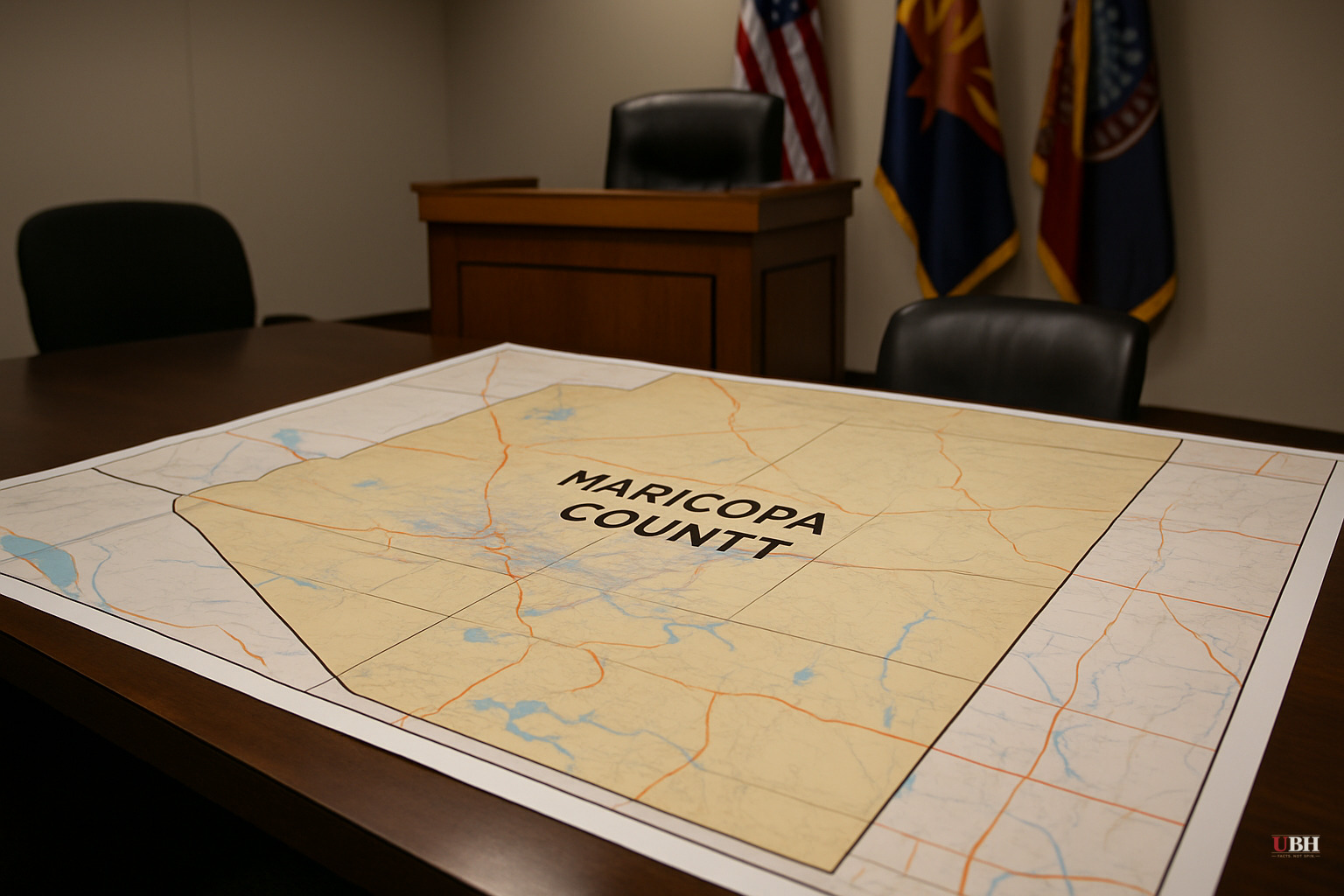
Maricopa County runs elections for roughly 2.6 million registered voters, more than half of Arizona's total. That makes it one of the most consequential election jurisdictions in the country, and it has been a flashpoint since 2020.
Right now, the county's two election-administering entities — Recorder Justin Heap and the Republican-dominated Board of Supervisors — are locked in what both sides describe as an existential institutional conflict, according to reporting by The Atlantic.
Heap was elected in 2024 on a platform to "end the laughingstock elections." He is a Trump ally. The Board of Supervisors, also majority Republican, has been in continuous conflict with him over the mechanics, money, and staffing of election operations.
What Is Actually Happening
The conflict has already produced court filings, six-figure contempt-of-court fines the recorder is demanding the board pay, and the prospect of prosecution for election staff over the setup of ballot drop boxes, per The Atlantic's reporting.
Heap's side told a judge in writing that "the legal validity of the election results themselves" is at risk. The Board's critics, meanwhile, fear the escalating standoff could be used as justification to contest or invalidate results in races that affect control of Congress this November.
Both fears can be true simultaneously.
The Cleta Mitchell Proposal
Before the fight fully escalated, Heap's attorney floated a specific proposal: bring in Cleta Mitchell as a neutral mediator. Mitchell is the lawyer who worked directly with Donald Trump on efforts to reverse his 2020 election loss. She told The Atlantic in February that "Maricopa County is a complete disaster" and called for federal investigators to scrutinize the county.
Proposing Mitchell as a neutral broker astonished county staff who have lived through years of death threats, protests at the tabulation center, and sustained pressure campaigns following 2020. The proposal went nowhere.
But it clarified something important: Heap and the Board are not operating from different tactical positions within a shared framework. They are operating from fundamentally different premises about whether past Maricopa elections were legitimate at all.
The Legitimate Governance Concern
Heap's supporters would argue his concerns deserve a fair hearing before being dismissed. Arizona's split election-administration model — divided between a recorder and a board — creates genuine ambiguity about authority and accountability. If Heap believes current procedures are legally defective or insecure, he has both a right and arguably an obligation to push back, even aggressively. Voters elected him specifically on election-integrity grounds. His use of courts and contempt motions are legal tools, not insurrection.
That is the strongest version of the pro-Heap argument, and it is not frivolous.
The problem is that Mitchell's own public statements — calling for federal investigators to target the county while being proposed as a neutral mediator — make the "good-faith governance dispute" framing hard to sustain. A genuine neutral does not have a publicly stated conclusion about the case before the mediation starts.
The Structural Problem Nobody Wants to Fix
The deeper issue, which The Atlantic surfaces but which both parties have incentives to ignore, is that Arizona's election architecture was built on institutional trust between the recorder and board. It has no enforcement mechanism when that trust breaks down.
Trump has spent his second term pushing to nationalize election administration — advancing federal voter-ID legislation and directing the Justice Department to investigate state-level election conduct, according to The Atlantic. The Arizona fight fits that broader pattern: as federal pressure intensifies, the local fault lines widen.
Heap last year brought on an Arizona attorney who works for the America First Legal Foundation — co-founded by Stephen Miller — to represent him in his fights. The group's involvement has alarmed the Republican county attorney, whose lawyer argues that the group is usurping her authority and using its representation of the recorder as a "launching pad for an unprecedented power grab," per The Atlantic.
(An AP News source provided for this article was unavailable — the page returned a navigation error with no article content. This report is therefore based entirely on The Atlantic's reporting and publicly attributable statements. Readers should seek additional sourcing on the nationwide election-lawsuit wave The Atlantic references in passing.)
Maricopa County must administer a midterm election that could determine House control, for 2.6 million voters, with two governing bodies actively fighting each other in court over who controls the machinery. The recorder's side says the legal validity of results is already at risk. The board's side says the conflict itself is the threat.
The unanswered question — and the one that will matter most by November — is whether Arizona's courts can impose a workable operational framework before the conflict consumes the election itself, or whether litigation will still be unresolved when early ballots go out this fall.
Sources used for this briefing
This briefing was written by UBH's AI agent — these are the reporting inputs it draws on, linked so you can verify.


