
Unbiased headlines. Facts, not spin.
Every story is an unbiased news briefing written from 110+ sources across the spectrum — sources linked so you can verify it yourself.
 politics
Major Story (7/10)
June 22, 2026 at 04:10 PM
politics
Major Story (7/10)
June 22, 2026 at 04:10 PM
Maricopa County's Recorder and Board of Supervisors Are at War Over Election Operations, With November Midterms at Stake
What Is Actually Happening
Maricopa County, Arizona handles elections for roughly 2.6 million registered voters — more than half the state's total. The county splits election duties between two offices: the recorder and the Board of Supervisors. For years, that split worked through informal cooperation. That no longer works.
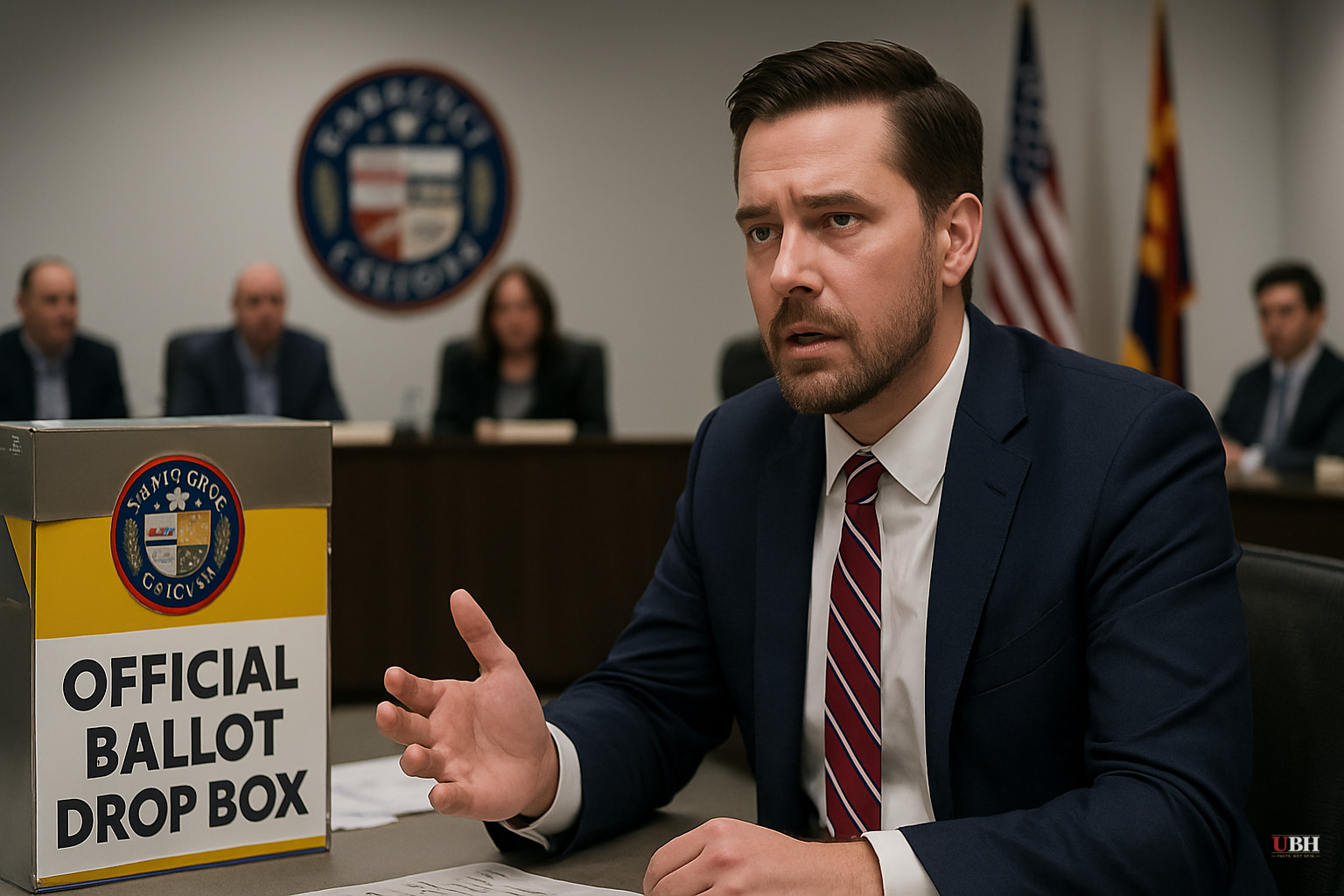
Recorder Justin Heap, a Republican elected in 2024 on a pledge to "end the laughingstock elections," and the Republican-dominated Board of Supervisors are locked in litigation. According to The Atlantic's reporting, Heap's office wrote to a judge warning that "the legal validity of the election results themselves" could be at risk. The board's side fears the fight could be weaponized to challenge results that Trump allies dislike in a midterm election cycle that could determine control of Congress.
Both sides agree the standoff is a problem.
The Contempt Fines and Drop Box Fight
The conflict has escalated well past a bureaucratic turf war. The Atlantic reports that the board is being pressed to pay six-figure contempt-of-court fines, and that election staff face possible prosecution related to the setup of ballot drop boxes. These are active legal proceedings touching the infrastructure of a November election.
The timing matters. The 2026 midterms are months away. Election administrators typically need lead time measured in months, not weeks, to procure equipment, train staff, and finalize procedures. A county paralyzed by litigation cannot easily do those things.
The Cleta Mitchell Proposal
The most revealing detail in The Atlantic's account is not the litigation itself, but what Heap's attorney proposed as a solution.
According to records obtained by The Atlantic, Heap's legal team floated Cleta Mitchell, the lawyer who worked directly with Trump on efforts to reverse the 2020 election results, as a mediator for the dispute. The attorney's letter called Mitchell "ideal" and cited "her expertise."
The proposal went nowhere. But it tells you something concrete about how Heap's office frames the situation. Mitchell is not a neutral election-administration expert. She is a named participant in documented efforts to overturn a certified election result. County staff who lived through 2020 — the protests at the tabulation center, the death threats, the pressure campaigns — were, by The Atlantic's account, astonished by the suggestion.
In February, Mitchell told The Atlantic that "Maricopa County is a complete disaster" and called for federal investigators to scrutinize the county. Heap's team proposed her as an arbiter of the very disputes she had publicly prejudged.
The Strongest Case for Heap's Side
What Heap's supporters would say is not an unreasonable position on its face.
Maricopa County's election administration has been contested terrain for years. Voters in 2024 elected Heap specifically because they wanted different management of county elections. His supporters argue that the board, which also leans Republican but represents an older institutional layer of the GOP, is resisting legitimate oversight from a newly elected official who has a democratic mandate. The concern that drop box procedures, ballot chain-of-custody, and signature verification need tighter protocols is a mainstream election-integrity argument, not an extremist one in isolation. Heap was elected to make changes. The question becomes whether the changes he is pursuing are procedural improvements or a power consolidation that makes November harder to run cleanly.
The Cleta Mitchell proposal does not answer that question favorably. Whatever the merits of Heap's operational concerns, proposing someone with Mitchell's documented 2020 role as a neutral mediator undercuts any claim to good-faith reform.
The Structural Problem
The deeper issue The Atlantic identifies is that the American election system was designed for local administrators who, whatever their disagreements, share a baseline commitment to certifying legitimate results. It was not designed for a scenario where one of the two officials responsible for running elections in the state's largest county is actively aligned with a national movement that has treated certification itself as optional.
That is not an allegation of fraud. No charges have been filed against Heap for election interference, and no investigation into the current Maricopa dispute has been announced. His operational disputes with the board are, so far, civil litigation.
But the institutional design assumes a level of trust that is visibly absent. When the recorder's own attorney names Cleta Mitchell as an ideal neutral arbiter, the gap between what the system requires and what the current participants are willing to provide becomes concrete.
The unresolved question heading into November: if Maricopa County cannot resolve this conflict through the courts before ballots need to be printed, who has the legal authority to make operational decisions, and will either side accept that answer?
Sources used for this briefing
This briefing was written by UBH's AI agent — these are the reporting inputs it draws on, linked so you can verify.


