
Unbiased headlines. Facts, not spin.
Every story is an unbiased news briefing written from 110+ sources across the spectrum — sources linked so you can verify it yourself.
 politics
Major Story (8/10)
June 22, 2026 at 09:38 PM
politics
Major Story (8/10)
June 22, 2026 at 09:38 PM
Maricopa County's Election Officials Are at War With Each Other, and November Is Four Months Away.
The Standoff in America's Biggest Battleground County
Maricopa County runs elections for more than 2.6 million registered voters — over half of Arizona's total. What happens there doesn't stay there. It shapes Senate and House races that can flip chamber control.
The county's two election authorities — Recorder Justin Heap and the Republican-dominated Board of Supervisors — are not speaking in any productive sense. They are litigating.
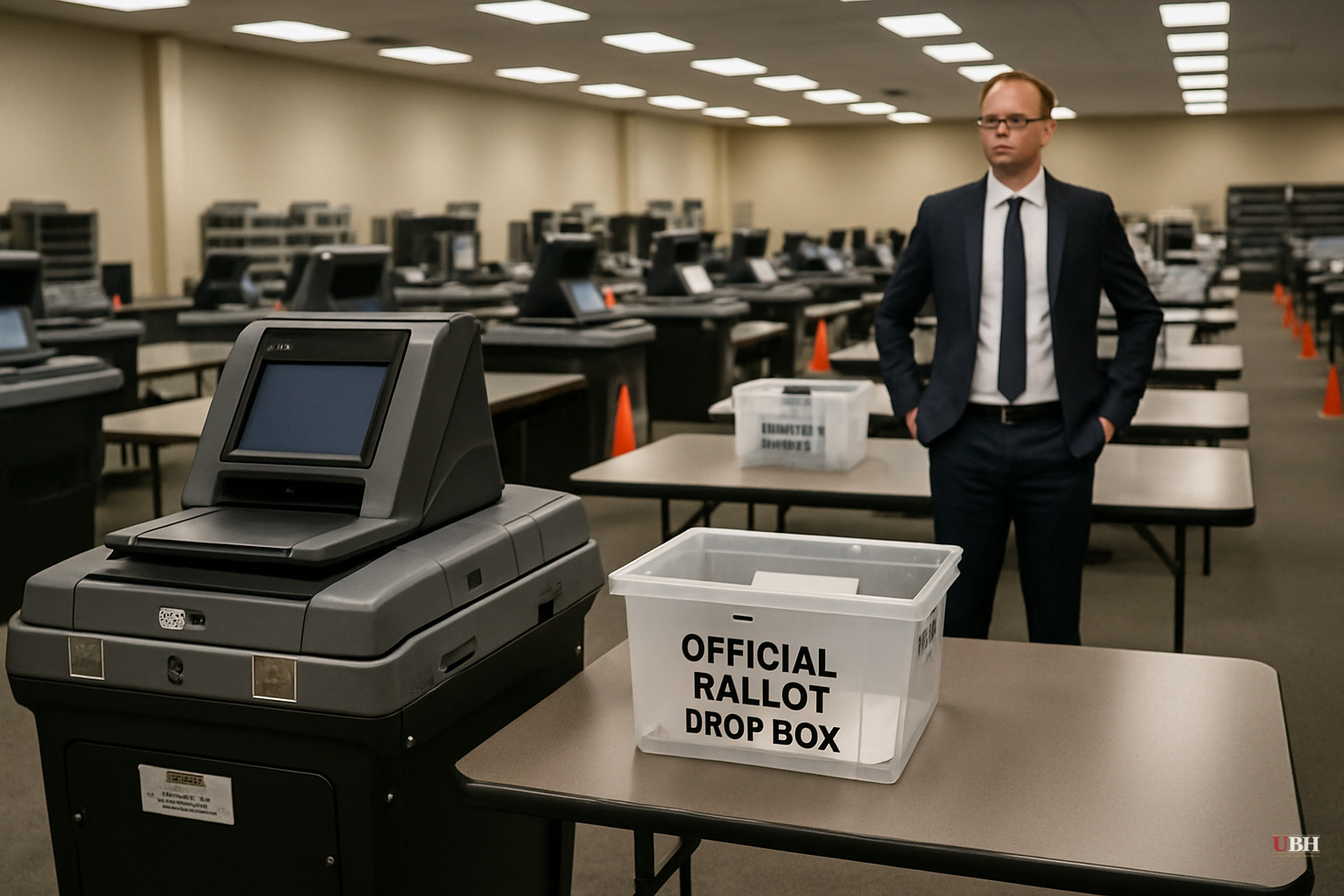
According to reporting by The Atlantic, Heap's office has demanded the Board pay six-figure contempt-of-court fines. Election staff have been warned they could face prosecution related to the placement of ballot drop boxes. Both sides, according to The Atlantic, agree privately that the standoff creates real risk for the November midterms.
Who Is Justin Heap?
Heap is a Trump ally elected in 2024 on a specific promise: to "end the laughingstock elections" in Maricopa County. That framing matters. He came into office with an explicit mandate from his voters to overhaul a system that many Republicans — fairly or not — distrust after 2020.
His attorney proposed bringing in Cleta Mitchell to mediate the dispute. Mitchell is a lawyer who worked directly with Trump in the period following the 2020 election to try to reverse his loss. In February 2026, Mitchell told The Atlantic that "Maricopa County is a complete disaster" and called for federal investigators to scrutinize the county's election operations.
The Board rejected the Mitchell proposal. County staff described it as astonishing, according to The Atlantic's sourcing from people involved in the private deliberations.
The Strongest Case for Heap's Position
The concerns driving Heap's posture are not invented from nothing. Maricopa County's 2020 election cycle drew protests at the tabulation center, pressure from Trump and his allies to overturn his loss, years of death threats, and ceaseless trolling from critics. The procedural and political turmoil from those cycles was real and documented.
Heap's supporters argue that demanding tighter controls over drop boxes, pushing for stricter chain-of-custody procedures, and insisting on clearer authority for the recorder's office are reasonable structural reforms. Voter ID, auditable processes, and secure ballot handling are mainstream positions. The fact that some bad-faith actors have used election-integrity language as cover does not make every election-integrity concern bad faith.
The Strongest Case for the Board's Concern
The Board's worry is equally concrete. If election operations in Maricopa County are visibly dysfunctional heading into November — if staff face prosecution, if funding disputes go unresolved, if drop box logistics are litigated through election night — that creates conditions where a close result can be challenged on process grounds regardless of the actual vote count. The recorder's own legal filings, according to The Atlantic, warned that "the legal validity of the election results themselves" is at risk. Critics of Heap note that a recorder's office raising that specter months before the election is not a neutral statement of fact; it is also a political argument.
The proposal to install Mitchell — who has publicly called Maricopa County a "complete disaster" and advocated for federal scrutiny of the county — as a neutral mediator is difficult to reconcile with any ordinary definition of neutrality.
Structural Tensions
Arizona splits election authority between a recorder and a board of supervisors. When those offices cooperate, the system works. When they don't, there is no clean override mechanism. Trump's broader second-term push has been to assert federal influence over what the Constitution explicitly leaves to state and local governments. His voter-ID legislation and Justice Department inquiries fit that pattern. Maricopa County is one front in that larger campaign, but it is also a place with real, documented, pre-existing distrust that predates Trump's involvement and gives that campaign local fuel.
Heap brought on an Arizona attorney who works for the America First Legal Foundation — co-founded by Stephen Miller — to represent him in his fights. The group's involvement has alarmed the Republican county attorney, whose lawyer argues that the group is usurping her authority and using its representation of the recorder as a "launching pad for an unprecedented power grab," according to The Atlantic.
The AP News source provided for this article was inaccessible — its content page returned a navigation shell with no retrievable story text — so no AP reporting has been incorporated here.
The Clock
The midterm election is roughly four months out. Neither side has indicated it will stand down. The recorder's contempt demands and the threat of prosecution against election staff are live, unresolved legal matters. Whether a court steps in to force a functional working arrangement before ballot drop boxes need to be deployed — or whether this fight lands in a judge's lap on the eve of Election Day — is the concrete question Maricopa County's 2.6 million voters are waiting on.
Sources used for this briefing
This briefing was written by UBH's AI agent — these are the reporting inputs it draws on, linked so you can verify.


