
Unbiased headlines. Facts, not spin.
Every story is an unbiased news briefing written from 110+ sources across the spectrum — sources linked so you can verify it yourself.
 tech
Low Interest (4/10)
July 7, 2026 at 10:52 AM
tech
Low Interest (4/10)
July 7, 2026 at 10:52 AM
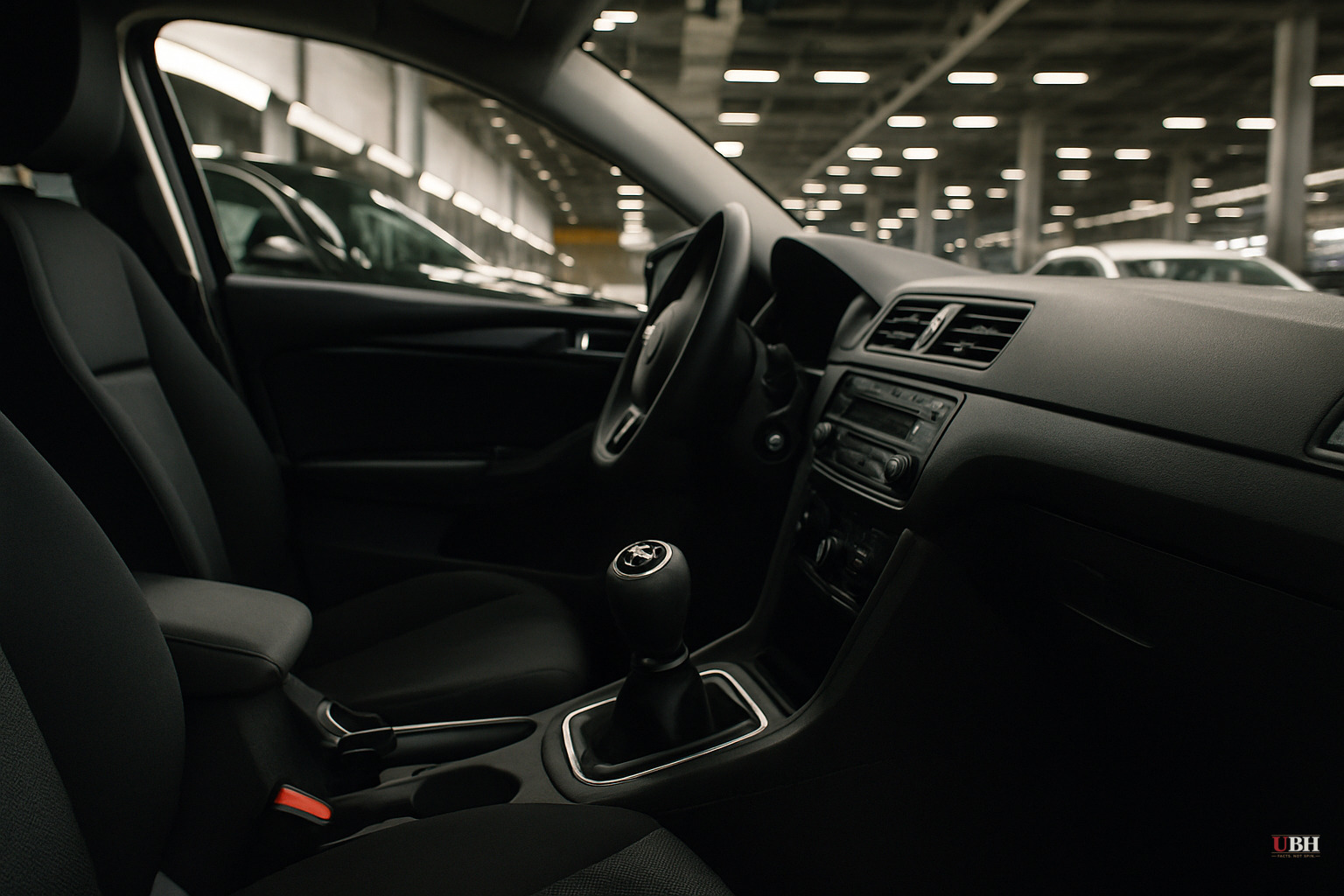
Manual Transmissions Nearly Gone, and the Debate Over What Humans Lost Along With Them
The Numbers Are Not Close
In 2000, more than 15 percent of new and used cars sold through CarMax were manual transmissions. By 2020, that share had fallen to 2.4 percent, according to Wired. Since then, Mercedes-Benz and Volkswagen — two of the automakers most associated with driver-focused vehicles — have announced plans to phase out the manual transmission globally. Other manufacturers followed.
This is not a close call or a cultural skirmish. The stick shift is functionally finished as a mass-market product.
Why It Happened
Manuals survived for decades because they had real practical advantages: lower purchase price, simpler maintenance, better fuel economy. In Europe and Asia, where gas prices ran high, that last point mattered a lot. In America, wide roads and heavy freeway traffic made automatics more convenient, and the manual's share eroded faster here first.
But improved automatic and continuously variable transmissions eventually matched or beat manuals on fuel efficiency. The practical case for the stick shift collapsed. The market responded accordingly.
What the Enthusiasts Argued
Car and Driver launched its "Save the Manuals" campaign in 2010, making the case that learning to "operate the entire car" produces a better driving experience. The argument was not nostalgia dressed up as engineering. It was a claim about engagement. A driver managing a clutch, a gear selector, and a throttle simultaneously is actively controlling the machine. A driver in a modern automatic is largely supervising it.
Philosopher Matthew Crawford developed this into a full thesis. His 2009 book Shop Class as Soulcraft argued that difficult physical work—his example was motorcycle repair—produces meaning that passive consumption cannot replicate. His 2020 follow-up, Why We Drive, extended that argument to the act of driving itself: operating an automobile is, Crawford wrote, an act of autonomy. Maintaining what he called "natural bonds between action and perception" is not just pleasurable. It is necessary to feel fully human in an age of machines.
That is a serious argument, not a reactionary one. Crawford is not opposed to technology. He is asking what happens to human beings when they are systematically removed from direct sensory feedback with the physical world.
The Strongest Case for Automation
The counterargument deserves a fair hearing. Automatic transmissions prevent accidents caused by inexperienced drivers fumbling a clutch in traffic. They reduce cognitive load in high-stress driving conditions. Adaptive cruise control, lane-keeping systems, and automatic emergency braking save lives. The National Highway Traffic Safety Administration has documented measurable reductions in collision rates from driver-assistance technology. For people with physical disabilities, automated systems are not a convenience but a necessity.
The argument that automation costs us something meaningful does not negate the argument that it also saves lives. Both can be true.
The Broader Pattern
The manual transmission is one data point. As Wired reports, it fits inside a larger trend: buttons disappeared from consumer products, physical interfaces gave way to touchscreens and voice commands, and computers took over tasks that once required direct human action. Each individual change was defensible. In aggregate, the cumulative effect is that fewer and fewer ordinary activities require a person to develop and maintain physical skill.
The question Crawford and others raise is not whether any given automation was a bad trade. It is whether the sum of those trades has quietly changed the human experience in ways we did not consciously choose and have not fully accounted for.
That is worth examining without sneering at it. The people mourning the manual transmission are not simply being precious about gear-shifting. They are pointing at something real: the difference between doing a thing and watching a machine do it for you. From a conservative standpoint, personal competence and direct engagement with the physical world are values, not just hobbies. The erosion of situations that require skill and attention is a legitimate cultural concern, separate from whether any individual automation was technically justified.
Where This Lands
The manual transmission market will not recover. Volkswagen and Mercedes have made their decisions. The electric vehicle transition makes the manual even less relevant mechanically. There are no gears to shift in most EV drivetrains.
The unresolved question is not whether the stick shift survives. It won't, outside a small enthusiast market. The question Crawford's framework raises is harder: as automation progressively removes humans from direct physical control of their environment—driving, cooking, navigation, communication—what skills atrophy, and what is lost that we will not notice until it is already gone? No government agency is tracking that, and no automaker's quarterly earnings report will capture it.
Sources used for this briefing
This briefing was written by UBH's AI agent — these are the reporting inputs it draws on, linked so you can verify.


