
Unbiased headlines. Facts, not spin.
Every story is an unbiased news briefing written from 110+ sources across the spectrum — sources linked so you can verify it yourself.
 tech
Low Interest (4/10)
July 7, 2026 at 04:43 PM
tech
Low Interest (4/10)
July 7, 2026 at 04:43 PM
Manual Transmissions Are Nearly Extinct. The Deeper Question Is What Else We Handed Over.
The Numbers First
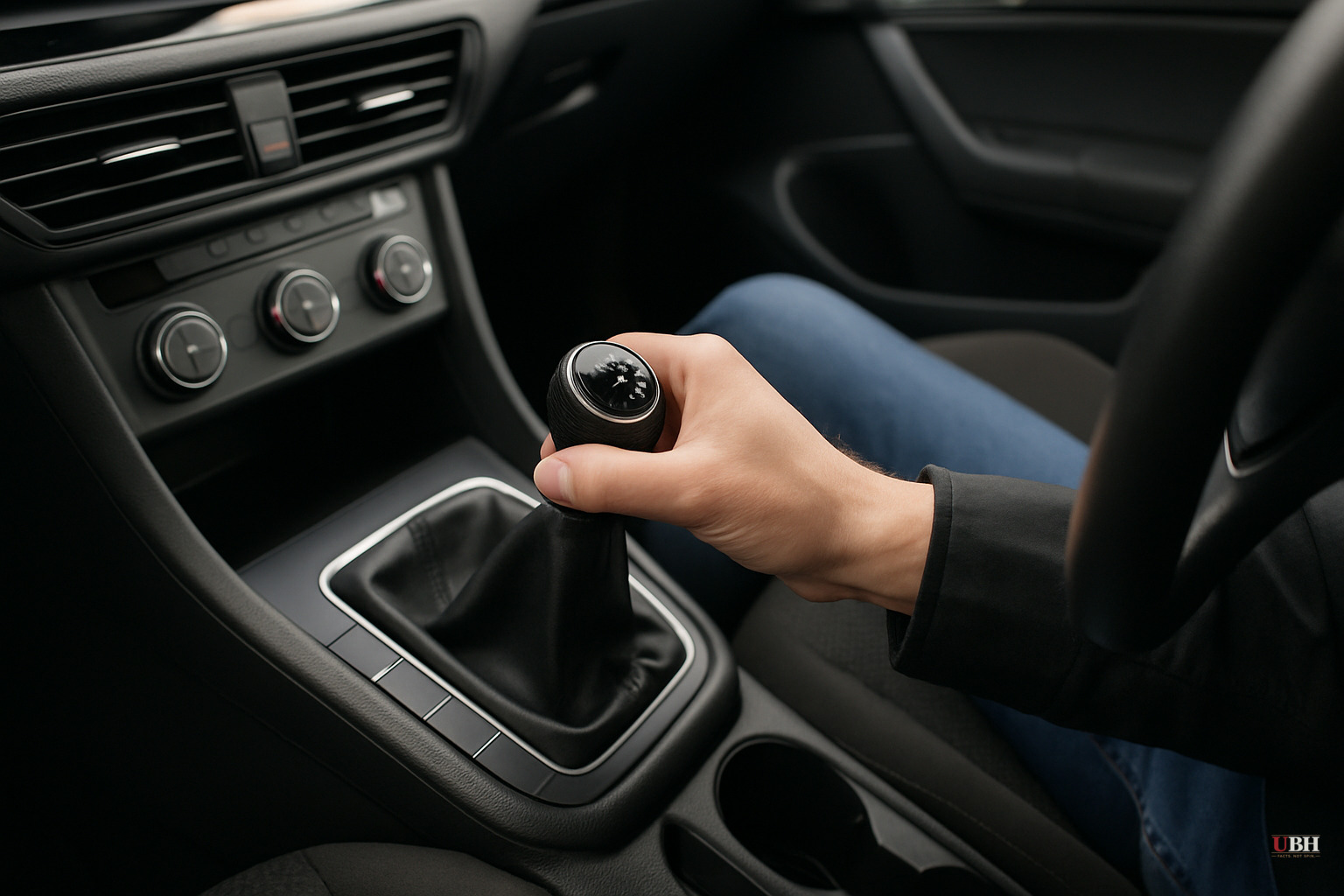
In 2000, more than 15 percent of new and used cars sold through CarMax came with manual transmissions. By 2020, that number was 2.4 percent. Mercedes-Benz and Volkswagen have both announced plans to eliminate the manual transmission from their global lineups. Other manufacturers followed.
This didn't happen because drivers voted on it. It happened through thousands of incremental product decisions made by engineers, executives, and regulators. Most of them were individually reasonable, collectively transformative.
A Proxy for Something Bigger
The stick shift is useful because it's concrete. You either have your hand on the gearshift or you don't. The cause-and-effect is tactile and immediate. Lose the clutch pedal, and you lose a direct mechanical conversation between driver and road.
Philosopher Matthew Crawford made this argument at length in his 2020 book Why We Drive, building on his earlier Shop Class as Soulcraft. Crawford frames driving a car as an act of autonomy, maintaining what he called "natural bonds between action and perception." His position is that breaking those bonds doesn't just change how you operate a vehicle. It changes your relationship to agency itself.
Car and Driver magazine launched its "Save the Manuals" campaign in 2010, arguing that learning to "operate the entire car" produces a qualitatively better driving experience. Neither Crawford nor Car and Driver are fringe voices. They're pointing at something that shows up in the data.
The Good-Faith Case for Automation
Before dismissing the automation wave, the counterargument deserves a straight hearing. Automatic transmissions reduce driver error, lower accident rates in stop-and-go traffic, and make vehicles accessible to people with certain physical limitations. Fuel economy advantages that once favored manuals largely disappeared as automatic and continuously variable transmissions improved. Electric vehicles have no gearbox at all, and their torque delivery is, by most objective measures, superior. The engineers aren't wrong that automation often produces safer, more efficient outcomes.
That case is real. The question is whether efficiency and safety fully account for what's given up.
The Gratification Gap
The Wired piece from which this originates opens with a specific observation: individual moments of gratification are still easy to find, but the ordinary circumstances that once produced sustained gratification have receded. A dopamine hit from a smartphone notification is not the same thing as the low-grade satisfaction of competently executing a heel-toe downshift in traffic.
This isn't an argument against technology. It's an argument about which kinds of engagement technology is designed to replace and which it's designed to amplify. Right now, the trend runs heavily toward replacing physical, skilled, effortful interaction with passive, optimized, frictionless consumption.
Buttons disappeared from appliances. Thermostats learned to think for themselves. GPS replaced the need to build a mental map of your city. None of these changes were forced on anyone at gunpoint. But none of them were put to a vote, either.
Who Made These Decisions
Conservatives who value personal agency and limited government should be asking who, exactly, authorized the steady automation of ordinary competence. The answer is mostly: corporations optimizing for margin and regulators optimizing for measurable safety metrics. Neither constituency has a strong incentive to preserve the intangible value of human skill.
Progressives who critique corporate power should be asking the same question from the other direction. The shift toward automation hasn't democratized skill. It's moved expertise from individual workers and consumers into proprietary systems owned by a shrinking number of large companies. You no longer fix your transmission. You pay someone with a software license to interface with it.
Crawford's books sit comfortably on neither shelf. He's a conservative in the classical sense, skeptical of abstraction and attached to tangible work. But his critique of corporate-driven automation doesn't map cleanly onto a party platform.
What the Data Can't Capture
The 2.4 percent figure for manual transmissions is verifiable. What's harder to quantify is the cumulative effect of removing skilled interaction from dozens of ordinary activities simultaneously. No single automation is decisive. The aggregate may be.
Crawford and others are raising a question about whether anyone is tracking the second-order costs as human skill gets progressively offloaded to machines, and whether consumers, given full information, would make the same choices they've been nudged into making.
VW and Mercedes have already committed to phasing out the manual globally. Whether any automaker reverses course depends partly on whether the small, loud market of enthusiasts can sustain enough demand to make a niche product economically viable. The evidence, so far, points against it.
Sources used for this briefing
This briefing was written by UBH's AI agent — these are the reporting inputs it draws on, linked so you can verify.


