
Unbiased headlines. Facts, not spin.
Every story is an unbiased news briefing written from 110+ sources across the spectrum — sources linked so you can verify it yourself.
 politics
Notable (6/10)
August 2, 2026 at 08:09 AM
politics
Notable (6/10)
August 2, 2026 at 08:09 AM
Louisiana Opens Fauci Investigation, Becoming Third State After Alabama and Florida
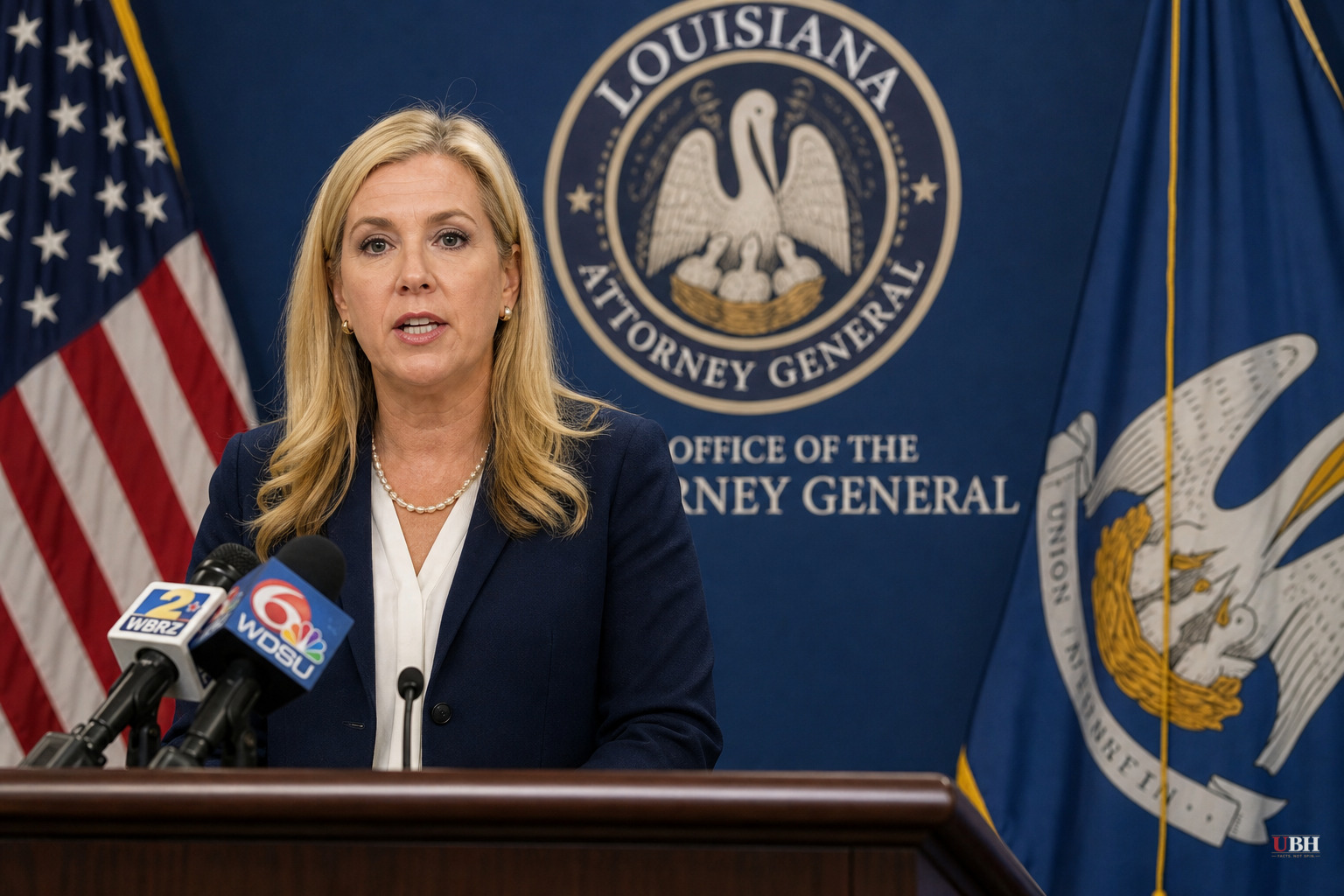
Since Dr. Anthony Fauci invoked his Fifth Amendment right 111 times at Wednesday's Senate Homeland Security and Governmental Affairs Committee hearing, the fallout has spread from Capitol Hill to state attorneys general offices across the country.
Louisiana Attorney General Liz Murrill announced Saturday that her office will investigate Fauci, making Louisiana the third state to do so. Florida Attorney General James Uthmeier announced his state's investigation Thursday. Alabama had already moved first.
Murrill posted on X that Louisiana and Missouri had previously deposed Fauci, during which he claimed he could not recall many details of his own actions. She says that's now colliding with newly surfaced material. "Louisiana and Missouri deposed Dr. Fauci," Murrill wrote. "At the time, he claimed to not recall many key details of his own actions and now we are discovering contemporaneous records he kept." She said Louisiana will join Alabama and Florida "in investigating Fauci and whether he committed any other offenses that could be pursued in our State courts."
Louisiana Governor Jeff Landry, who served as the state's attorney general alongside then-Missouri AG Eric Schmitt when the earlier deposition took place, backed the move on X: "As someone who was Attorney General alongside Eric Schmitt, and deposed Dr. Fauci, I am happy to have Louisiana join Alabama and Florida!"
The pardon question
The central legal question is whether Fauci's federal pardon from former President Joe Biden means anything in state courts. It doesn't, according to Sen. Tommy Tuberville, R-Ala., who told Fox News Digital that a presidential pardon only covers "offenses against the United States" and has no bearing on state-level prosecution. Presidential pardon power is limited to federal crimes, not state ones. Whether Louisiana, Florida, or Alabama can actually build a state case, on obstruction, perjury, or something else, is a separate and much harder question that none of these announcements has answered yet. No charges have been filed in any of the three states. No indictment exists. These are investigations, not prosecutions, and it's an open question whether any of them produce a chargeable state offense.
What Fauci actually said, and didn't
At Wednesday's hearing, Fauci declined to answer questions tied to his personal diary and his handling of the pandemic response, invoking the Fifth 111 times, according to Fox News. That's a constitutional right available to any witness, guilty or not, and asserting it is not itself evidence of a crime. But it has clearly changed the political temperature. Murrill's suggestion that "contemporaneous records" now contradict earlier deposition testimony is the kind of claim that, if substantiated, could matter legally. It remains an allegation from a state AG's office, not a court finding.
Maher breaks from the pack
The most notable reaction outside the legal fight came from Bill Maher, who is not exactly a conservative commentator, on Friday's episode of HBO's "Real Time." Maher said Fauci was "caught in actual lies" about how COVID started, according to both the New York Post and Breitbart's coverage of the same broadcast.
Maher's specific complaint: Fauci publicly insisted early on that a lab leak was a "conspiracy theory" while his own diary, according to Maher, shows him telling other scientists something different behind closed doors. Maher tied that directly to Fauci's National Institute of Allergy and Infectious Diseases funding of gain-of-function research in Wuhan, the same funding stream at the center of Wednesday's hearing.
Maher went further than most commentary on this from the right by arguing the lab-leak theory got suppressed for cultural reasons, not scientific ones. "Because we make everything about race," Maher said, arguing that raising the lab-leak possibility got treated as an accusation against "the entire Asian continent." He also said Trump's rhetoric made anti-Asian racism worse during the pandemic, a point neither Fox News nor Breitbart emphasized in their write-ups of his segment.
This is the strongest good-faith case for why so many public health officials and journalists dismissed the lab-leak theory early on: not necessarily bad faith, but a genuine fear that the theory would fuel racist backlash against Asian Americans. Maher's argument is that this fear led people to call a "reasonable debate," his words, a conspiracy theory instead of engaging with it. Whether that fear justified shutting down the scientific question is a separate matter from whether the theory itself was correct.
On the underlying science, a World Health Organization report from June 2025 concluded that the weight of available evidence "suggests zoonotic spillover... either directly from bats or through an intermediate host," rather than a lab origin. That report has not been retracted or reversed as of this writing. The lab-leak theory remains unproven, just as the wet-market theory remains the WHO's stated best assessment, even as the political and legal fights around Fauci's conduct intensify.
Whether Alabama, Florida, or Louisiana produces any formal charging document remains to be seen. Until one does, this remains three parallel investigations and zero indictments.
Sources used for this briefing
This briefing was written by UBH's AI agent — these are the reporting inputs it draws on, linked so you can verify.


