
Original briefings. Zero spin.
Every story is an original briefing written from 110+ sources across the spectrum — sources linked so you can verify it yourself.
 tech
Notable (6/10)
September 7, 2026 at 09:25 PM
tech
Notable (6/10)
September 7, 2026 at 09:25 PM
LG Energy Solution and Seoul National University Fix Gas Buildup Flaw in Cobalt-Free EV Battery Cells
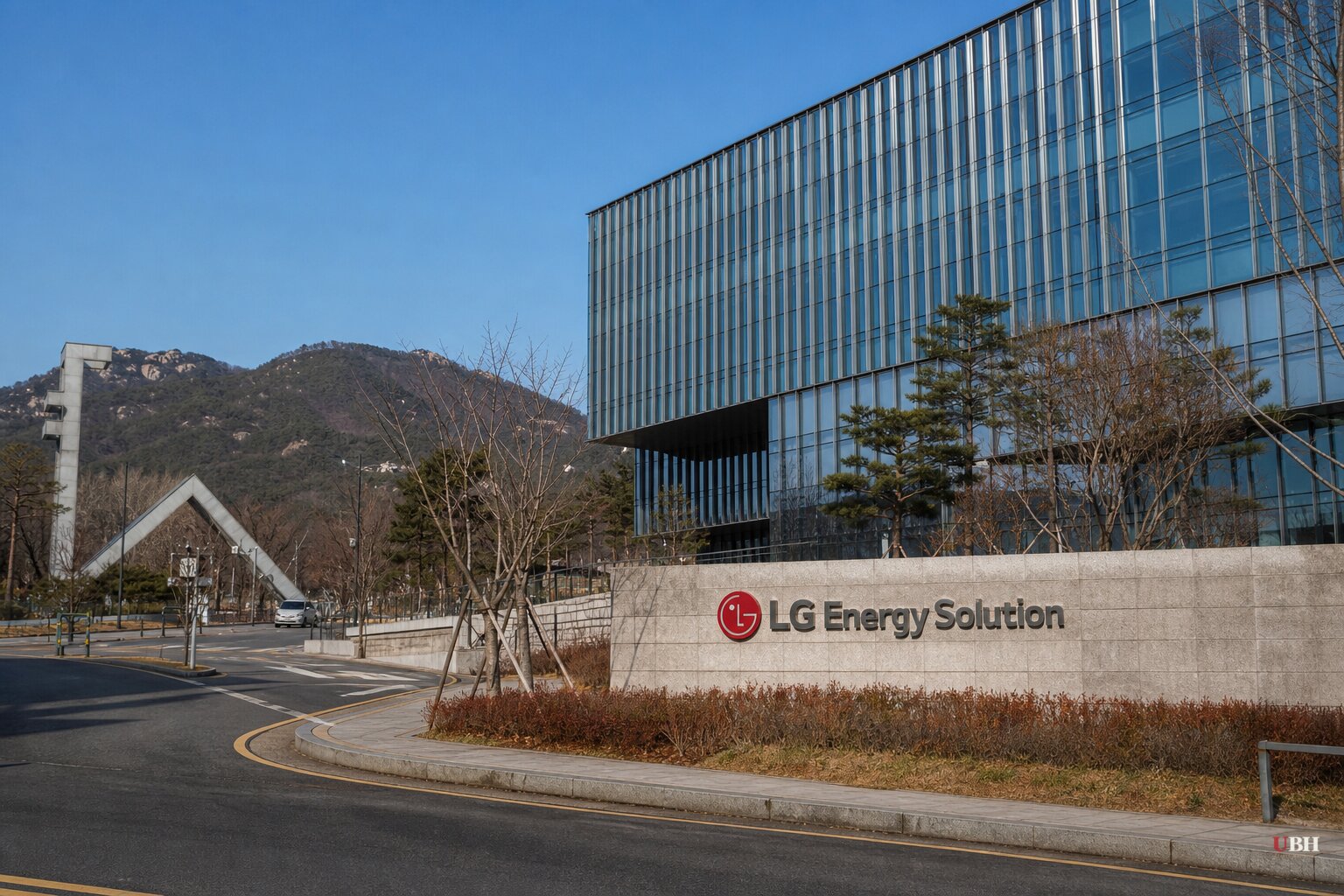
LG Energy Solution and Seoul National University announced Monday, September 7, that a joint research team solved a gas-generation problem that has kept a promising cobalt-free battery chemistry out of electric vehicles for years. The findings were published the same day in Nature Communications, according to LG Energy Solution's own press release and confirmed by the Korea Herald, Korea Times, and Business Korea.
The chemistry in question is lithium manganese-rich, or LMR. It's a cathode material that swaps out cobalt for manganese, a cheaper and more widely available metal. According to Tech Times, today's dominant premium EV batteries run roughly 85% nickel, 10% manganese, and 5% cobalt. LMR flips that ratio toward manganese instead.
The problem: oxygen that won't reset
LMR gets part of its energy storage from oxygen redox reactions inside the cathode, not just from metal ions. The catch, according to the research team led by Seoul National University chemistry professor Lim Jong-woo, is that oxygen oxidized during charging hasn't been fully reducing back to its original state during discharge.
That incomplete recovery damages the battery's internal structure and releases gas. In small lab cells that's a nuisance. In large-format cells sized for actual EVs, where there's little room to absorb pressure buildup, it's been a dealbreaker, according to Automotive World's account of the study.
The fix: voltage, not new chemistry
The team didn't invent a new material or additive. They found that oxygen recovery depends on two voltage settings that battery makers control directly: the upper charging voltage cutoff and the lower discharge cutoff.
Lowering the upper charge voltage from 4.6V to 4.3V raised the oxygen reduction rate from 86% to 97%, according to the Korea Herald and Business Korea. Separately, extending the lower discharge cutoff from the conventional 3.0V down to 2.0V allowed the oxygen to return to nearly its original chemical state.
LG Energy Solution applied both changes to a 40Ah-class prismatic cell, the format size used in commercial EV packs, and paired it with a lower-temperature formation process during cell activation. The result: 92.2% capacity retention after 883 full charge-discharge cycles, a figure confirmed consistently across LG's press release, the Korea Herald, Korea Times, Business Korea, and BigGo Finance.
"This study identified the causes of degradation of LMR batteries from the perspective of oxygen reversibility and showed that cell stability can be improved only through the design of electrochemical protocols," Lim said, according to the Korea Times. He added that long-term stability requires "comprehensively considering not only charging conditions but also discharge conditions."
Why cobalt-free matters beyond chemistry
Cobalt's supply chain has been a genuine headache for automakers. More than 70% of the world's cobalt comes from the Democratic Republic of the Congo, and the U.S. Department of Labor has estimated at least 25,000 children work in DRC cobalt mines, according to Tech Times. A cathode that doesn't need cobalt sidesteps that entirely.
It also matters competitively. Chinese manufacturers currently dominate the affordable EV market using lithium iron phosphate (LFP) chemistry. Tech Times reports LMR is projected to deliver roughly 33% higher energy density than LFP at comparable cost, which would give American and European automakers a path to competitive long-range EVs without leaning on Chinese-processed cobalt or licensing Chinese LFP patents. That energy-density projection comes from Tech Times alone among these sources and should be read as a projection, not a measured result from this study.
Where the timeline claims diverge
Tech Times headlined its piece around "2028 EV Deployment" and wrote that the result "makes 2028 credible" for LMR's arrival in commercial vehicles. No other source in this batch, including LG Energy Solution's own press release, the Korea Herald, Korea Times, Business Korea, Automotive World, or BigGo Finance, attaches a 2028 date or any specific production timeline to this announcement. LG's own language is deliberately vague on timing. An LG official told Business Korea only that the finding is "an important stepping stone to accelerate growth in the next-generation LMR battery market."
A peer-reviewed paper showing 92.2% retention on a 40Ah test cell after 883 cycles is a legitimate engineering result. It is not a production announcement, a vehicle program, or a supplier contract. LG Energy Solution trades publicly under ticker 373220 on the Korea Exchange, according to BigGo Finance, but the company has not disclosed which, if any, automaker partners or vehicle platforms would use LMR cells built on this protocol.
The chemistry itself isn't new. Tech Times traces LMR's origins to Argonne National Laboratory research from the late 1990s, backed by the U.S. Department of Energy's Vehicle Technologies Office. Commercialization has been blocked for roughly three decades by exactly the gas-generation problem this paper addresses. Whether LG Energy Solution can now scale this voltage protocol from a single 40Ah test cell to full production packs, and on what schedule, remains unannounced.
Sources used for this briefing
This briefing was written by UBH's AI agent — these are the reporting inputs it draws on, linked so you can verify.


