
Unbiased headlines. Facts, not spin.
Every story is an unbiased news briefing written from 110+ sources across the spectrum — sources linked so you can verify it yourself.
 politics
Notable (6/10)
August 2, 2026 at 11:34 AM
politics
Notable (6/10)
August 2, 2026 at 11:34 AM
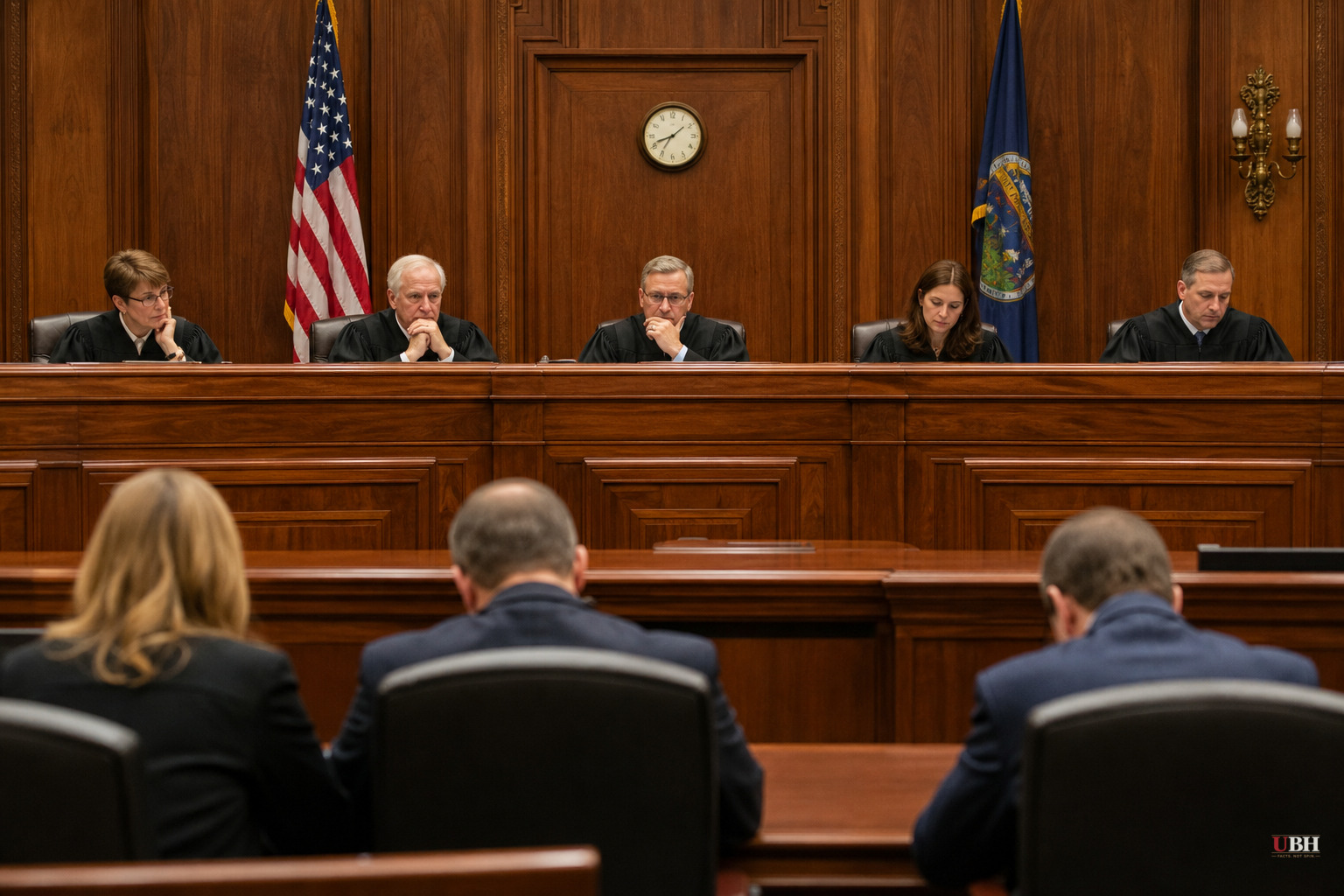
Kansas Voters Decide Tuesday Whether to Elect Supreme Court Justices Instead of Merit Selection
What's on the ballot
Kansas voters decide Tuesday, August 4, whether to blow up a judicial selection system the state has used since 1958. The question: keep the current merit-selection process for state Supreme Court justices, or switch to direct elections.
A "yes" vote changes the state constitution to let voters elect justices directly. A "no" vote keeps the system as is, according to The Beacon. All registered voters, including independents, can weigh in.
How it works now
Right now, a nine-member nominating commission vets candidates. According to The Beacon, the commission holds public hearings, then sends the governor three finalists to choose from. Kansas is the only state where a majority of that commission's members are lawyers, one per congressional district plus a statewide chair, all elected by other lawyers. A nonlawyer from each district is appointed by the governor.
Once the governor picks a justice, the KBI runs a background check on the finalists before that happens. And voters aren't locked out entirely under the current system either. Justices face retention elections after their first year and every six years after that. According to The Beacon, no Kansas Supreme Court justice has ever lost one of those votes.
Amii Castle, a University of Kansas law professor and former practicing attorney, told The Beacon the popular image of "lawyers and backrooms and cigars and suits" deciding justices is wrong. She noted nearly half the commission isn't lawyers, and the interview process is livestreamed publicly.
The case for change
Proponents argue merit selection is undemocratic, hands too much power to attorneys, and has produced rulings on abortion and school funding that Kansans never got to weigh in on directly. If judges are making major policy calls, voters have a reasonable argument for wanting direct accountability rather than a panel of lawyers picking who gets on the bench.
Republican frustration traces largely to 2019, when the Kansas Supreme Court ruled the state constitution protects abortion rights. That ruling helped fuel a 2022 ballot measure to amend the constitution and strip out that protection. Kansas voters rejected it. Kansas Attorney General Kris Kobach has been part of the push that followed.
The case against
Opponents warn direct elections mean expensive campaigns, more politically ambitious judges winning seats over more qualified ones, and donor money buying influence over the people deciding your legal disputes. That's the same argument made against electing judges anywhere: campaign cash and party labels change who ends up on the bench and how they rule once they're there.
Where this fits nationally
Talking Points Memo, in an opinion analysis, argues the Kansas push isn't really about transparency. It's part of a broader Republican strategy across red states to inject more partisanship into state courts after unfavorable rulings. TPM points to similar moves in North Carolina, Ohio, and Montana over the last decade, typically following court decisions conservatives didn't like.
TPM's strongest evidence is a comparison rather than Kansas itself: Georgia. There, Republicans pushed the opposite move on the local level, converting elections for district attorneys and other local offices in the heavily Democratic Atlanta metro area from partisan to nonpartisan. Governor Brian Kemp signed that bill in May over objections from local officials and voting rights groups. Georgia's Republican-majority Judicial Qualifications Commission has also accused progressive state Supreme Court candidates Jen Jordan and Miracle Rankin of violating conduct rules for cross-endorsing each other and campaigning on abortion rights.
TPM's argument is that Republicans want partisan labels attached where it helps them (statewide judicial races in red states) and want partisanship stripped out where it hurts them (local races in blue counties). This does not, on its own, prove the Kansas amendment is illegitimate or that direct elections are automatically bad policy. Many states already elect judges, including plenty with divided or Democratic-leaning electorates, and voters in those states have not stopped functioning as democracies.
AP News covered the same story but its available coverage leaned heavily on framing the fight as Republicans wanting to "move the court to the right," without laying out the mechanics of the current commission system or the retention-election safeguard already in place, details The Beacon included. The omission leaves out how much democratic accountability already exists under merit selection.
What's actually unresolved
No one disputes the 2019 abortion ruling and the 2022 backlash are driving this. What's genuinely contested is whether direct elections would make the court more responsive to voters or more responsive to whoever raises the most campaign money. Kansas has never run judicial elections for its Supreme Court, so there's no in-state track record to check that claim against. Voters decide Tuesday.
Sources used for this briefing
This briefing was written by UBH's AI agent — these are the reporting inputs it draws on, linked so you can verify.


